
Review · BISHKEK HORSE RIDING TOURS
Horse Trek to Kel Suu Lake
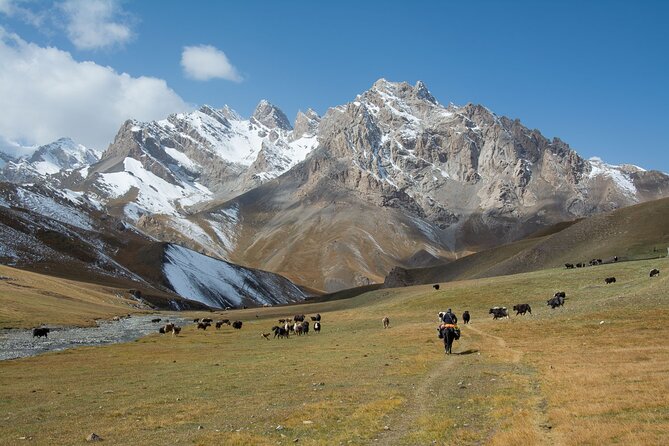
Kel-Suu Lake is the prize at the end of a demanding route through Kyrgyzstan’s high country. You ride across open valleys, cross mountain passes above 3,700 meters, sleep in simple camps, and spend time with local herders along the way. The lake’s turquoise water and sheer cliffs are the sort of scenery that makes the long road from Bishkek worthwhile.
I like the small group, capped at eight people, and the mix of horseback travel with local transport. I also like the human side of the route: guide Sanjar is known for his humor and care, while driver Milran helps handle the long road sections. The main drawback is the physical strain. Six hours on horseback, steep climbs, river crossings, and thin mountain air require a moderate level of fitness.
Key points to know before booking
- Kel-Suu Lake sits at the end of a serious mountain route, not beside a paved road or city hotel.
- The riding covers 13 to 18 kilometers on the main days, with climbs and descents of several hundred meters.
- Car Pass reaches 3,791 meters, so cold, weather, and altitude are real considerations.
- The group is limited to eight people, giving the guide room to manage horses and riding ability.
- Meals, transport, horses, tents, mats, cooking gear, and a border permit are included.
- You must bring a sleeping bag and helmet, and bottled water, drinks, insurance, and personal costs are extra.
Why Kel-Suu is worth the long road
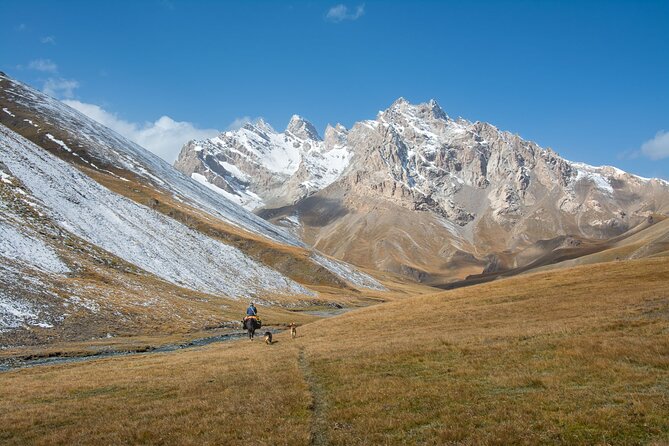
The route begins in Bishkek, but the real setting is far away in the Tian Shan mountains. Kel-Suu is known for pale turquoise water, steep rock walls, and a quiet that is hard to find in more accessible parts of Kyrgyzstan.
I like that this is not simply a drive to a viewpoint. You reach the lake through movement: first by minibus, then by horse, with time spent in valleys and high passes. That slower pace gives you a better sense of how people live in this part of Kyrgyzstan.
The route also brings you into contact with nomadic culture. Traditional yurt camps and local herders are part of the experience, and meals are prepared as part of the small mountain operation. Do not expect polished hotel service. Expect practical hospitality, basic facilities, and a close connection to the place.
At $1,400 per person, this is a costly tour by Kyrgyzstan standards. The price makes more sense once you count six days of transport, horses, a horseman, guide support, food, camping equipment, accommodation arrangements, and the border permit. It is not a budget ride, but it gathers several difficult logistics into one package.
More Walking and Hiking Trips in Bishkek:
- Year-Round Adventure: 3 Days Horse Trek to Song Kul Lake
★ 5.0 · 16 reviews - Cardrona High Country Pub Trail Horse Trek (Intermediate level+)
★ 5.0 · 269 reviews - Rubicon Valley Horse Treks – 2 Hour River Trail Horse Trek
★ 5.0 · 196 reviews
Day 1: Bishkek to Naryn, with a 315-kilometer road day
You leave Bishkek after breakfast and drive toward Naryn, covering about 315 kilometers. The journey takes roughly six hours, so this is primarily a transport day rather than a riding day.
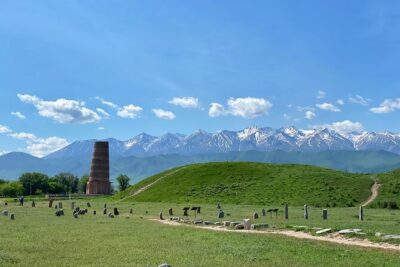
A stop at Burana Tower breaks up the route. The tower is one of Kyrgyzstan’s best-known historic sights, and it gives the opening day some cultural depth before the route turns fully toward the mountains. You also pass through valleys and smaller towns, where the changing scenery helps show how quickly Kyrgyzstan shifts from city life to wide-open country.
You spend the night in a homestay. That matters because the first evening is not a resort-style arrival. It is a practical overnight stop that puts you closer to the high valleys ahead.
The drive is long, and you should prepare for it with water, snacks, and clothing that can handle changing temperatures. The included transport is valuable here. Arranging a private vehicle and driver for this route would be a major task on your own.
Day 2: Bosogo Pass and the wide Ak-Sai Valley
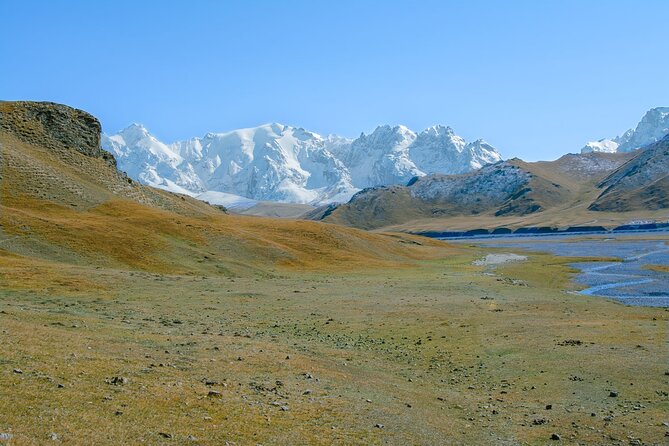
From Naryn, the road climbs through the switchbacks of Bosogo Pass. After about 140 kilometers, you reach the Kok-Kiya Valley area, with the drive taking about three hours.
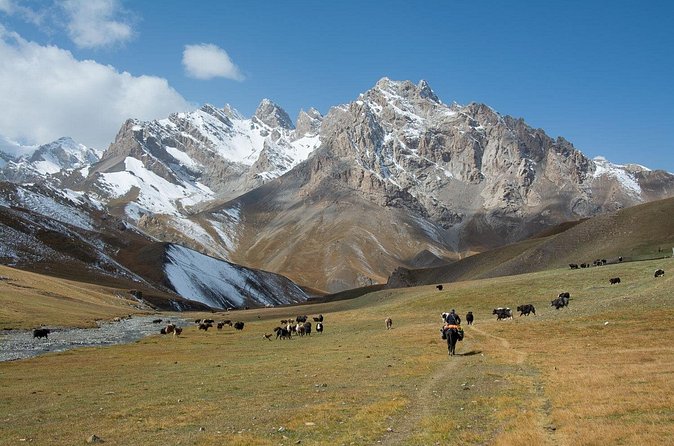
This is where the trip starts to feel remote. The Ak-Sai Valley opens out beneath snow-capped peaks, and the scale changes from settled valley to broad mountain country. The road itself is part of the experience, with bends, open views, and a growing sense that you are moving beyond ordinary sightseeing routes.
You have time to settle into the high country before the riding begins. That is useful for checking your equipment, meeting the horseman, and adjusting to the colder conditions.
The tradeoff is comfort. A high mountain valley can feel exposed, and the weather may change quickly. The tour requires good weather, so flexibility is part of the deal. If conditions make the route unsafe, the operator may offer another date or a full refund.
Day 3: A 13-kilometer ride through Kok-Kiya Valley
After breakfast, you meet your horse and receive a short riding briefing from the guide. The day covers about 13 kilometers, with an ascent of 514 meters and a descent of 414 meters. Riding time is listed at about six hours.
The trail follows rivers and winds through the valley. This is an important first riding day because you learn how the horse responds, how the group moves, and what the mountain terrain feels like from the saddle.
Do not judge the distance by the number of kilometers. At altitude, a 13-kilometer ride with significant climbing can feel like a full day. You need enough balance and stamina to stay comfortable in the saddle, especially on uneven ground.
The short riding briefing is helpful, but it is not a substitute for experience. The tour asks for moderate physical fitness, and you should be honest with yourself about that. If you have never ridden for several hours, expect sore muscles and a slower adjustment.
This is also one of the best days for noticing the rhythm of the route. You are not racing from one attraction to another. You follow the horse, the trail, and the valley. That pace is a major part of the appeal.
More Horse Riding Tours in Bishkek:
- 4 Days Issyk Kul & Chon Kemin with Nomadic Stay, Horse riding
★ 5.0 · 41 reviews - 3 Days Issyk Kul lake & Chon Kemin: Eagle show, horse riding
★ 5.0 · 33 reviews - 2-Days in Song Kul Lake as Nomad – horseback riding & Yurt stay
★ 5.0 · 33 reviews - Horseback riding on the mountains of Chon Kemin National Park
★ 5.0 · 31 reviews
Day 4: Crossing Car Pass at 3,791 meters
The next riding day covers about 18 kilometers. You climb 470 meters and descend 488 meters, crossing Car Pass at 3,791 meters before continuing toward Kel-Suu Lake.
This is likely the most demanding part of the ride. The high pass gives you broad views over the surrounding mountains, but the altitude brings cold air and possible fatigue. The route is thrilling because of its scale, yet it is also where you will feel the physical cost most clearly.
You should pack layers that you can add or remove easily. Gloves, a warm hat, sun protection, and sturdy shoes are sensible choices, but the tour specifically excludes a helmet and sleeping bag, so those are your responsibility.
The horse does much of the work, but that does not make the day effortless. You still need to mount, balance, hold your position, and manage the effects of wind and cold. I would treat this day as an outdoor expedition rather than a casual horseback outing.
Day 5: Reaching Kel-Suu Lake by horse
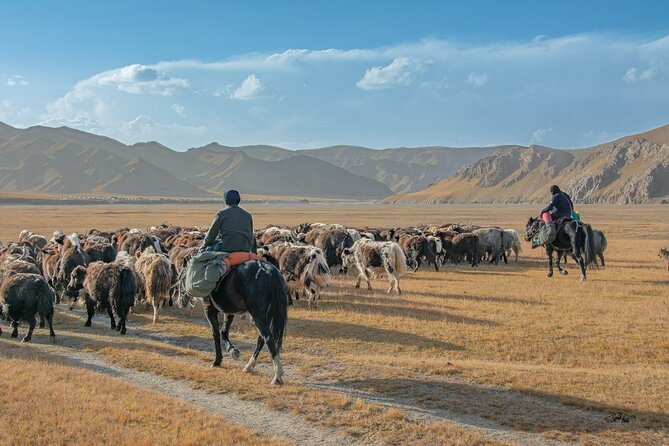
The final riding section covers about 12 kilometers and takes about three hours. The ascent and descent are smaller than the previous days, at 180 and 261 meters, which gives you more time to focus on the lake itself.
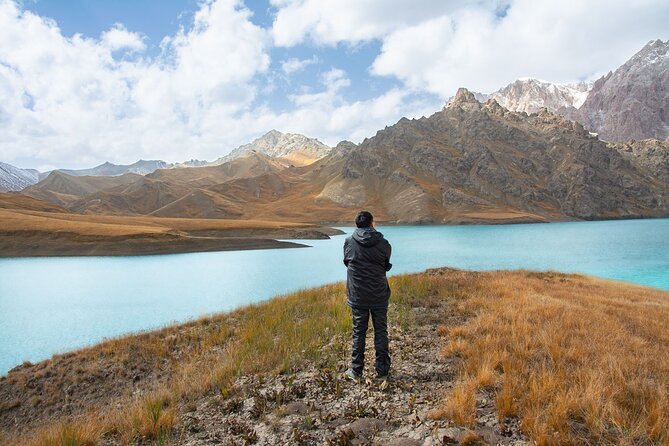
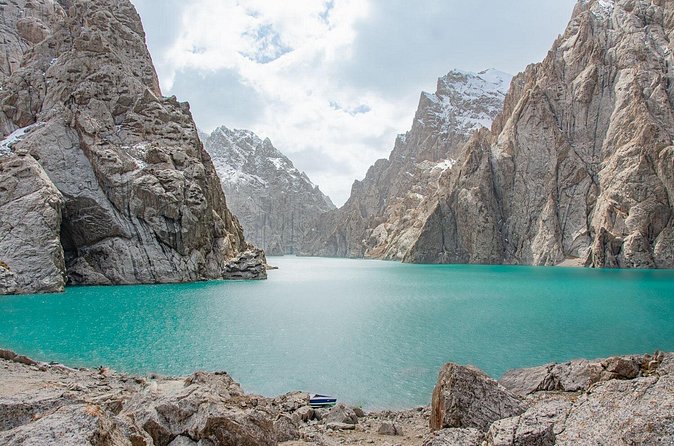
Kel-Suu is the visual payoff. Its turquoise water sits among dramatic cliffs in a remote alpine setting. The atmosphere is quiet and spare, and the lake feels far removed from the roads and towns you passed earlier.
You arrive by horse rather than by a large sightseeing vehicle. That gives the lake a stronger sense of arrival. You have worked your way toward it through the valley, rather than simply stepping off a bus at a viewpoint.
After the ride, the plan includes about 140 kilometers of driving. That combination is worth noting. Day 5 is not only a relaxed lake visit. It includes riding and a substantial road transfer, so the schedule can feel full.
The information provided does not set out a detailed lake-side activity schedule, so you should not assume a long boat trip, a swim, or a full day of free time. The clear promise is the ride to the lake, the scenery, and time in this remote region.
Day 6: Returning to Bishkek
After breakfast, you begin the 315-kilometer return drive to Bishkek. The listed drive time is about five hours, with scenic stops for breaks and photos, and arrival is expected by early afternoon.
The return is not glamorous, but it is efficient. You finish the route without adding another overnight, which is helpful if you have onward plans in Bishkek.
The long distance also shows why this tour is hard to organize casually. Kel-Suu is not a simple weekend side trip from the capital. The included driver, vehicle, route planning, and border permit remove several practical headaches.
What the price includes, and what it does not
The $1,400 price includes transport to and from Bishkek, horses, a horseman, a tent, mats, gas, cooking dishes, staff meals, a border permit, and five breakfasts, five lunches, and five dinners.
That is a substantial package. The food and equipment matter because there are no ordinary restaurants or full-service lodges along the riding route. The border permit also matters because the lake is in a sensitive border region, and handling that requirement yourself could be difficult.
You should budget for the items left out:
- Sleeping bag
- Helmet
- Bottled water
- Coffee, soda, and alcoholic drinks
- Travel insurance
- Personal expenses
The lack of a sleeping bag is the most important practical omission. Ask the operator what temperatures to expect and bring a suitable bag for high mountain nights. A helmet is also your responsibility, and I would not treat it as optional on a multi-day ride.
Accommodation varies by stage. The first night is listed as a homestay, while the mountain portion uses camping equipment and traditional yurt settings as part of the route. Confirm the exact sleeping arrangements before departure if you need a particular level of comfort.
The guide, driver, and small-group advantage
Sanjar is the named guide, and his role is central to the experience. He brings route knowledge, humor, and day-to-day support, which matters when the group is tired or the weather shifts.
Milran is the named driver for the road sections. A friendly, capable driver makes a real difference when you spend long hours on mountain roads. The horseman handles the animals and helps keep the riding section organized.
With a maximum of eight people, the group is small enough for direct contact with the guide. That also makes it easier to discuss riding ability, pace, and comfort. A small group cannot remove the physical demands, but it can make the experience feel less mechanical.
Who should book this horse trek?
I would choose this tour if you want remote scenery, a real multi-day ride, and a close look at Kyrgyz mountain life. It suits people who are comfortable with basic camping, long drives, changing weather, and several hours in the saddle.
It is less suitable if you want hotel comfort, short transfers, or a flexible schedule with plenty of downtime. The high passes and riding distances call for moderate fitness, and the lack of included sleeping bags and helmets means you must prepare properly.
The tour is also a good fit for someone who wants support with complicated logistics. Transport, horses, meals, a horseman, and the border permit are already arranged. You pay more, but you avoid piecing together a remote route on your own.
Booking is available from July 1 through September 15, 2026. The experience requires good weather and a minimum number of participants, so keep some flexibility in your plans.
FAQ
Where does the tour start and finish?
It starts at 573 Frunze Street in Bishkek, Kyrgyzstan, and ends back at the same meeting point.
How long is the Horse Trek to Kel-Suu Lake?
The experience lasts approximately six days.
How much does the tour cost?
The listed price is $1,400 per person.
How many people can join the tour?
The maximum group size is eight people.
Is pickup available?
Yes. Transport from and to Bishkek is included, and pickup is offered.
What meals are included?
Five breakfasts, five lunches, and five dinners are included.
Are horses and riding support included?
Yes. The tour includes horses and a horseman, along with a riding briefing from the guide.
Do I need to bring a sleeping bag and helmet?
Yes. Sleeping bags and helmets are not included, so you need to provide them yourself.
Can I cancel for a full refund?
You can cancel at least 24 hours before the start time for a full refund. Cancellations or changes made less than 24 hours before departure are not accepted for a refund. The operator may also offer a new date or full refund if poor weather or insufficient participation cancels the experience.
Should you book the Kel-Suu horse trek?
Book it if Kel-Suu itself is the goal and you want to reach it through valleys, horses, high passes, and local camps rather than by taking the shortest route. The combination of turquoise water, Car Pass at 3,791 meters, small-group guiding, and Kyrgyz hospitality gives the journey real substance.
Skip it if you want an easy scenic outing or are not ready to carry personal cold-weather gear and ride for several hours a day. For prepared riders who accept basic conditions, the price buys more than a view. It buys access to a remote corner of Kyrgyzstan with the difficult planning already handled.
Just added around Bishkek
- Chunkurchak Day Tour: Sky Bridge, Horse Riding and Archery★ 5.0 · 14 reviews
- Year-Round Adventure: 3 Days Horse Trek to Song Kul Lake★ 5.0 · 16 reviews
- 4 Days Issyk Kul & Chon Kemin: Horse Riding and Nomadic Yurt Stay★ 5.0 · 4 reviews
- Scenic Horse Riding tour to Chon Kemin Valley★ 5.0 · 3 reviews
- From Bishkek Horse Riding in Arashan Mountains★ 5.0 · 4 reviews
- 2-Day Adventure: Horseback Riding, Konorchek Canyons & Yurt Stay★ 5.0 · 2 reviews
- A superb horse riding in Chon Kemin valley, 1 day★ 5.0 · 27 reviews
- 2 Days Issyk Kul Lake Canyons Horse Riding and Yurt Stay★ 5.0 · 24 reviews
Bishkek Horse Riding Tours, compared.
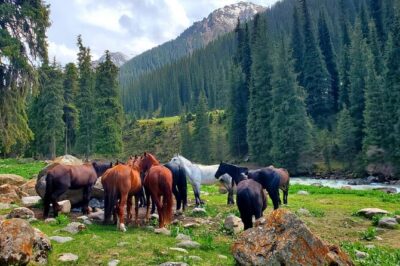
4 Days Issyk Kul & Chon Kemin with Nomadic Stay, Horse riding
Read our review →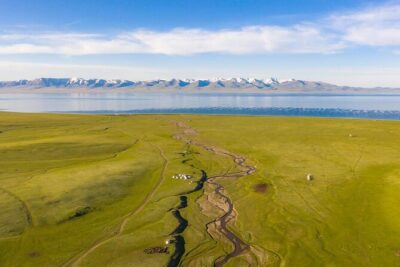
2-Days in Song Kul Lake as Nomad – horseback riding & Yurt stay
Read our review →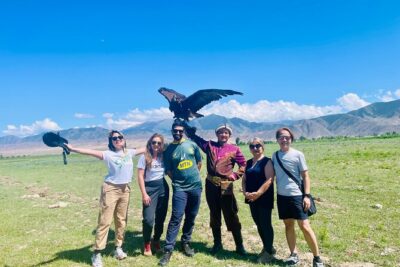
3 Days Issyk Kul lake & Chon Kemin: Eagle show, horse riding
Read our review →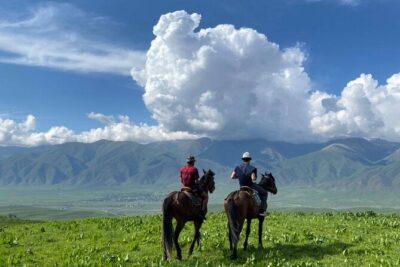
Horseback riding on the mountains of Chon Kemin National Park
Read our review →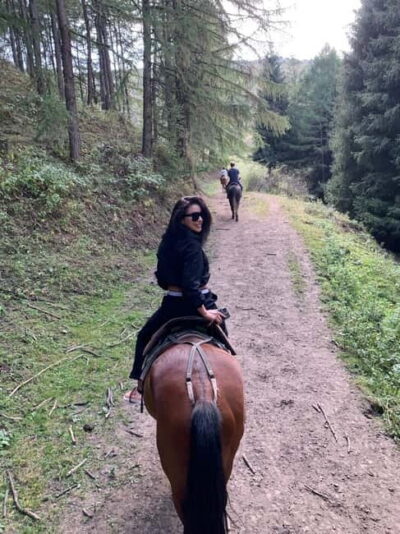
A superb horse riding in Chon Kemin valley, 1 day
Read our review →
2 Days Issyk Kul Lake Canyons Horse Riding and Yurt Stay
Read our review →
Year-Round Adventure: 3 Days Horse Trek to Song Kul Lake
Read our review →Browse the lists this tour appears in