
Review · CHARLESTON HORSE RIDING TOURS
Charleston: Downtown Horse-Drawn Carriage Tour
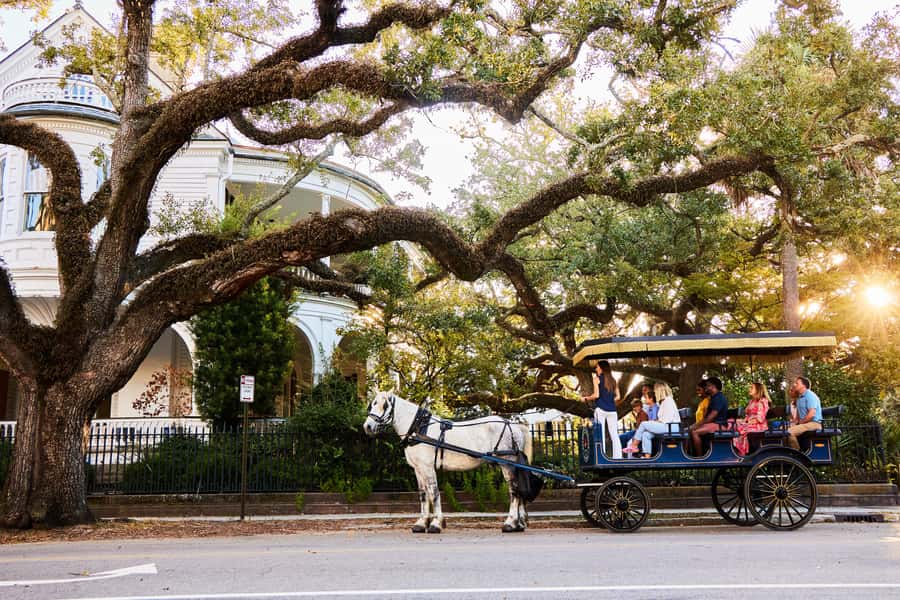
Charleston’s old residential streets make far more sense at a horse’s pace. From the carriage, you can take in grand homes, church steeples, gardens, and moss-draped oaks while your guide explains how the city developed. It is an easy, pleasant way to get your bearings early in your stay.
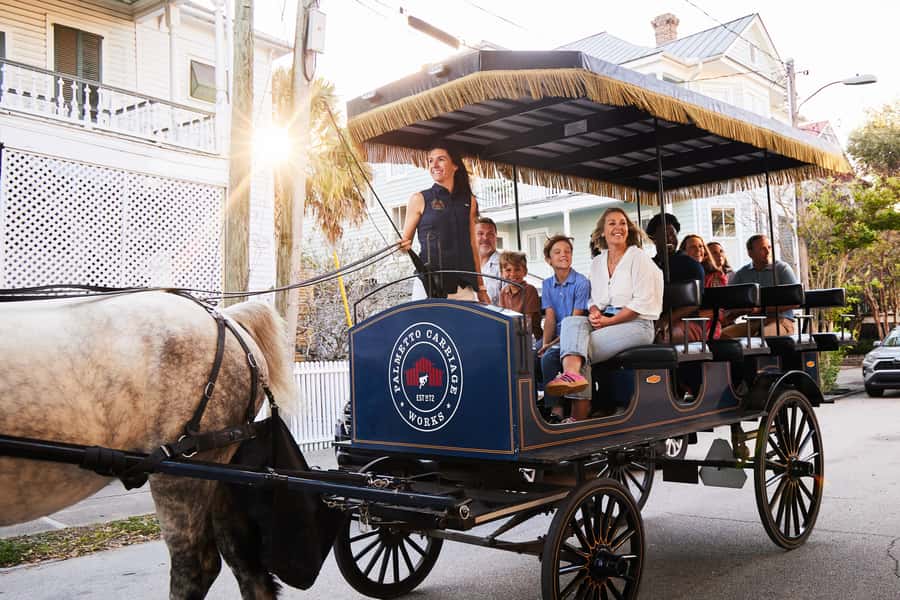
I like the mix of scenery and storytelling, especially when guides such as Jeremy, Sims, Scott, Blake, and Van add humor to the facts. I also like the care given to the horses and the polished setup at Palmetto Carriage Works. The main drawback is that carriage routes can vary, so you are not guaranteed to pass every famous street, including Rainbow Row.
Key points to know before booking
- One hour through downtown: The tour gives you a broad first look at Charleston without taking up half a day.
- Licensed English-speaking guide: Expect local stories, historical context, humor, and time for questions.
- A slow view of residential Charleston: Mansions, gardens, churches, parks, and older homes are the main sights.
- Route choice matters: The company uses different routes, so a particular landmark may not appear on your ride.
- Comfort depends on the weather: Blankets have been available on cold rides, while water can be useful on hot days.
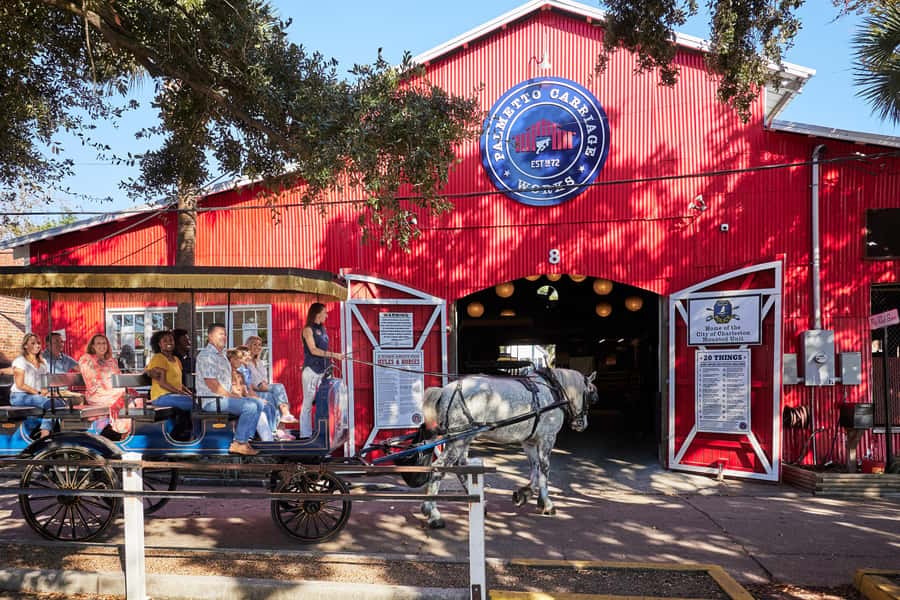
- Easy central meeting point: Meet at the big red barn at Palmetto Carriage Works, with paid parking at 22 Anson Street.
Why a carriage is a smart first look at Charleston
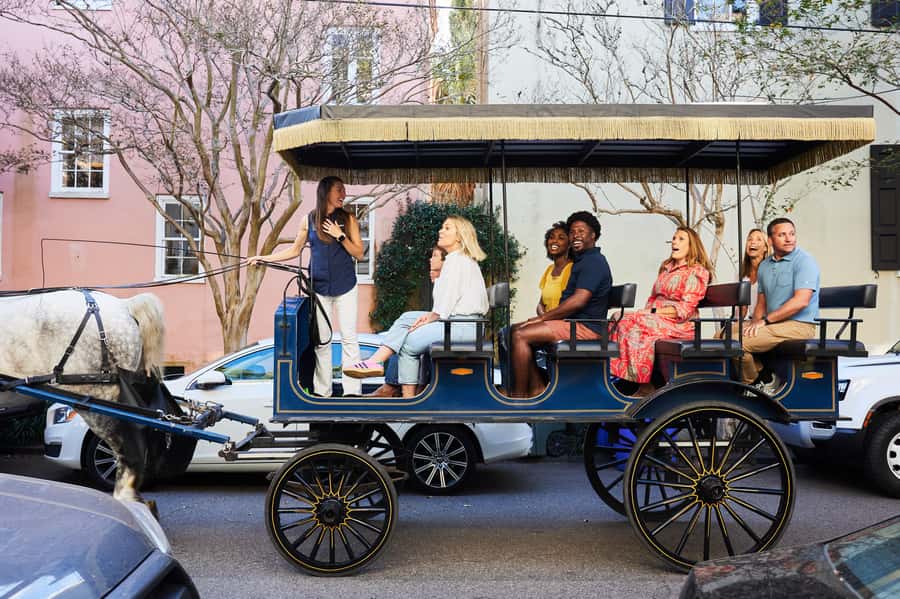
Charleston rewards slow sightseeing. Its best details are often above eye level or tucked behind iron gates: a carved doorway, a narrow balcony, a formal garden, or a church steeple framed by live oaks. A horse-drawn carriage keeps you moving slowly enough to notice these things without asking you to walk several miles in the heat.
I see this tour as an orientation ride rather than a complete study of Charleston. In one hour, you get a sense of the city’s layout, architecture, and public spaces. You also hear the basic stories that give meaning to what you see on later walks.
The pace is part of the appeal. You are not rushing from one stop to another or checking off a long list of attractions. Instead, the carriage moves through the historic downtown district while the guide points out houses, gardens, churches, and parks. That makes the tour especially useful at the beginning of a Charleston visit.
It also works well for families and anyone who wants a gentler way to see the center. The carriage ride is relaxing, and the guide provides the context that you would miss by simply walking past the buildings on your own.
More Horse-Drawn Carriage Tours in the USA
- Charleston’s Old South Carriage Historic Horse & Carriage Tour
★ 5.0 · 10,023 reviews - Haunted Evening Horse and Carriage Tour of Charleston
★ 4.5 · 3,678 reviews - Charleston Horse-Drawn Carriage Tour: Explore Historic Charleston
★ 5.0 · 3,561 reviews
Starting at the red barn on Anson Street
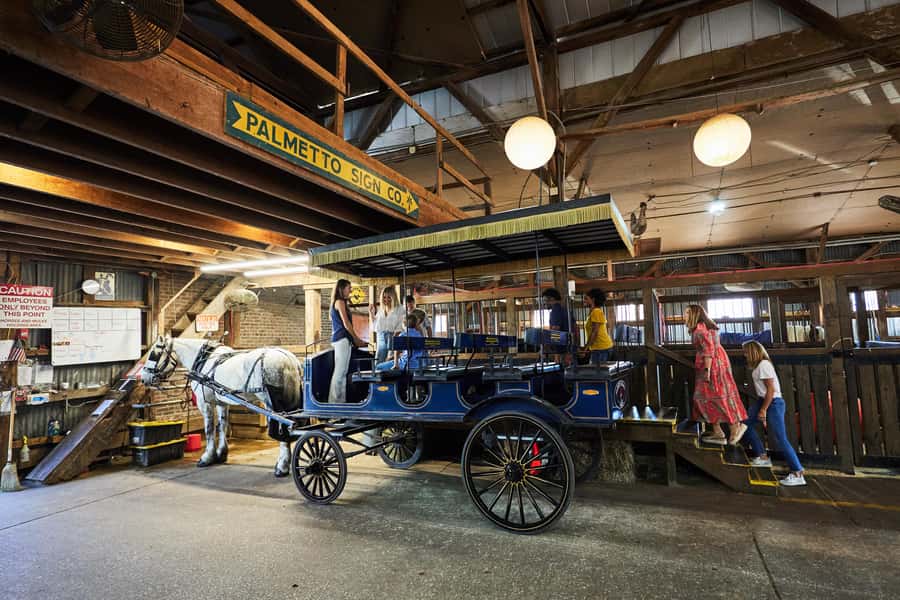
Your tour begins at Palmetto Carriage Works, where you meet by the big red barn. This is also where the ride ends, so there is no need to arrange a second pickup point or figure out where to go afterward.
Paid parking is available at 22 Anson Street, Charleston, South Carolina 29401. The location is also close enough to reach on foot from the cruise terminal, with one ride described as roughly a 10-minute walk. If you are arriving by car, allow time to park and reach the barn before departure.
The staging area matters more than it may seem. You are not simply flagging down a carriage on a random downtown corner. The company has a dedicated setting with staff, horses, and carriages ready for the ride. Several riders appreciated the professional feel of the facilities and the apparent care given to the animals.
You may be offered water while waiting in the staging area. On a hot day, I would still bring your own bottle for the carriage itself. On a cold day, blankets may be available, but dress for the temperature rather than counting on the carriage to provide all your warmth.
Riding through Charleston’s historic residential district
Once aboard, the carriage heads into downtown Charleston for a guided circuit lasting about an hour. The exact route can vary. That is an important point because a carriage tour does not promise a fixed parade of landmarks.
You might pass a different collection of streets from one ride to the next. One route may include a familiar sight, while another may leave you wanting to return on foot. Rainbow Row, for example, was not included on one ride, and the riders later visited it independently.
That flexibility has both good and bad sides. It allows the company to manage the operation across downtown and gives you a broader chance of seeing different residential areas. At the same time, you should not book this experience solely to reach one specific house or street.
The main reward is the overall picture. You see how Charleston’s older homes relate to its churches, parks, gardens, and streets. The horse’s slow pace gives you time to look up, listen, and take photographs without the hurried feel of a bus tour.
Houses, gardens, and the details between them
Charleston’s homes are the visual center of the ride. Expect to see older houses, large mansions, and buildings with architectural details that your guide explains along the way. The point is not simply to admire attractive facades. Your guide helps connect the design of a building to the city’s past and to the people who shaped it.
The gardens add another layer. From the carriage, you can glimpse planted courtyards, flowers, and greenery behind gates and walls. These views are brief, but they help explain why Charleston feels different from a modern American city built around wide roads and large parking areas.
You will also pass churches and parks. The church steeples are more than pretty landmarks, since they point to the religious traditions that have long shaped the city. Parks break up the dense historic blocks and give you a sense of the public spaces used by the local community.
I recommend sitting where you can see and hear well. The back row can be harder for some people when the carriage is moving, and one rider found the guide difficult to hear from there. Some guides use microphones, but that is not guaranteed on every carriage. If hearing every detail matters to you, ask staff about seating before departure.
More Horse-Drawn Carriage Tours in Charleston:
- Charleston: Historical Downtown Tour by Horse-drawn Carriage
★ 4.8 · 1,009 reviews - Charleston’s Historic Residential Horse and Carriage Tour
★ 4.5 · 668 reviews - Charleston Horse & Carriage Historic Sightseeing Tour
★ 4.5 · 460 reviews - Private Daytime Horse-Drawn Carriage Tour of Charleston
★ 5.0 · 340 reviews
The guide makes or breaks the hour
The carriage is charming, but the guide determines how much you take away. Palmetto Carriage Works uses licensed English-speaking guides who explain Charleston’s past and present while keeping the ride conversational.
The best guides combine facts with personality. Jeremy was praised for his stories about Charleston, while Sims was singled out for a friendly, personal style. Scott received similar praise, and Blake was noted for keeping everyone informed throughout the ride. Van was described as both fun and informative.
These names do not guarantee who will lead your departure, but they show the kind of guiding style you can expect: local history mixed with humor and conversation. Guides also answer questions, so you are not limited to a prepared speech.
A good guide helps you understand the city rather than simply naming buildings. You may hear about architecture, local traditions, contemporary Charleston, and the cultural forces that shaped the city. The most useful tours connect those subjects instead of treating history as a string of dates.
There is room for improvement in the depth of cultural coverage. One rider wanted more attention to African American contributions to Charleston’s buildings, culture, and development. That is a fair consideration if you are seeking a fuller account of the city. The tour offers historical and cultural discussion, but one hour naturally limits how much any guide can cover.
Horses, comfort, and the feel of the ride
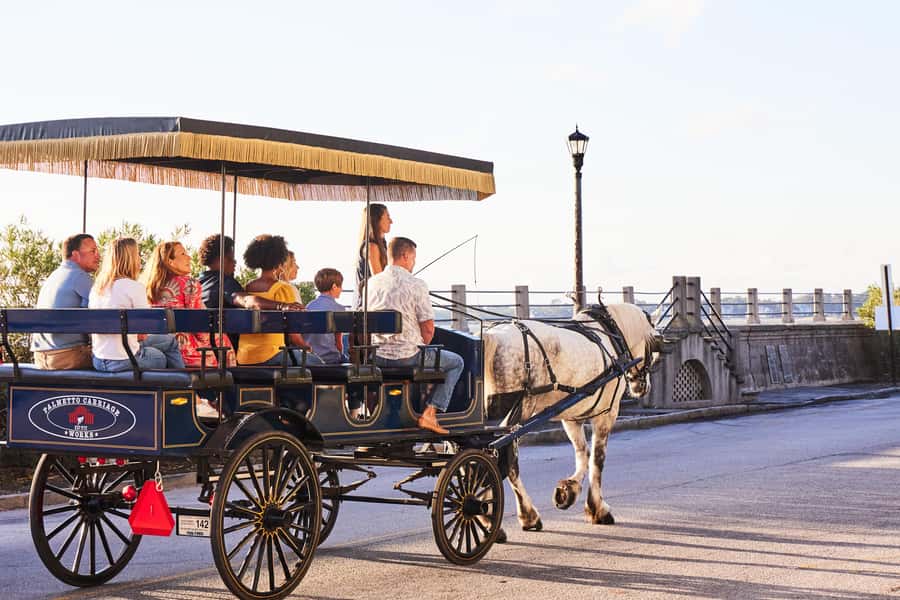
The horse is not just transportation. It sets the tone. The carriage moves at an unhurried pace, allowing you to watch the streets rather than pass them in a blur. Some riders also remember the horses by name, including Goober, Melodie, Bezos, and DiBlazio.
The horse and guide work as a pair. You get the historical commentary from the person driving, along with the quieter pleasure of being pulled through downtown by a working animal. The setup feels old-fashioned without cutting you off from the modern city around you.
The company’s stable and facilities appear well maintained, and care for the horses is a major part of the experience’s appeal. That does not turn the ride into an animal-care visit, but it is reassuring to see a professional operation behind the carriage.
Weather is the practical issue. Charleston can be hot, and a carriage ride in full sun may feel warmer than expected. Bring water, wear light clothing, and consider a hat. Cold weather brings the opposite concern, although blankets may be available.
The carriage is wheelchair accessible, which makes this a useful option for people who cannot comfortably manage a long walking tour. You should still confirm the exact arrangement when booking if you have specific mobility needs, since carriage access can vary by vehicle.
Is $50 a fair price for one hour?
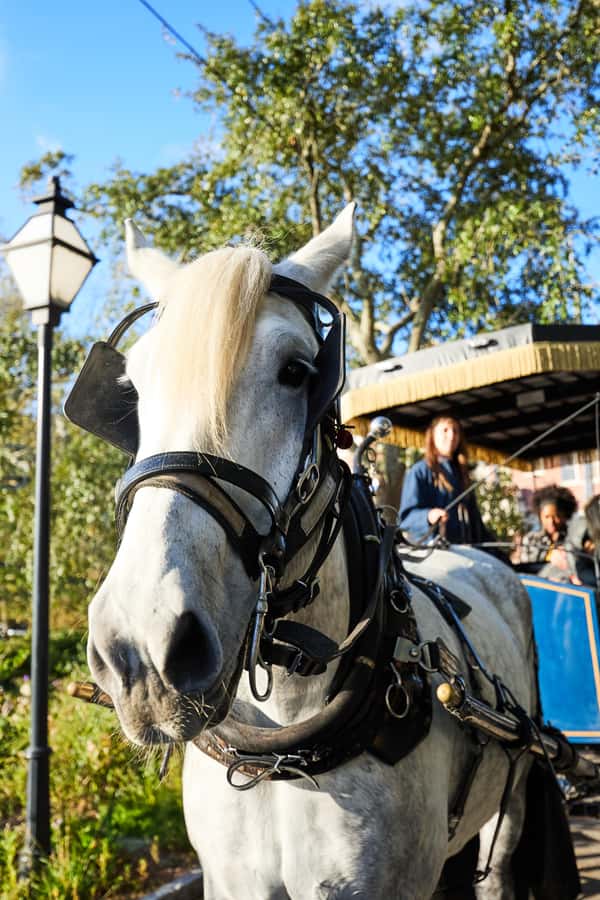
At $50 per person, this is not the cheapest way to see Charleston. You are paying for the carriage, the horse, the licensed guide, the central departure point, and the chance to cover a wide section of downtown without walking the whole way.
The value depends on what you want. If you only need transportation, the price will feel high. If you want a pleasant orientation with history, architecture, and local stories, the cost is easier to justify.
I think the ride offers its best value at the start of a trip. After one hour, you have a map in your head. You can decide which streets, churches, parks, and homes deserve a closer walk. That saves you from wandering without context on your first day.
It is also good value for families or small groups who want one shared activity. The experience is simple to understand, does not require strenuous walking, and gives everyone a common introduction to the city.
The price is less compelling if you expect entry into houses, formal gardens, or churches. This is a passing tour. You see the exteriors and hear about the places, but the experience does not include separate admissions or extended stops.
How the route fits into a Charleston day

Book this near the beginning of your stay if you can. A carriage tour gives you a useful overview before you spend time exploring on foot. You can mark down streets and buildings that you want to revisit, then return with more time and purpose.
After the tour, you are back at Palmetto Carriage Works. From there, you can continue around downtown, return to your accommodation, or head toward another planned activity. Since the ride lasts only one hour, it is easy to fit into a busy schedule.
The tour also works well on a cruise stop because the meeting point is within walking distance of the cruise terminal. Keep enough time for the walk, the scheduled start, and your return to the ship. The provided information confirms the approximate walk from the terminal, but you should still allow extra time for your own pace.
Do not plan your day around seeing every major Charleston landmark from the carriage. The route is selected by the operating company and can change. Use the ride as a city introduction, then visit must-see spots separately if they are not included.
Who will enjoy this carriage tour?
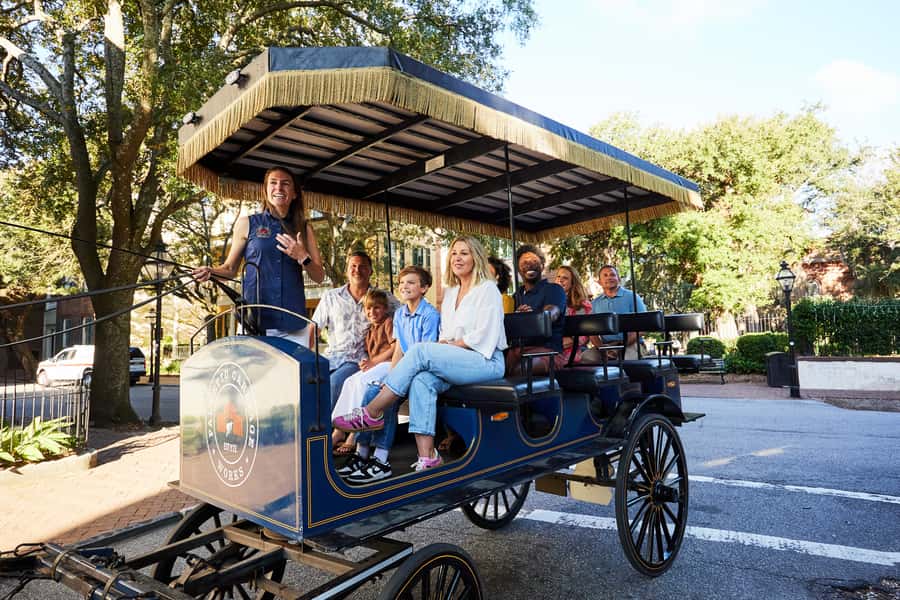
I would recommend it to first-time visitors who want a clear introduction to downtown. It is also a good fit for families, older adults, people who prefer limited walking, and anyone who likes history delivered with humor instead of a formal lecture.
Architecture fans will enjoy the homes, gardens, and churches. Photographers may appreciate the slow pace, although the carriage keeps moving and does not promise long stops at each view.
This is also a sound choice for people who want a relaxed activity. You sit, listen, and watch the city pass by. The ride has enough structure to feel worthwhile but not so much information that it becomes an exhausting class.
I would be more cautious if you want a detailed treatment of African American history, a guaranteed route past Rainbow Row, or access inside historic buildings. You may still enjoy the tour, but you should add separate visits and walking time to cover those interests properly.
Booking, cancellation, and practical details
The tour costs $50 per person and lasts one hour. Starting times depend on availability, so check the schedule before building the rest of your day around it.
You can cancel up to 24 hours before departure for a full refund. The reserve-now, pay-later option also lets you hold a place without paying immediately, which is useful when your Charleston plans are still changing.
The guide language is English. Alcohol and drugs are not allowed. The activity includes the horse carriage ride and guide, with no separate attraction admissions listed.
Should you book the Palmetto Carriage Works ride?
Book it if you want a calm, scenic introduction to Charleston with a guide who can connect houses, churches, gardens, parks, and local culture. The one-hour length is convenient, the central meeting point is practical, and the horse-drawn format gives you a memorable way to see the old residential district.
Go in with the right expectations. This is not a fixed landmark checklist or a substitute for walking through every historic street. Routes vary, some seats may make hearing harder, and the city’s African American story may deserve more time than one carriage ride can provide.
For most first-time visits, I would take this tour early, listen closely, note the places you want to explore later, and treat the ride as your opening chapter in Charleston.
FAQ
How long is the Charleston carriage tour?
The guided carriage ride lasts one hour. Check availability for current starting times.
Where does the tour begin?
Meet by the big red barn at Palmetto Carriage Works in downtown Charleston.
Where does the tour end?
The carriage returns to Palmetto Carriage Works, the same place where the activity begins.
How much does the tour cost?
The price is $50 per person.
What does the tour include?
The experience includes the horse-drawn carriage ride and a live guide.
Is the tour wheelchair accessible?
Yes, the activity is listed as wheelchair accessible.
Can I cancel and receive a refund?
Yes. You can cancel up to 24 hours in advance for a full refund.
Just added around Charleston
- Charleston, SC: Private Daytime Horse-Drawn Carriage Ride★ 4.8 · 17 reviews
- Charleston: Haunted Horse-Drawn Carriage Evening Tour★ 4.7 · 48 reviews
- Private Evening Carriage Tour Charleston – Palmetto Carriage★ 5.0 · 65 reviews
- Private Historic Horse & Carriage Tour of Charleston★ 5.0 · 103 reviews
- Charleston Haunted Horse and Carriage Evening Tour★ 4.5 · 253 reviews
- Private Daytime Horse-Drawn Carriage Tour of Charleston★ 5.0 · 340 reviews
- Charleston Horse & Carriage Historic Sightseeing Tour★ 4.5 · 460 reviews
- Charleston’s Historic Residential Horse and Carriage Tour★ 4.5 · 668 reviews
Charleston Horse Riding Tours, compared.
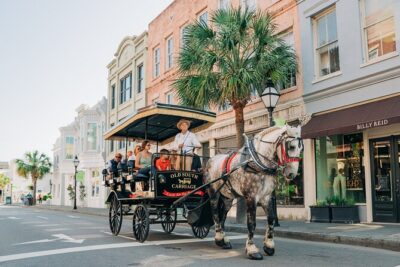
Charleston’s Old South Carriage Historic Horse & Carriage Tour
Read our review →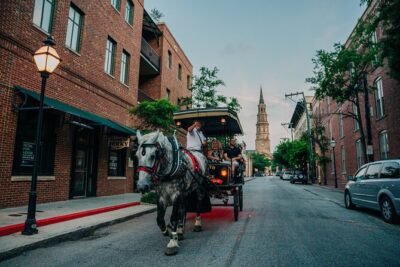
Haunted Evening Horse and Carriage Tour of Charleston
Read our review →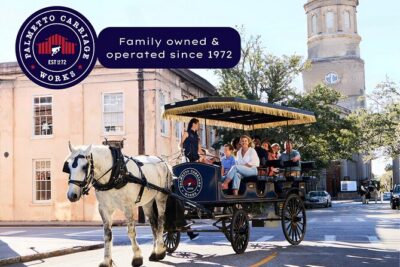
Charleston Horse-Drawn Carriage Tour: Explore Historic Charleston
Read our review →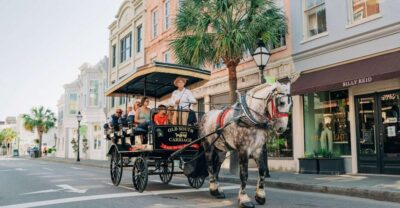
Historical Downtown Tour by Horse-drawn Carriage
Read our review →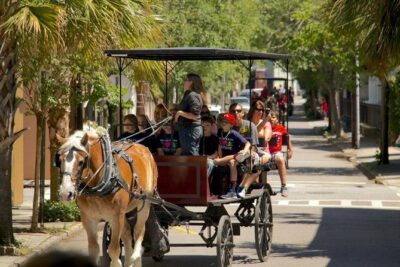
Charleston’s Historic Residential Horse and Carriage Tour
Read our review →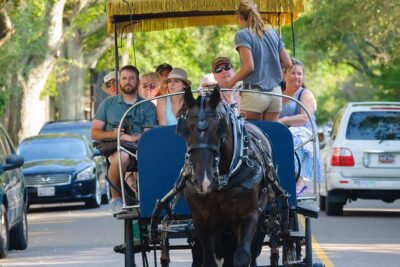
Charleston Horse & Carriage Historic Sightseeing Tour
Read our review →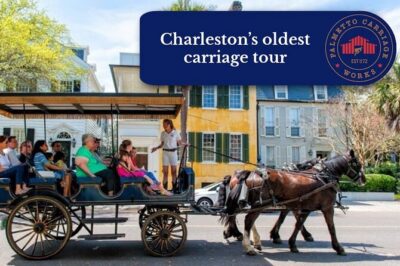
Charleston Haunted Horse and Carriage Evening Tour
Read our review →Browse the lists this tour appears in