
Review · MOUNTAIN & FOREST TRAIL RIDES
2 Hour Monument Valley Horseback Tour
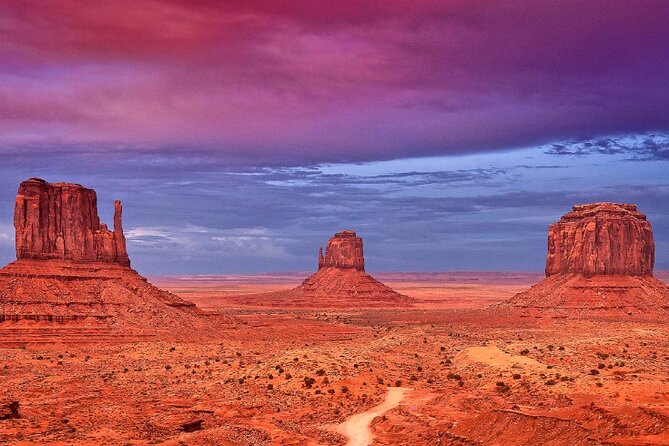
Monument Valley looks familiar from films and photographs, but seeing the red buttes from the back of a horse changes the scale. You move through washes and gullies that cars cannot reach, with the West and East Mittens, Merrick Butte, and Sentinel Mesa rising around you like a Western film set.
I like the small group size and the chance to ride with a Navajo guide who may share local stories, movie connections, plants, and family heritage. I also like that the guides take photos, provide helmets and cowboy hats, and match horses to your size and experience.
The main caution is time. Several bookings sold as two hours included saddling and preparation, or finished well before the promised time. The ride itself is usually slow and calm, which suits beginners, but you should confirm the planned riding time before leaving the stable.
Key points for deciding if this ride fits
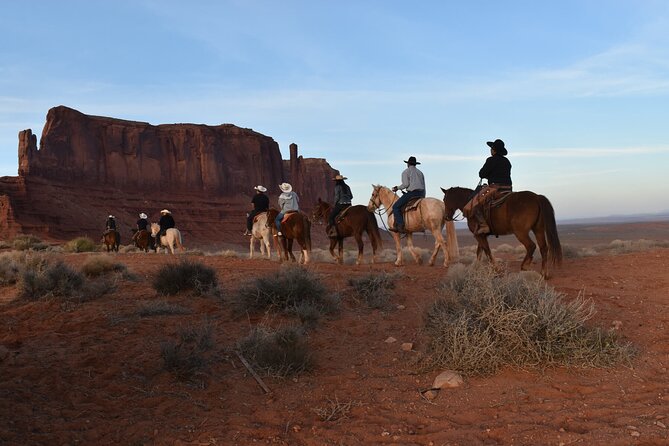
- Ride close to the Mittens: The route brings you near Monument Valley’s most famous buttes and into sandy washes that are difficult to reach by car.
- Small groups matter: The advertised maximum is four people, allowing more personal help with horses, balance, and photos.
- Good for first-time riders: The horses are generally described as gentle, and the pace is slow rather than a trot or gallop.
- Navajo-led experience: Guides such as Logan, Marco, Ranger, Nelson, Adam, and Ezekiel have led rides, with some sharing stories about Navajo heritage and the area.
- Budget for the park fee: The $110 tour price does not include the $20 Monument Valley Navajo Tribal Park entrance fee.
- Ask about the clock: Preparation can reduce actual saddle time, and some rides have returned early.
Riding into Monument Valley instead of driving through it
At $110 per person, this is not the cheapest way to see Monument Valley. You also pay the separate $20 park entrance fee, and food, drinks, and private transport are not included. Still, the price can make sense if your priority is getting away from the road and reaching sandy channels, dry creek beds, and gullies that a vehicle cannot enter.
A drive gives you a broad look at the valley. A horse gives you time to notice the ground beneath you. The pace is quiet and steady, and you are not looking through a windshield or stopping only at formal viewpoints. For many people, that shift is the whole point.
The tradeoff is that the ride is not a fast sightseeing circuit. You will not trot or run. Marco, one of the guides, is specifically associated with a very calm pace, and that is typical of the outing. If you want speed or technical riding, this is not the right choice. If you want a relaxed western-style ride with time for photographs, the pace works well.
The booking is often made far ahead, with an average lead time of about 83 days. That is a useful signal for planning, especially if your Monument Valley visit falls on a busy date. The advertised group limit of four also makes this more intimate than a large coach tour, though you should confirm the size of your particular departure.
More Mountain and Forest Trail Rides in the USA
- West Maui Mountain Waterfall and Ocean Tour via Horseback
★ 5.0 · 845 reviews - Monument Valley: Horseback Adventure Tour
★ 4.4 · 715 reviews - Orderville: East Zion Park White Mountain Horseback Tour
★ 4.8 · 400 reviews
Finding Sacred Monument Tours near The View Hotel
The stable is at Sacred Monument Tours on Main Monument Valley Road, close to The View Hotel Premium Cabins and the park Visitor Center area. You can drive or walk toward the hotel cabins, then follow the path at the end of the road to the horse stable.
This is a practical departure point because it keeps the tour close to the main Monument Valley visitor area. You do not need a separate private transfer, and the activity returns to the same meeting point. Private transportation is not part of the price, so you are responsible for reaching the stable yourself.
Allow enough time to find the path and arrive ready for the paperwork. The first part includes meeting your Navajo guide, signing a waiver, choosing or being assigned a suitable horse, and receiving a safety briefing. The formal itinerary gives this preparation about 15 minutes, but actual timing can vary.
The stable is also where you can take final photographs with the horses and ask questions after the ride. Bring that into your schedule, especially if you have a park viewpoint or meal reservation afterward. A tour described as two hours may take longer from arrival to departure if the horses still need to be saddled.
Choosing a horse and getting ready to ride
The operator offers a selection of horses based on your riding experience, skill level, and size. That is important for a mixed group, especially when one person is an experienced rider and another is sitting on a horse for the first time.
You will sign a waiver and receive a safety briefing before setting out. Helmets, cowboy hats, and personal protective equipment are included. You do not need to bring your own riding helmet to take part, though the supplied safety equipment should be used as directed.
The overall tone is beginner-friendly. Several people with little or no riding experience describe calm horses and patient guides. Logan is praised for helping first-time riders, and other guides have been described as steady and attentive. A horse may still have its own mood or little attitude, so listen closely to the guide and follow instructions rather than assuming every animal will behave identically.
There is one serious safety complaint involving a rider who was thrown and injured. That account is not consistent with the many reports of calm horses, but it is worth taking seriously. Horseback riding always carries some risk. Tell the guide honestly about your experience, use the helmet, and speak up if you feel uncomfortable before the group leaves.
The Mittens: Monument Valley’s most recognizable view
The first major part of the ride heads toward the West and East Mitten Buttes. Seen from the south, their shapes suggest two enormous mittens with the thumbs turned inward. These are the formations most closely tied to the classic Monument Valley image.
From horseback, you see the Mittens at a lower, more personal level than from a roadside overlook. The red rock walls and open desert appear to move slowly around you. The route gives the guide time to stop for photographs, and guides commonly take pictures so you do not have to choose between holding the reins and recording the moment.
This is also where the slow pace helps. A fast ride would be exciting, but it would make it harder to compose a photograph or listen to an explanation. The horses usually walk, and the group pauses at scenic points.
The quality of interpretation depends on the guide. Logan, Marco, Ranger, Nelson, Adam, and Ezekiel are among the guides associated with especially positive experiences, with subjects ranging from monument names and film locations to local plants and Navajo heritage. At least one ride was described as quiet, with little explanation, so do not assume every departure will include the same level of storytelling.
Same saddle, a completely different route:
- Charleston’s Old South Carriage Historic Horse & Carriage Tour
★ 5.0 · 10,023 reviews - Haunted Evening Horse and Carriage Tour of Charleston
★ 4.5 · 3,678 reviews - Charleston Horse-Drawn Carriage Tour: Explore Historic Charleston
★ 5.0 · 3,561 reviews - 2-hour Outer Banks Wild Horse Tour by 4WD Truck
★ 5.0 · 2,449 reviews
Merrick Butte and the movie-set feeling
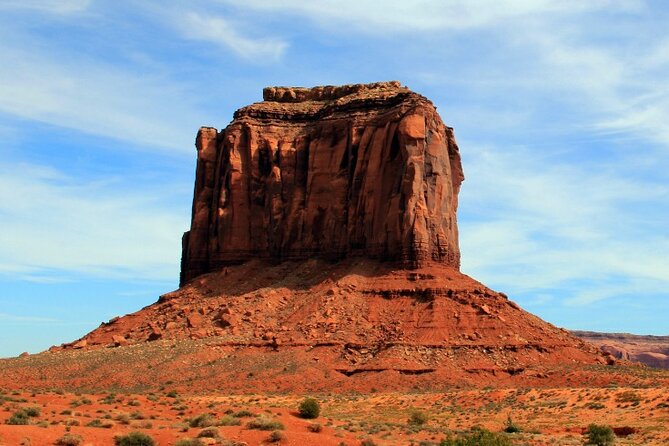
The route also brings you near Merrick Butte, named for the prospector Richard Merrick. The butte rises to about 5,000 feet above sea level and has appeared in well-known Western films.
This is the section that will appeal most to film fans. Riding toward the butte gives you the feeling of entering a familiar Western scene, but without the polished framing of a movie set. You see the butte from changing angles as the horse follows the valley floor.
The ride is not only about famous names. The route may pass through dry creek beds and shallow gullies, giving you a better sense of how water has shaped the valley. That ground-level movement is one reason this can feel more rewarding than a vehicle tour, even though the vehicle covers more distance.
Do not expect a long stop at every formation. The exact route and amount of time at each place can change with weather, the group, and the guide. Photography opportunities are included, but extended or custom stops are not. If you want a special route or a longer visit at one butte, ask before booking rather than assuming the standard ride can be adjusted.
Sentinel Mesa, the valley’s watchtower
Another focal point is Sentinel Mesa, a tall formation often described as the valley’s watchtower. It reaches about 6,200 feet and has long served as a natural landmark for Navajo people and early explorers.
The mesa gives the ride a different visual rhythm from the Mittens. Instead of two balanced shapes, you get a lone vertical mass and wider views across the desert. The guide may stop for photographs, and the open sight lines make this a good place to appreciate how the buttes relate to one another.
The route can move down into a wash and then back up again. Ezekiel’s ride, for example, included the West Mitten, Sentinel Mesa, and a wash, with sure-footed horses handling the changes in ground. That does not mean the ride is strenuous, but you should be comfortable sitting on a horse over uneven desert surfaces.
If your main goal is a long narrated tour about Navajo culture, ask what your guide plans to cover. Some guides share personal stories and heritage, while others focus more on getting the group safely along the route and allowing photo stops. The setting remains impressive, but the educational side may vary.
How long will you actually be in the saddle?
The advertised duration is about two hours. This is the most important point to clarify before you begin.
Some accounts describe a full and satisfying two-hour ride. Others report arriving at 1:30 and not starting until 2:30, then riding for about 90 minutes. A few describe only 45 to 60 minutes of riding before returning. Preparation, saddling, group organization, or an early finish can reduce time on horseback.
That does not make the outing worthless. Even a shorter ride can reach the main monuments and provide a memorable view. But $110 is a significant price if you are expecting two full hours in the saddle.
At the stable, ask two direct questions: What time will we leave on horseback, and what time should we expect to return? If the guide knows you booked the two-hour option, you have a better chance of catching a timing problem before the group sets off. This is especially important if you have limited time in Monument Valley or are booking the ride as a birthday or bucket-list surprise.
Guides, stories, and the human side of the ride
The guides shape this activity as much as the horses do. Nelson has been praised for being kind and for explaining the horses and area. Marco has been described as a young guide who shares local information and singing. Ranger is noted for stories about the valley, while Logan is repeatedly singled out for patience, photographs, and care for less experienced riders.
Some guides share stories about their heritage and their wish to teach visitors about it. That can give the ride a stronger sense of place than a simple horseback loop. You are not only looking at rock formations; you may also hear how the land, plants, films, and Navajo life connect.
Still, service is not perfectly consistent. One account describes a guide who offered little explanation and seemed distracted, while another describes a guide asking for a tip before the ride had begun. Tipping is optional, and the level of service should guide your decision. You should not feel pressured to tip in advance.
Is the $110 price fair?
The price is fair for you if the following matter most: a very small group, a horse selected for your ability, access to areas beyond the vehicle routes, a Navajo-led outing, and photographs taken during the ride. The included helmet, cowboy hat, safety equipment, and guide reduce the need to arrange extra gear.
The price is harder to justify if you receive less than the promised riding time or if you want a detailed cultural tour at every stop. Add the $20 park entrance fee, and the outing costs $130 per person before food, drinks, tips, or transport.
I would compare it with what you want from your Monument Valley day. For a first visit, the horseback ride offers a personal view that complements a scenic drive. For a horse lover, the ride itself may be the main event. For someone interested mainly in photography, a vehicle route may offer more stops and less concern about balance.
The strongest value comes from booking it as an experience, not simply as transportation between monuments. You are paying for the horse, guide, access, pace, and sense of being in the valley. If the operator delivers the full riding time, that package can feel special.
Who should book this ride?
I would recommend it to couples looking for an unusual way to see Monument Valley, families with a horse-loving member, and first-time riders who want a calm introduction. It also suits anyone drawn to Western films and anyone who wants to reach gullies and washes beyond the usual road.
It is less suitable for riders seeking speed, long stretches of trotting, or a private custom itinerary. It may also disappoint you if you need a guaranteed two full hours on horseback and cannot tolerate timing uncertainty. Ask for a clear departure and return time before you commit.
Most people can participate, according to the activity information, but horseback riding still calls for honest self-assessment. Use the safety gear, follow the briefing, and tell the guide about your experience. The tour requires good weather, so poor conditions can lead to a different date or a full refund.
Free cancellation is available up to 24 hours before the start time. Changes or cancellations inside that window are not accepted for a refund. The activity is offered in English and uses a mobile ticket.
Should you book the Sacred Monument Tours ride?
Book it if you want to experience the Mittens, Merrick Butte, and Sentinel Mesa at a slow, ground-level pace, especially if you are new to horseback riding or excited by the old Western-film atmosphere. The horses are generally calm, the groups are small, and guides such as Logan, Marco, Ranger, Nelson, and Ezekiel can add personal stories and useful local detail.
Before paying, confirm that the two-hour option means about two hours of riding, not two hours including saddling. If the answer is clear and the weather looks good, this is a memorable way to see corners of Monument Valley a car cannot reach. If timing and value matter more than the horseback element, choose a different park tour.
FAQ
Where does the horseback tour begin?
The tour begins at Sacred Monument Tours on Main Monument Valley Road in Oljato-Monument Valley, Utah. The stable is reached by heading toward The View Hotel Premium Cabins and following the path at the end of the road.
Where does the tour end?
The activity ends back at the Sacred Monument Tours meeting point and horse stable.
How long is the tour?
The advertised duration is approximately two hours. Preparation and saddling may take part of your overall visit, and the actual riding time can vary, so confirm the schedule with the guide before departure.
How much does the tour cost?
The listed price is $110 per person. The $20 Monument Valley Navajo Tribal Park entrance fee is separate.
Is the park entrance fee included?
No. The Monument Valley Navajo Tribal Park entrance fee is not included in the tour price.
What equipment is provided?
Cowboy hats, helmets, and personal protective equipment are included. A tour guide and photography opportunities are also included.
Is food or drink included?
No. Food and drinks are not included.
How many people can join?
The advertised maximum is four travelers.
Is the tour suitable for beginners?
Most people can participate, and the horses are generally described as gentle and suitable for inexperienced riders. You receive a safety briefing before the ride, but you should tell the guide about your level of experience.
What happens if the weather is poor?
The activity requires good weather. If it is canceled because of poor weather, you will be offered another date or a full refund.
Can I cancel for a full refund?
Yes. You can cancel at least 24 hours before the experience start time for a full refund. Cancellations or changes made less than 24 hours before the start time are not accepted for a refund.
More Two-Hour Rides in the USA
- 2-Hour Horseback Riding through Red Rock Canyon
★ 5.0 · 838 reviews - Los Angeles: 2-Hour Hollywood Trail Horseback Riding Tour
★ 4.7 · 256 reviews - 2-Hour Horse Rides Capitol Reef
★ 5.0 · 35 reviews - 2 Hour Wildflower Horseback Trail Ride experience in Agoura Hills
★ 4.5 · 8 reviews
Just added around the USA
- Private Wild Horse Photo Safari from Tooele★ 5.0 · 52 reviews
- Horseback Riding Experience through Kodachrome with a Guide★ 5.0 · 6 reviews
- 2-Hour Horse Rides Capitol Reef★ 5.0 · 35 reviews
- One Hour Guided Horseback Ride★ 4.5 · 12 reviews
- Classic Horse-Drawn Carriage Tour★ 4.5 · 17 reviews
- Horse Country Estate and Vineyard Wine Tasting Tour★ 5.0 · 2 reviews
- Scottsdale Horseback Riding and Horse Country Estate Tour★ 5.0 · 2 reviews
- Horse Drawn Ghost and Folklore Tour in Savannah★ 4.0 · 14 reviews
Mountain & Forest Trail Rides, compared.
West Maui Mountain Waterfall and Ocean Tour via Horseback
Read our review →
Horseback Riding through Secluded Beaches and Tropical Forests
Read our review →
Mendoza: Sunset Horse Back Riding in the Mountains and BBQ
Read our review →
Orderville: East Zion Park White Mountain Horseback Tour
Read our review →
Sunset Horseback Ride in Macao Beach and Forest
Read our review →
Cappadocia Sunset Horse Riding through the Valleys and Fairy Chimneys
Read our review →
Browse the lists this tour appears in