
Review · ITALY HORSE RIDING TOURS
Horseback Ride on Mt. Vesuvius
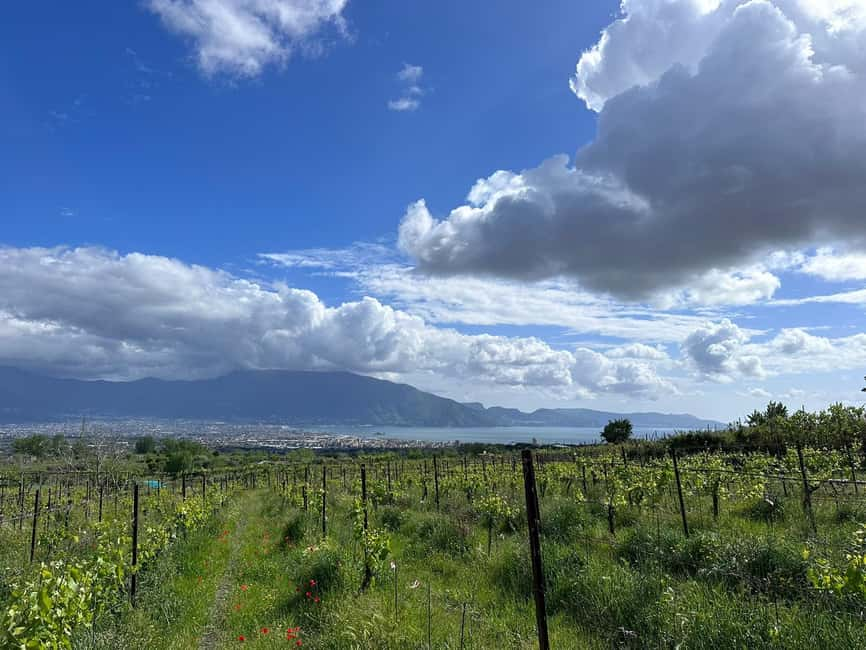
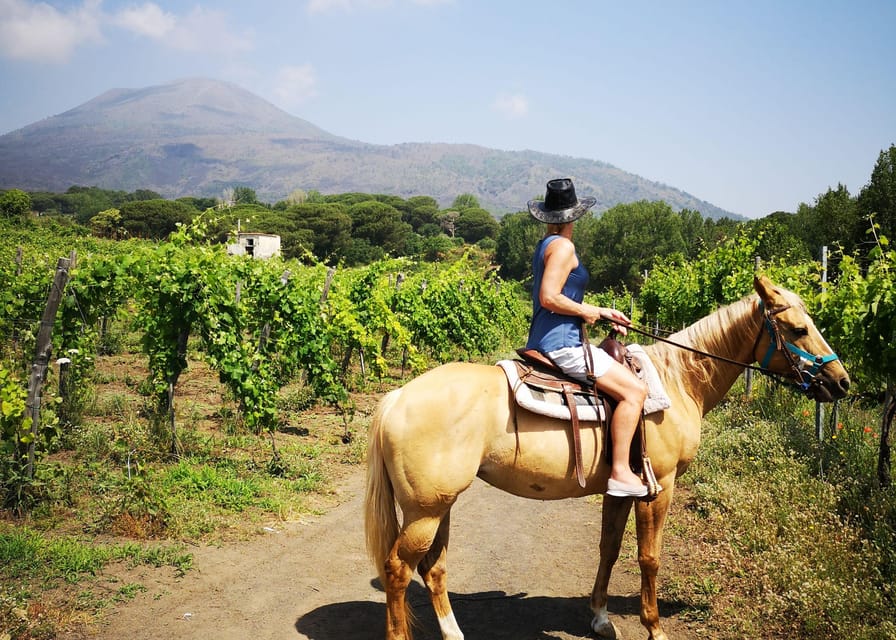
Mount Vesuvius is usually approached by bus, car, or on foot. This experience gives you a quieter option: a one-hour horseback ride on old lava paths, far from the feel of a standard city tour. You will ride on the lower slopes, not to the crater rim, with views across the Bay of Naples and toward Sorrento and the Amalfi Coast.
I like two things here. First, the small group, limited to eight people, should make the ride feel more personal. Second, the visit connects the horse, the volcanic soil, local plants, vineyards, and nearby communities rather than treating Vesuvius as only a photo stop. The main point to consider is that the riding portion lasts one hour, while the full experience takes two hours because of the van transfer.
Key points to know before booking
- Ride the lower slopes, not the crater rim: The horses travel at about 400 to 500 meters above sea level, so you will need a separate visit for the summit trail.
- Beginner-friendly pace: No previous riding experience is required, and helmets are provided.
- Small group size: A maximum of eight participants allows for a calmer outing and easier contact with the English-speaking host.
- Roundtrip service from Pompei: Meet outside Caffetteria Magma, then allow about 30 minutes each way by van.
- Local food can extend the day: Sofia, who helps with bookings, recommended Tenuta Quirinoli to one guest for zero-kilometer products near the stables.
- Best for scenic riding: The appeal is the volcanic scenery, views, and local setting, not advanced horsemanship or crater access.
Riding Vesuvius below the crater
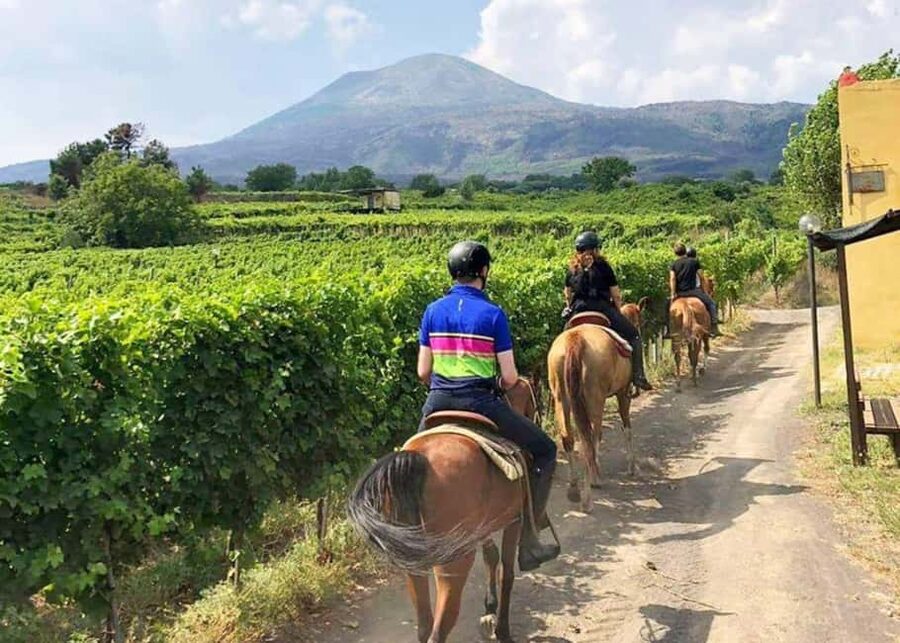
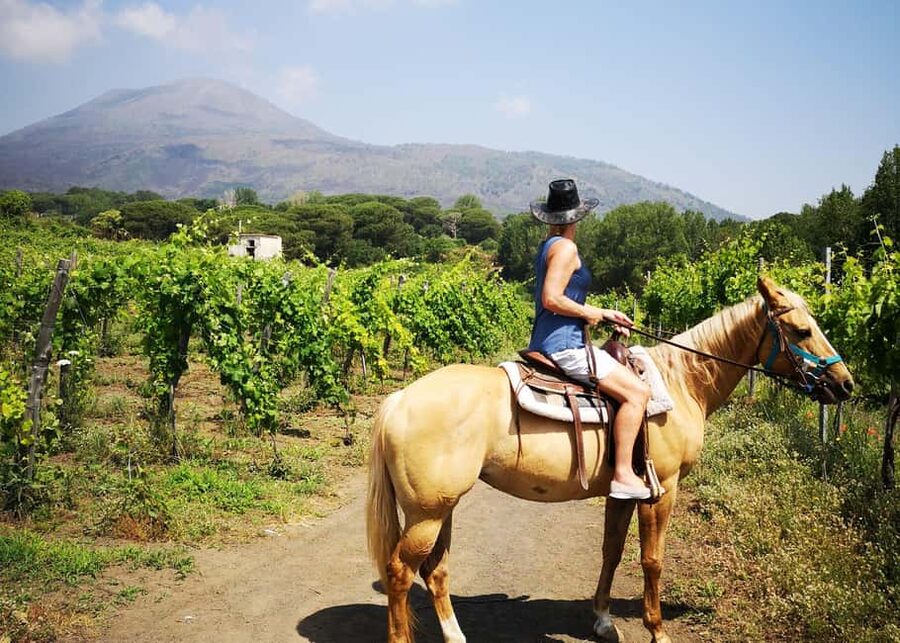
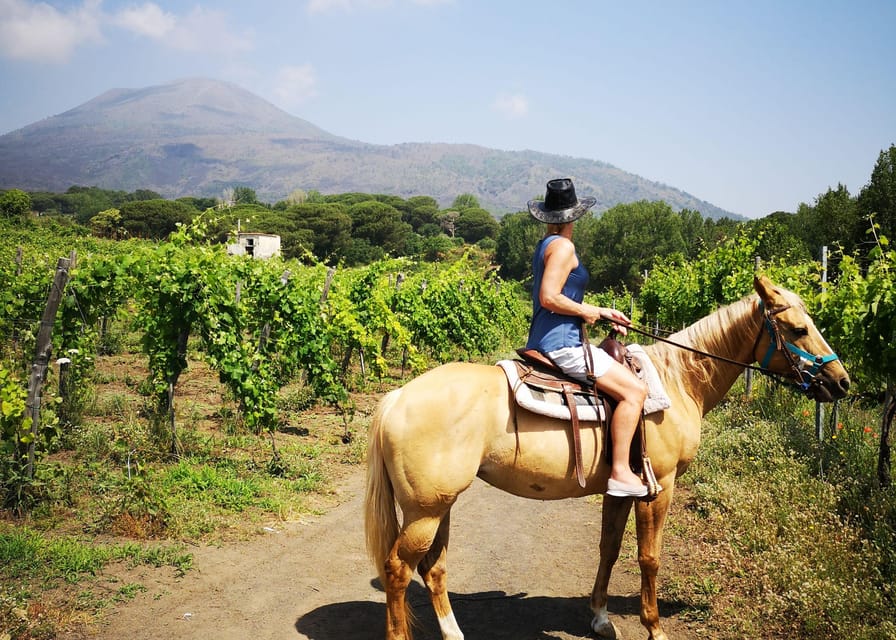
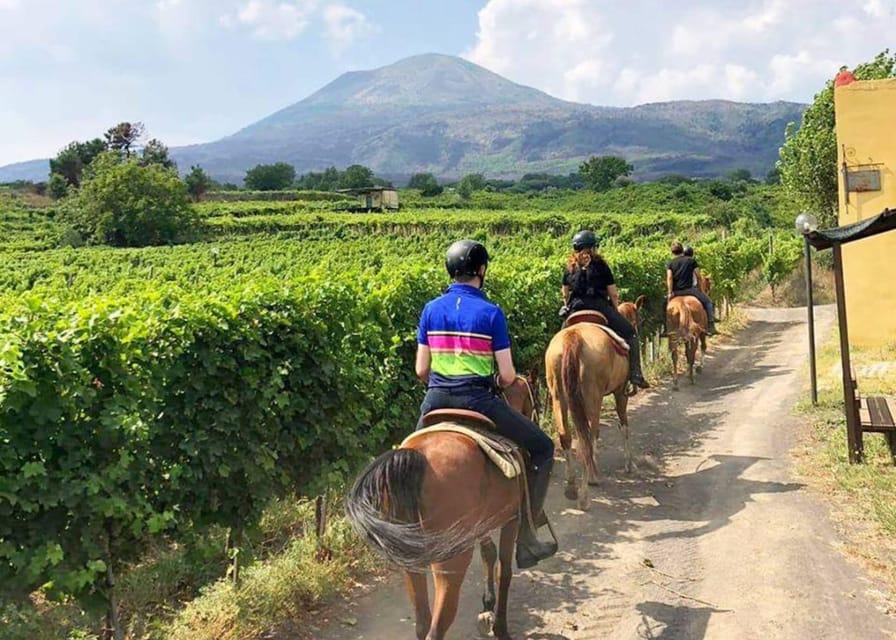
The ride takes place on the slopes of Mount Vesuvius, one of Europe’s most famous volcanoes. You will not ride up to the crater edge. Instead, the route stays on scenic volcanic ground at roughly 400 to 500 meters above sea level.
That distinction matters. If your main goal is to peer into the crater, this is not a substitute for the designated hiking trail from the upper parking area. If you want a slower way to see the volcano’s lower slopes, the horseback route offers something the usual summit visit cannot: time among the old lava paths, vegetation, and working countryside.
The setting also gives the guide plenty to explain. You can expect attention to Vesuvius’s volcanic soil, local products, plant life, vineyards, and the communities shaped by eruptions over the centuries. The ride is not just a loop around a stable. It is meant to show how people and agriculture continue to use this unusual ground.
At higher points along the route, the views open toward the Gulf of Naples, Bay of Sorrento, surrounding countryside, and, according to the activity description, the Amalfi Coast. Bring your camera, but keep it put away while the horse is moving. The best photographs will come when the group pauses or reaches an open viewpoint.
More Horse Riding Tours in Italy:
- Horseback Ride in S.Gimignano with Tuscan Lunch Chianti Tasting
★ 5.0 · 453 reviews - Pompeii Guided Tour & Horse Riding on Vesuvius with Lunch
★ 5.0 · 419 reviews - Siena: Horseback Riding Tour in the Tuscany Countryside
★ 4.8 · 321 reviews
From Caffetteria Magma to the stables
Your meeting point is outside Caffetteria Magma, also identified as Bar, Cornetteria, Tabaccheria Magma H24. A driver picks you up there for the transfer to the riding center.
The van ride takes about 30 minutes each way. That means an hour of the two-hour outing is spent on transport, leaving one hour in the saddle. I would factor this into your plans, especially if you are comparing this with a longer riding excursion or a full-day Vesuvius visit.
The transfer is useful if you are staying in Pompei and do not have a car. You do not need to arrange separate transport to the stables, and the return trip brings you back to the same meeting point. Still, arrive ready for a short wait or road journey, rather than expecting to mount immediately after meeting the driver.
The provider lists English as the activity language. A small group of no more than eight helps keep the transfer and riding portion manageable. It should also make it easier to ask questions about the terrain, the horses, and the area’s farming traditions.
Getting comfortable with the horses
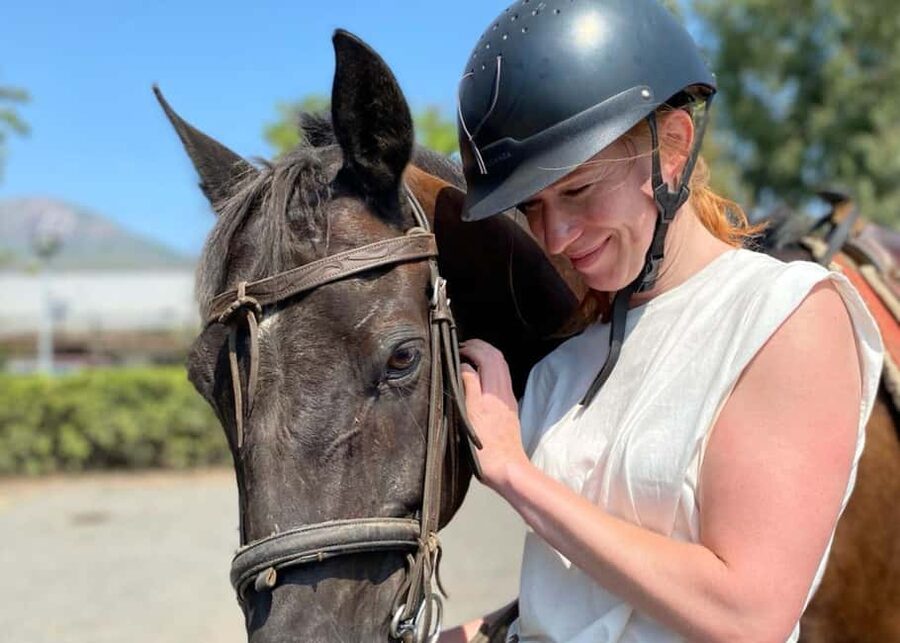
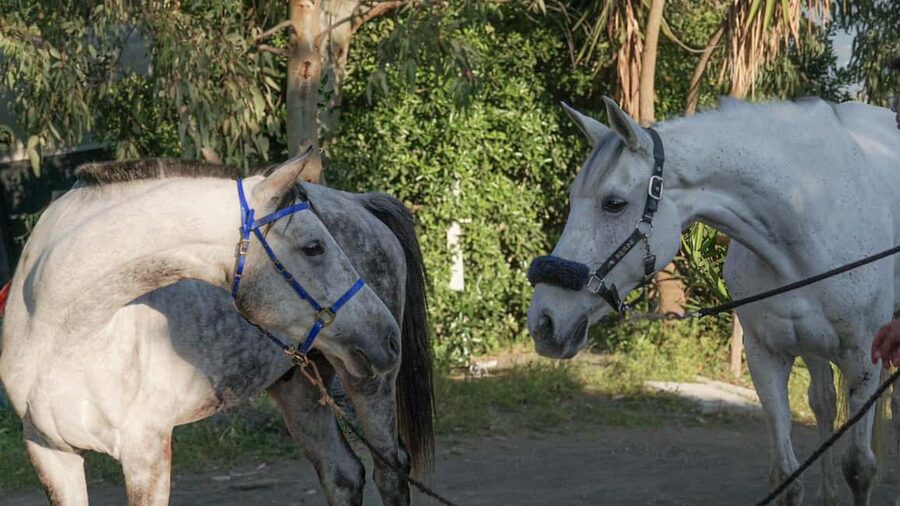
At the stables, you will receive a helmet and meet the horses before setting out. The activity is designed for beginners, so you do not need previous riding experience.
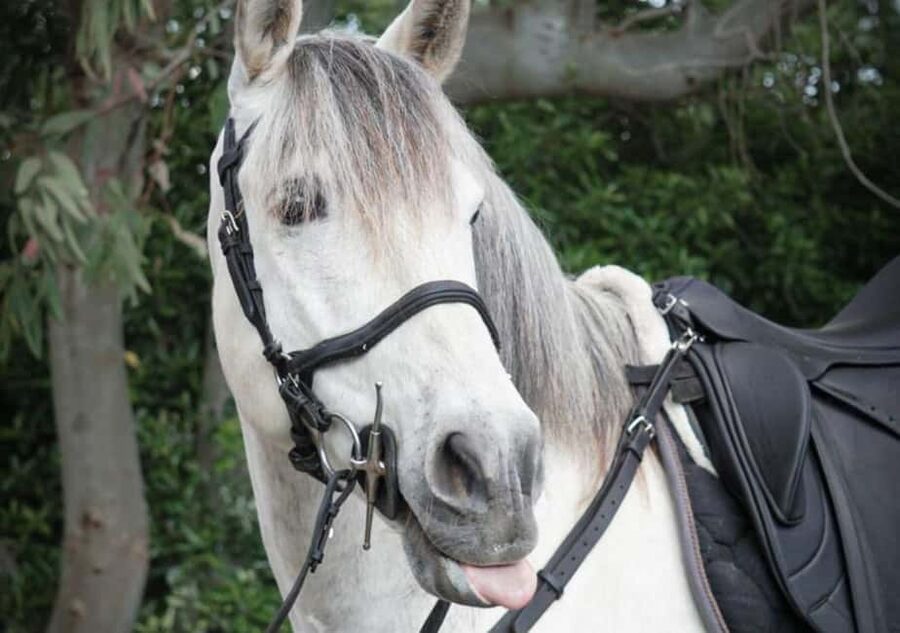
That is a real advantage for first-time riders. You can focus on sitting comfortably, following the guide’s instructions, and taking in the scenery instead of worrying about technical riding skills. The horses are described as experienced, which is appropriate for a route that welcomes people with different levels of confidence.
No riding activity is entirely passive. You will still need to listen carefully, use suitable balance, and follow directions around animals and uneven ground. People with mobility impairments are advised not to book, and children must be at least six years old.
The weight information needs a quick check before you reserve. The booking details list a maximum weight of 105 kilograms, while the exclusion notes say the experience is not suitable for anyone over 275 pounds, or 125 kilograms. Because those limits do not match, contact the provider if you are close to either figure and ask which limit applies.
One hour on ancient lava paths
The ride follows old volcanic routes on the slopes of Vesuvius. The appeal is the change underfoot and the way the scenery reflects the volcano’s past. You may see ground formed by lava, vegetation adapted to the area, and cultivated land made productive by volcanic soil.
The route is not presented as a fast or technical ride. It is a guided outing for all skill levels, with the emphasis on place, views, and the bond between horse and rider. You should expect a steady group experience rather than galloping or advanced instruction.
A local guide accompanies the ride and shares stories about Vesuvius and the civilizations shaped by it. The references to Roman soldiers and ancient routes add context, but the experience remains a present-day visit. You are looking at a working volcanic area, not only an archaeological monument.
I especially like that the activity links the scenery to products and farming. Vesuvius is not simply a dramatic mountain rising over Naples. Its soil supports vineyards and local crops, and the ride gives you a way to consider those connections while moving through the countryside.
The views will change with the weather and the exact route. On a clear day, the open slopes provide broad views toward the Bay of Naples and Bay of Sorrento, with the activity also promoting views toward the Amalfi Coast. Weather cancellations receive a full refund, which is important here because cloud or rain can reduce the visual reward of the outing.
Same saddle, a completely different route:
- Horse Sanctuary & Trail Ride in Ostia Antica
★ 4.5 · 276 reviews - An Exclusive Horseback Experience in the Heart of Tuscany
★ 4.8 · 221 reviews - Alghero: Guided Horseback Ride at Lake Baratz & Porto Ferro
★ 4.7 · 201 reviews - Horse ride on the coast of Monterosso al Mare Cinque Terre
★ 5.0 · 152 reviews
What the $81 price includes
At $81 per person, this is not the cheapest way to see Vesuvius. But the price includes roundtrip transfer from Pompei, a one-hour ride, a helmet, and water. For someone without a car, the included van service adds useful value.
You are paying for more than saddle time. The cost also covers access to a stable on the volcano’s slopes, an English-speaking host, the horses, and a small-group format. That makes it more appealing than a bare horseback rental where you would need to find the stable and arrange your own transport.
The value is weaker if you already have a car and only want a short ride. In that case, you may prefer to compare the total cost with other local riding options. The activity becomes a better fit when you want transport from Pompei and a guided introduction to Vesuvius’s countryside.
Food and drinks are not included beyond the provided water. Plan to eat before or after the ride. Sofia, who assists with bookings, recommended Tenuta Quirinoli to an Italian guest, where local products from nearby farms were served. That is not part of the horseback package, but it could turn the outing into a fuller half-day focused on the area’s food.
The crater question: what this ride does not do
This is the most important limitation. The horses do not take you to the crater rim.
For crater access, you need to combine the ride with a separate Pompeii and Vesuvius visit or use the designated hiking route from the upper parking area. You could also plan the horseback experience as a different kind of Vesuvius visit, one centered on quiet paths and countryside rather than the summit.
I would not treat the lower-slope route as a lesser version of the crater walk. They serve different purposes. The crater trail gives you the classic volcanic viewpoint and the chance to look into the summit area. The horseback ride gives you a slower route through old lava ground, with a guide, a horse, and wider views over the surrounding region.
If you have only a few hours and the volcano crater is your top priority, choose the summit visit first. If you have already seen the crater or prefer a relaxed outdoor activity, the ride adds a fresh side of Vesuvius.
Who will enjoy this most
I would recommend this outing to first-time riders, couples, families with children aged six and up, and anyone who wants to see Vesuvius without spending the whole visit on a steep walking route. The small group and included transfer also suit people based in Pompei who want a simple plan.
It is a good choice for someone interested in the relationship between horses, farming, volcanic soil, and local life. The activity has an authentic rural angle that a bus ride to the summit cannot provide.
It is less suitable for experienced riders seeking speed, technical terrain, or a long day in the saddle. The ride lasts one hour, and the activity is structured for mixed ability. It is also not suitable for people with mobility impairments or for children under six.
Practical details for a smoother outing
Wear clothes you can move in and closed shoes suitable for riding. The supplied information does not specify a dress code, but practical clothing makes more sense than anything delicate or restrictive.
Bring sun protection and a camera, while remembering that the weather can affect visibility. The volcano views are a major part of the experience, and cloudy conditions may make the route feel more ordinary.
The activity offers free cancellation up to 24 hours before departure, and you can reserve now and pay later. If poor weather forces a cancellation, you receive a full refund. Those terms help when you are arranging several days around Pompei, Naples, or the Amalfi Coast.
The published rating is 4.4 from six verified bookings. The strongest praise focuses on the friendly organization, the ride itself, the views, and the driver and guide. One guest described the staff as welcoming and well organized, while another singled out the guide and driver as terrific. That matches the practical strengths of the experience: simple transport, a small group, and local support.
Should you book the Vesuvius horseback ride?
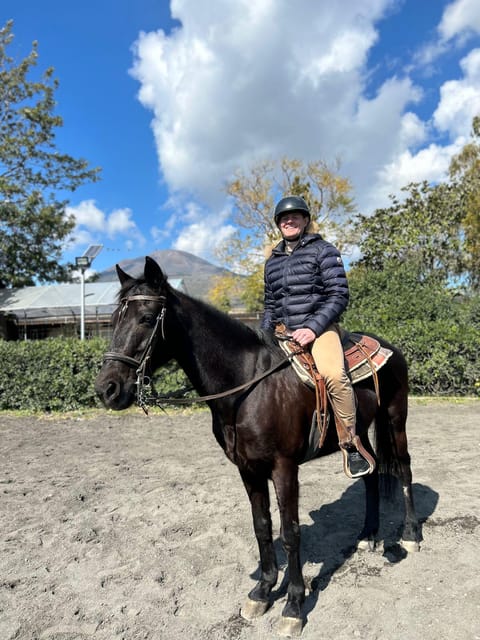
Book it if you want a scenic lower-slope ride, easy transport from Pompei, and a beginner-friendly way to connect with local countryside. The volcanic paths, views, horses, and small group give you a side of Vesuvius that most summit visits skip.
Skip it if reaching the crater is your main reason for visiting the volcano, or if you want several hours of riding. You will spend about half of the two-hour activity in the van, and only one hour on horseback.
For the best value, pair the ride with a separate crater visit or a nearby meal featuring local products. That combination gives you both sides of Vesuvius: the dramatic summit and the quieter, cultivated slopes below.
FAQ
Does the horseback ride reach the crater rim?
No. The ride stays on the scenic slopes at about 400 to 500 meters above sea level. You need a separate visit and designated hiking trail for crater access.
How long is the horseback ride?
The riding portion lasts one hour. The complete activity takes two hours, including about 30 minutes of van travel each way.
Do I need previous horseback riding experience?
No. The activity is suitable for beginners, and no prior riding experience is required.
What is included in the price?
The $81 price includes roundtrip transfer from Pompei to the stables, a one-hour horseback ride, water, and a helmet.
Where does the activity begin?
The driver picks you up outside Caffetteria Magma, also listed as Bar, Cornetteria, Tabaccheria Magma H24.
Can children join the ride?
Children must be at least six years old. The activity is not suitable for children under six.
Just added around Italy
- Horseback Riding with Pic Nic in Lazise Countryside★ 5.0 · 16 reviews
- Horse Carriage Tour and Wine Tasting in Lazise★ 5.0 · 2 reviews
- Horseback riding and wine tasting★ 5.0 · 6 reviews
- Horseback Riding with wine tasting in Lake Garda vineyards★ 5.0 · 3 reviews
- Horsemanship Experience★ 5.0 · 4 reviews
- Private Horseback Riding Tour on Etna Area + Traditional Lunch★ 4.5 · 49 reviews
- Sorrento Guided Horseback Riding Tour★ 5.0 · 2 reviews
- Private Pompeii, Horse Riding & Lunch Tour w/ Pick up included★ 5.0 · 3 reviews
Italy Horse Riding Tours, compared.
Horseback Ride in S.Gimignano with Tuscan Lunch Chianti Tasting
Read our review →
Pompeii Guided Tour & Horse Riding on Vesuvius with Lunch
Read our review →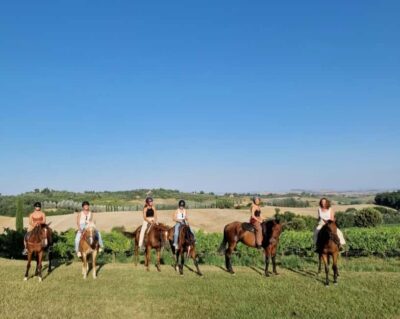
Horseback Riding Tour in the Tuscany Countryside
Read our review →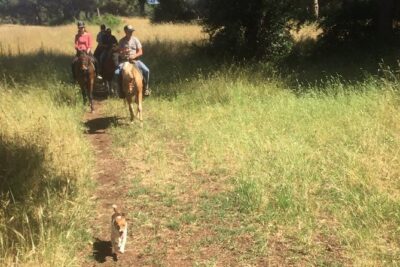
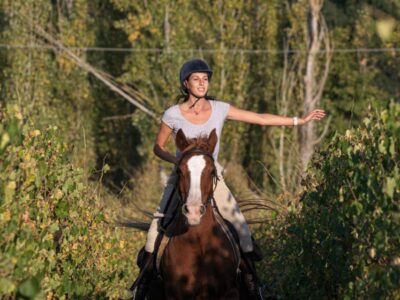
An Exclusive Horseback Experience in the Heart of Tuscany
Read our review →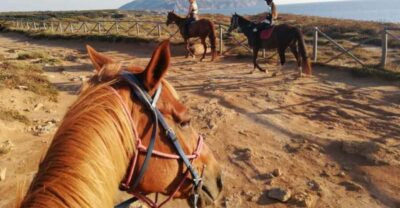
Alghero: Guided Horseback Ride at Lake Baratz & Porto Ferro
Read our review →
Horse ride on the coast of Monterosso al Mare Cinque Terre
Read our review →
Browse the lists this tour appears in