
Review · HORSE SHOWS & EQUESTRIAN EVENTS
Cordoba: Equestrian Show General Entry
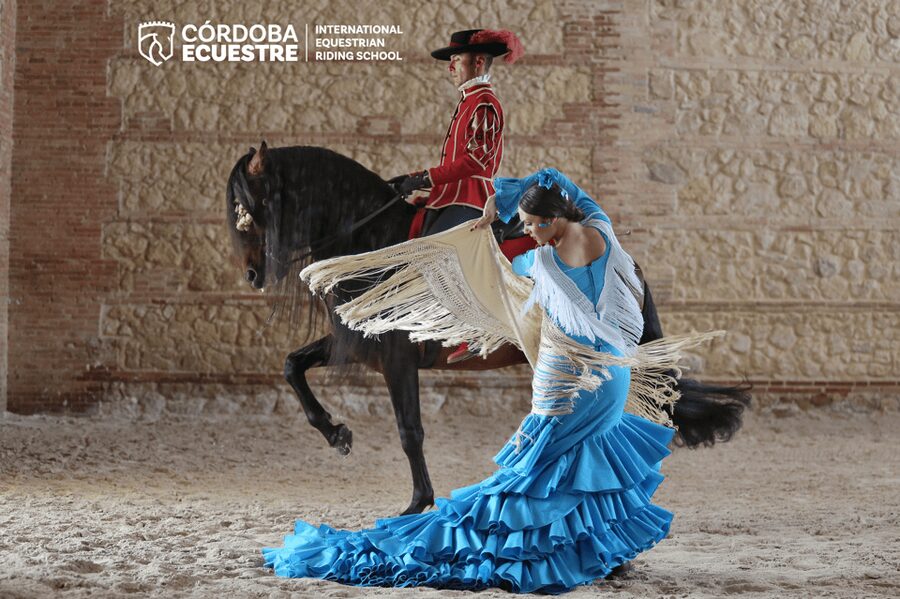
Córdoba’s Royal Stables turn Andalusian horses and flamenco into one polished evening performance. You’ll see classical dressage, vaquera riding, Alta Escuela movements, and a flamenco dancer working beside the horses in a sixteenth-century setting built for royal equestrian displays.
I like the strong sense of place and the close horse-and-rider partnership. I also like the price: at $21 for about 70 minutes, this is a fairly easy cultural evening to add after sightseeing. The main drawback is practical: general seating can mean hard, backless plinths, and entry may feel untidy if you arrive without checking the correct queue.
Key things to know before you go
- The Royal Stables are part of the experience: The sixteenth-century building gives the performance a warm, old Córdoba setting rather than a modern arena feel.
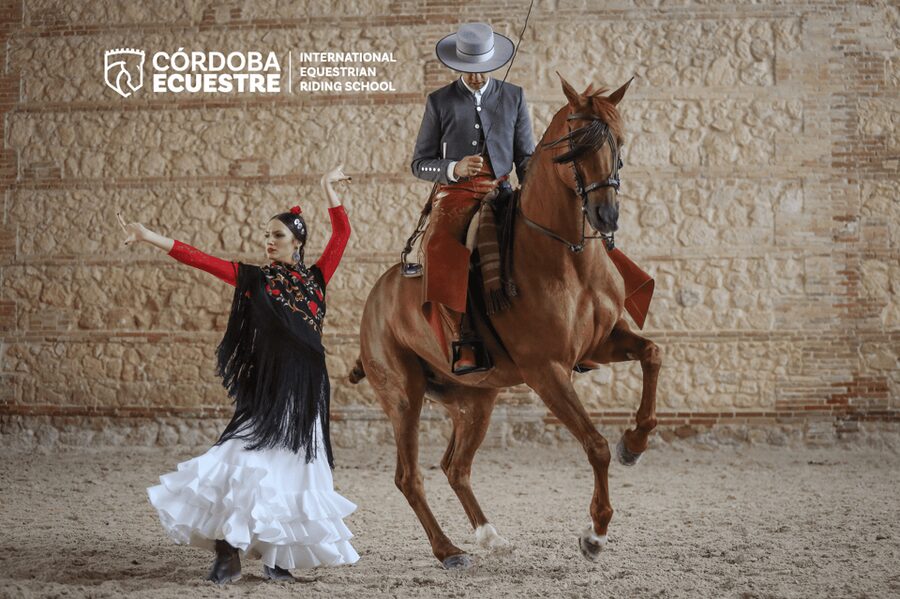
- Three riding traditions share the program: Expect classical dressage, vaquera, and Alta Escuela, each showing a different side of Spanish horsemanship.
- Flamenco adds movement and drama: A dancer works with the horse and rider, bringing music and dance into the riding display.
- The show lasts about 70 minutes: It fits neatly into an evening plan without taking up an entire night.
- General entry keeps the price reasonable: The $21 ticket is good value if you mainly want the spectacle, though seating comfort may be basic.
- Leave your camera in your bag: Photography, video, and cameras are not allowed during the show.
Entering Córdoba’s sixteenth-century Royal Stables
The setting does much of the early work. The Royal Stables, known as Caballerizas Reales, were created in the sixteenth century under King Philip II for the breeding and presentation of horses. You enter a building tied directly to Córdoba’s equestrian tradition, with stone arches and warm lighting that suit the evening performance.
This is not just a horse show placed in a generic theater. The old stable complex gives the event a sense of age and ceremony. Even before the horses enter, you are looking at a place designed around them.
The venue is in Córdoba’s historic center, so it works well after a day around the city’s major sights. You won’t need to build a separate outing around it. If you are driving, one useful approach is to leave the car across the river and walk the short distance, rather than trying to find a space on the narrow streets close to the stables.
The arrival process deserves a little planning. If you have a ticket bought through a third party, check the entrance instructions carefully. General admission ticket holders may need the right-hand queue, and the ticket may not show a seat number. One practical trick is to collect your ticket early and wait at the tavern opposite the entrance instead of standing in a long line in the Córdoba heat.
More Horse Shows and Equestrian Events in Spain:
- Fuengirola: Spanish Horse Show with Optional Dinner/Flamenco
★ 4.1 · 339 reviews - Equestrian Show Royal Stables of Córdoba
★ 4.0 · 241 reviews - Jerez & Cadiz Winery with Tasting & Opt Horse Show from Seville
★ 4.0 · 142 reviews
What the 70-minute performance includes
The program brings several forms of Spanish riding into one compact show. Classical dressage focuses on precision, balance, and the horse’s response to small signals from the rider. The appeal is not speed. It is control, posture, and the remarkable way a well-trained horse can appear to move to music.
Vaquera riding comes from the working traditions of Spanish cattle country. It has a more practical, direct character than formal dressage, with the rider handling the horse in a style linked to fieldwork. Alta Escuela, or high school riding, presents advanced movements and careful training in a more formal style.
You may not be able to identify every movement without an equestrian background, but you can still follow the basic story. The rider appears to ask for very little, and the horse responds with exact footwork, turns, changes of pace, and controlled poses.
The show also includes moments when riders dismount and ask the horses to perform tricks, including rearing on command and jumping. These sections can be exciting, but they are not for everyone. If you are sensitive to displays that look demanding or unnatural, the more formal riding and the horse-and-dancer sections may be more comfortable to watch.
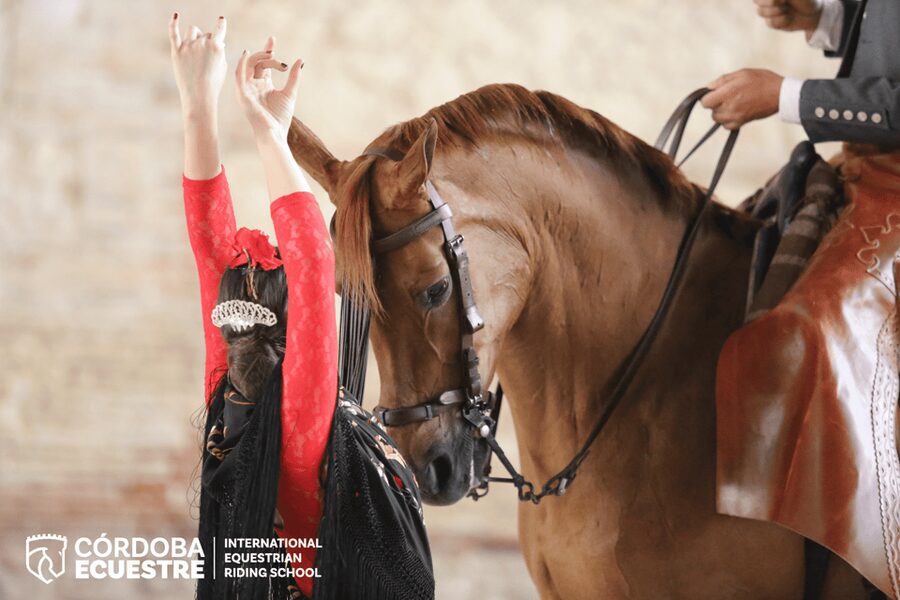
The horses are the clear focus. Their appearance, posture, and training make the program work even when you know little about dressage. You will see animals selected for beauty and movement, but the strongest impression comes from the relationship with the riders. At its best, the horse seems to anticipate the rider’s request.
When flamenco meets the Andalusian horse
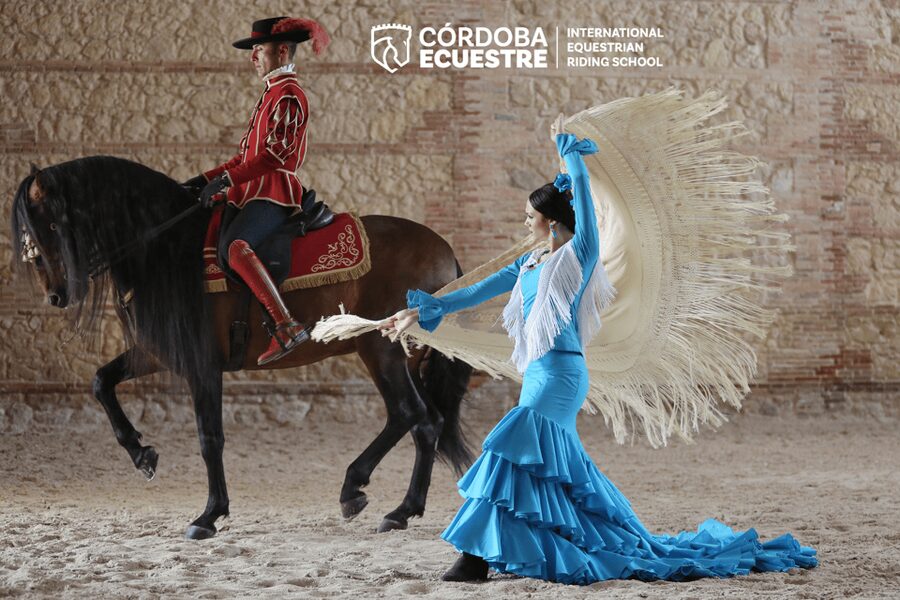
The flamenco element keeps the performance from feeling like a straight equestrian demonstration. A dancer joins the horse and rider, matching the animal’s controlled movement with sharp footwork, posture, and musical expression.
This is the show’s most distinctive combination. A classical riding display can be technically impressive, but the flamenco gives it a clear Andalusian identity. The result is more theatrical and accessible than a dressage lesson, especially if you are not a horse enthusiast.
The strongest moments come when the dancer works close to the horse. The contrast is striking: the horse moves with measured strength while the dancer supplies quick, human energy. Music helps connect the two, and several parts are choreographed so that horse, rider, and dancer seem to share one rhythm.
You should not expect a full flamenco evening with a large cast and long dance program. The flamenco is woven into the equestrian show, not presented as a separate concert. That is exactly why the combination works for a short cultural outing, but it may feel limited if your main goal is a dedicated flamenco performance.
The Andalusian horse in the spotlight
The Andalusian horse is central to Córdoba’s identity as a center of Spanish horsemanship. The show presents the breed through beauty, obedience, stamina, and high-level training rather than through a spoken history lesson.
You’ll see why these horses suit formal performance. They have a proud carriage and controlled movement, and the close venue lets you appreciate details that might disappear in a large arena. Several sections bring the horses close enough for a clear view of their footwork and the riders’ posture.
The free audioguide app can add useful background before or after the show. It is especially helpful if you want more context about the stables and the traditions behind the performance. The show itself is built more around visual impact than detailed explanation, so the app may be worth using if you want more than the spectacle.
One point worth keeping in mind is that the program does not appear to offer extensive personal introductions to every horse, rider, or trainer. If you want to know about the animals’ care, training routines, or the riders’ backgrounds, you may find the information less detailed than you hoped.
For horse riders, the technical demands are easier to appreciate. Movements that look simple from the seats can require years of patient training and close communication. For everyone else, the visual lesson is simpler: the horse is not just following broad commands. The rider uses small changes in balance, hands, legs, and timing.
More Shows in Spain:
- Andalusian Horses Dance Show
★ 4.5 · 483 reviews - Cadiz: Andalusian Horses and Bulls Country Show
★ 4.6 · 189 reviews - Torremolinos: Spanish horse and flamenco show
★ 4.5 · 162 reviews - Horse and Flamenco Show in Malaga
★ 4.5 · 125 reviews
Seating, sightlines, and general entry
General entry is the sensible choice if price matters most. At $21, you get the full 70-minute production in the historic venue without paying a major premium for a cultural night out.
The tradeoff is comfort. Seating may consist of hard, backless stone or raised plinth-style seats. Several people found the seats less comfortable than expected, especially because they do not offer back support. You may have a clear view of the arena, but a clear view does not make a hard seat softer.
The arena is arranged so that the performance can be seen from the seating area. Some seats are particularly close, which helps when you want to watch the horses’ feet and the riders’ signals. Seat arrangements depend on the option booked, so check the conditions of your ticket rather than assuming general entry includes a chosen seat.
A premium option has been available for some bookings, with a designated seat and a particularly good view. If you are tall, have back problems, or simply dislike uncertain seating, paying more may make sense. If you are comfortable with basic seating and want the best price, general entry remains good value.
Arrive with enough time to sort out the queue and ticket collection. The admission process can be confusing when third-party tickets do not display seat numbers. Once inside, the staff and seat-finding process have generally been straightforward, but the entrance area can be more crowded and less organized than the performance itself.
Photography rules and what they mean
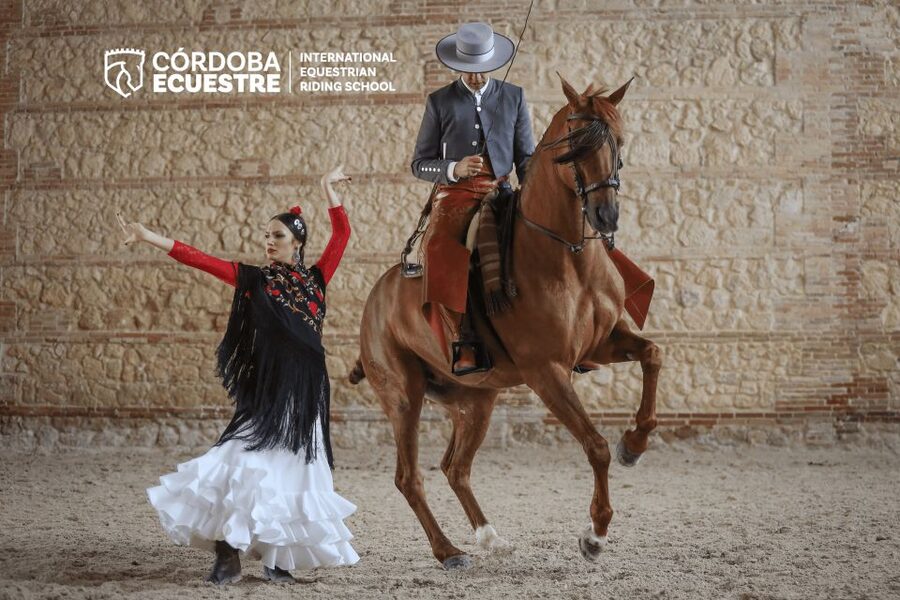
Cameras, drinks, photography, and video recording are not allowed inside during the show. You need to take this seriously, since staff may prevent you from using your phone even for a quick picture.
The restriction is frustrating if you like recording cultural experiences, but it also keeps the arena darker and less distracting for the horses. Flash photography would be especially disruptive during close riding work.
You can take pictures during horse training if that opportunity is offered before the show, but do not assume every ticket includes a formal stable tour or training session. Some bookings provide access to a pre-show look at the stables or a chance to watch the horses train, while the core general-entry description covers the performance itself.
If you want photographs, arrive early and ask what is permitted before the show begins. Do not count on a photo opportunity afterward. The performance is meant to be watched rather than documented, so put your phone away and focus on the arena.
Timing your evening in Córdoba
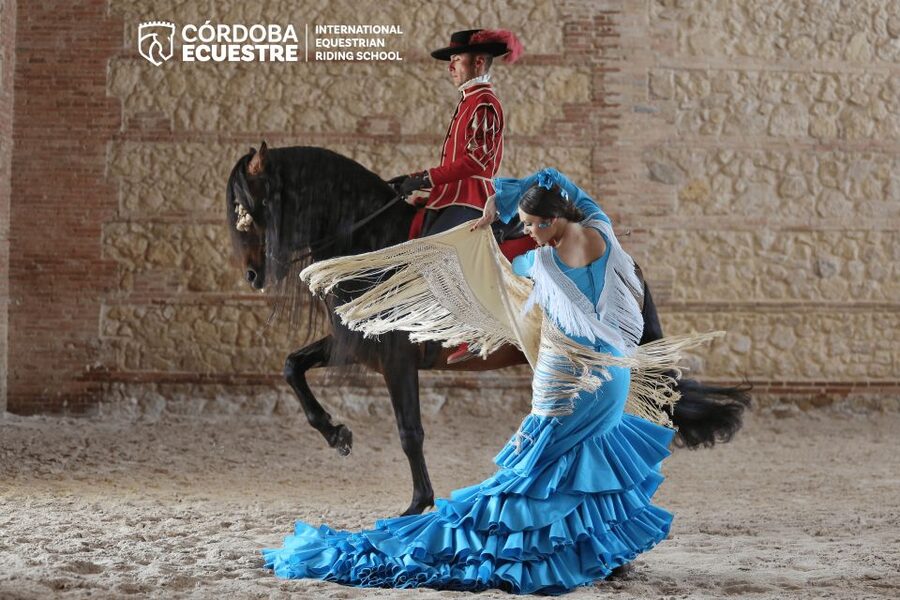
The 70-minute duration makes this easy to combine with a full day in Córdoba. You can spend the afternoon seeing the historic center, take a break, eat nearby, and then walk to the Royal Stables for the evening show.
The location is especially useful because you do not need a long transfer outside the center. If you are staying near the old town, walking is the simplest option. If you are arriving by car, parking across the river and walking the final few minutes is more practical than forcing a car into the streets near the venue.
The show has enough structure to feel like a complete event, but it does not consume your whole evening. That matters in Córdoba, where you may also want time for dinner or an evening stroll.
Summer heat changes the arrival experience. Lines outside can become uncomfortable, so collecting your ticket and waiting in the nearby tavern is a better plan than standing in the sun. The building itself provides the atmosphere, but it is still wise to handle the queue before the doors open.
Who will enjoy this show most
I would choose this experience for anyone who wants a distinctly Andalusian evening without committing to a long tour. It suits couples, families, and solo visitors, provided everyone is comfortable with the no-photo rule and basic seating.
Horse lovers will get the most technical value. You can watch the precision of the dressage, compare formal and vaquera riding, and study how the riders communicate with the horses.
You do not need to know anything about horses to enjoy it. The flamenco, costumes, music, and old stable setting give the program enough theatrical appeal for a general audience. It is also a good choice if you want culture that feels connected to Córdoba rather than another indoor museum visit.
I would be more cautious if you dislike animal performance or feel uncomfortable watching trained movements such as rearing and jumping. One part of the show may raise questions about how some movements are taught. The experience presents the horses as cared-for, highly trained animals, but viewers can reasonably have different reactions to the trick sections.
Is $21 good value?
For $21, the value is strong. You receive a full performance, a historic venue, Andalusian horses, multiple riding styles, and flamenco in a single outing. Comparable cultural entertainment can easily cost more, especially when it combines live animals, skilled riders, and a central location.
The price is particularly fair if you already plan to spend the evening in the old center. There is no need for a lengthy excursion or a separate transportation package. Your extra costs are mainly the ticket, food or drinks before or after, and the time spent getting there.
The value drops slightly if you expect a detailed educational program. The presentation is visual and polished, but it may not explain the horses’ individual histories, care, or training in depth. Use the free audioguide app if you want additional context, and look for a pre-show stable or training opportunity if your booking includes it.
Seat comfort is the other value question. General entry is inexpensive, but the hard, backless seating may make a premium designated seat worth considering for some people. Decide based on your priorities, not just the headline price.
Should you book the Córdoba Equestrian Show?
Book it if you want a short, memorable look at Andalusian culture in a setting that feels tied to Córdoba’s past. The combination of refined riding, vaquera tradition, Alta Escuela, and flamenco is unusual, and the horses and riders provide the show’s strongest moments.
Choose general entry if you want to keep the cost down and can manage basic seating. Consider a designated-seat option if comfort and a guaranteed sightline matter more than saving a few dollars.
Skip it if you need a highly detailed explanation of horse training, dislike animal performances, or want a full-length flamenco production. For most visitors, though, the $21 ticket is a reasonable way to spend 70 minutes, especially when you value atmosphere as much as entertainment.
FAQ
How long does the Córdoba Equestrian Show last?
The performance lasts approximately 70 minutes.
How much does general entry cost?
The listed price is $21 per person.
What riding styles are included?
The show includes classical dressage, vaquera riding, and Alta Escuela, combined with flamenco.
Can I take photos or record video during the show?
No. Cameras, photography, and video recording are not allowed during the show.
Is the experience wheelchair accessible?
Yes, the activity is listed as wheelchair accessible.
Is an audioguide included?
A free app is available for listening to the audioguide.
Just added around Spain
- Horseback Riding by the beach or mountain in Tarifa, Spain – 1 to 2 hrs★ 5.0 · 3 reviews
- Horseback riding through the Calblanque Natural Park★ 3.5 · 12 reviews
- Private Horse Carriage Ride and Walking Tour of Seville★ 4.5 · 4 reviews
- Seville Palaces: Dueñas Palace and Pilate House Tour★ 5.0 · 28 reviews
- Horseback riding route through Doñana + visit to El Rocio-Private tour★ 4.0 · 2 reviews
- Jerez and Cadiz with Horse Ballet and Sherry Tasting from Seville★ 4.5 · 45 reviews
- Horseback riding tour of Doñana and visit of El Rocio★ 4.5 · 4 reviews
- Donana National Park Horse or 4×4 Riding Day Trip★ 5.0 · 4 reviews
Horse Shows & Equestrian Events, compared.
Fuengirola: Spanish Horse Show with Optional Dinner/Flamenco
Read our review →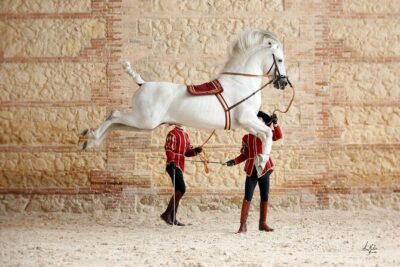
Jerez & Cadiz Winery with Tasting & Opt Horse Show from Seville
Read our review →
From Budapest: Puszta Horse Show and Countryside Visit
Read our review →
Dhow Cruise Dubai with Buffet Dinner, Dance & Horse Show
Read our review →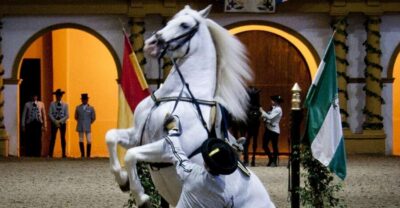
Jerez, Cadiz Wine Tasting with Optional Horse Show
Read our review →
Budapest Puszta Day Trip to Kecskemet with Horse Show & Lunch
Read our review →Browse the lists this tour appears in