
Review · HORSE-DRAWN CARRIAGE TOURS
New Orleans French Quarter and More Carriage Ride
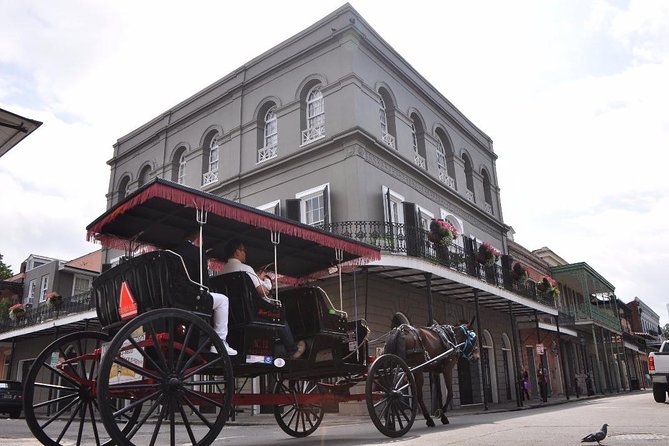
The best part of this ride is its pace. Instead of weaving through the French Quarter on foot, you settle into a covered carriage and let a mule carry you past iron balconies, bright Creole homes, old courtyards, and major landmarks. Guides such as Sarah, Nate, Marty, Tony, and Mike have all been praised for mixing history with useful advice about restaurants, jazz clubs, museums, and evening plans.
I like the small group limit of eight, which gives the ride a more personal feel than a large sightseeing vehicle. I also like the chance to see the French Quarter and nearby Marigny in one hour, then return to Decatur Street with a clear sense of where to explore next. The main drawback is that an hour passes quickly, and some riders find the seats uncomfortable or the narration hard to hear from the back.
Key points at a glance
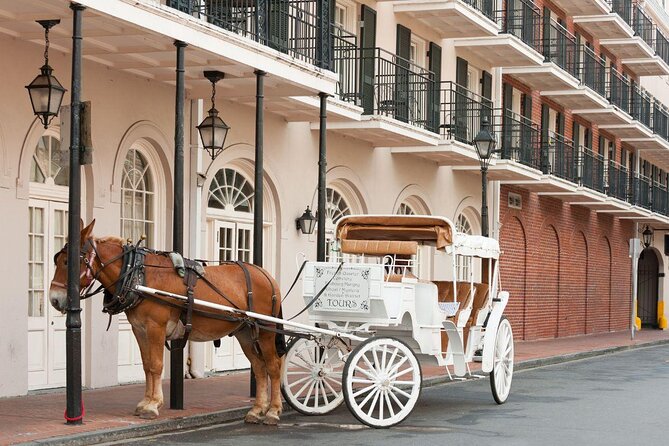
- Covered mule-drawn carriage: The roof helps shield you from strong sun and less pleasant weather.
- 700 Decatur Street departure: The tour starts and ends in a central French Quarter location.
- Eight-person maximum: A small group makes it easier to hear the guide and ask questions.
- Major historic sights: Expect St. Louis Cathedral, Place D’Armes, the Spanish Cabildo, French Market, Napoleon House, and Pontalba Buildings.
- Local planning advice: Guides share ideas for jazz, nightclubs, museums, restaurants, and places worth returning to on foot.
- One-hour introduction: It works best as a first look, not as a full tour of every corner or cemetery.
Why a carriage ride works well in New Orleans
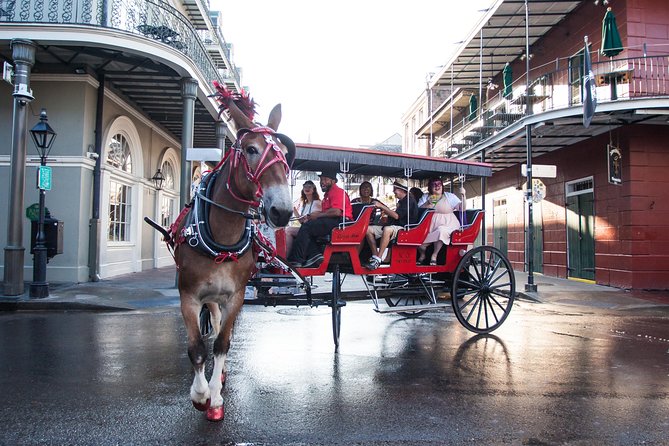
New Orleans rewards slow looking. The details sit above eye level and around the edges: decorative ironwork, narrow balconies, brightly painted façades, old Spanish patios, and buildings shaped by fires, floods, and changing rule. A carriage gives you time to look up without constantly checking traffic or a street map.
The ride is also a practical first activity. You pass several key places in the French Quarter, hear the stories that connect them, and get suggestions for the rest of your stay. I would schedule it near the beginning of a New Orleans visit, then use the final minutes to mark restaurants, museums, music spots, or streets you want to revisit.
This is not a silent sightseeing loop. The guide drives the mule-drawn carriage while explaining the buildings, local customs, and major events tied to the area. The strongest comments describe guides who add humor, ghost stories, and details about past fires and floods rather than simply naming buildings.
The carriage has a covered top. That matters in New Orleans, where direct sun can make a slow ride feel much warmer than expected. The cover also gives some protection from difficult weather, though the experience depends on good conditions and can be canceled if the weather is poor.
More Horse-Drawn Carriage Tours in the USA
- Charleston’s Old South Carriage Historic Horse & Carriage Tour
★ 5.0 · 10,023 reviews - Haunted Evening Horse and Carriage Tour of Charleston
★ 4.5 · 3,678 reviews - Charleston Horse-Drawn Carriage Tour: Explore Historic Charleston
★ 5.0 · 3,561 reviews
Starting on Decatur Street
You meet at 700 Decatur Street, close to the French Market and the Mississippi River side of the French Quarter. The activity ends at the same spot, so you do not need to arrange a separate ride back or figure out where the carriage leaves you.
The central meeting point makes it easy to connect the tour with a meal, a walk along the river, or more time in the Quarter. It also means the surrounding streets can be active and crowded, so allow enough time to find the exact designated meeting location.
The group is limited to eight people. That is one of the strongest practical features here. A smaller carriage lets you follow the narration more easily and gives you a better chance to ask about a building, a restaurant, or a place you pass.
Still, seating position matters. One rider found the guide harder to hear from the back and recommended sitting toward the front if hearing is a concern. If you care most about the stories, choose a place with a clear line to the guide rather than treating the ride as a purely visual outing.
St. Louis Cathedral and Place D’Armes
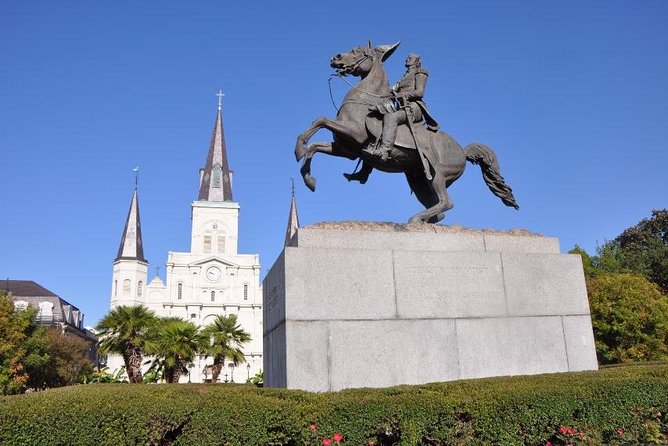
One of the early highlights is St. Louis Cathedral, which is identified as the oldest continuously active cathedral in the United States. Its position beside Jackson Square makes it one of the Quarter’s most recognizable sights, and the carriage gives you time to take in the full setting rather than rushing past it.
The surrounding area is tied to Place D’Armes, the historic square now associated with Jackson Square. You also see the Place D’Armes Hotel, another important building in the same part of the Quarter.
Your guide may connect these sights to the early development of the city and to the mixture of French and Spanish influence visible in the architecture. This is where the carriage is especially useful for a first visit: the commentary helps explain why several different styles appear within a short walk.
Do not expect a cathedral interior visit or a long stop for independent sightseeing. This is a moving overview. You see the buildings from the carriage and can return later if one catches your interest.
The Spanish Cabildo and New Orleans’ layered past
The Spanish Cabildo helps explain why the French Quarter does not look purely French. New Orleans changed hands and absorbed several cultural influences, and the Spanish colonial architecture remains part of the neighborhood’s identity.
The ride also covers major events such as the Great Fire of 1788 and the Battle of New Orleans. These stories give useful context for the brick buildings, iron balconies, and compact streets you see from the carriage.
A strong guide will make the past feel connected to the view in front of you. Rather than hearing isolated dates, you learn why parts of the Quarter were rebuilt, why certain materials became common, and how fire and flooding shaped the city.
The amount of detail can vary by guide and by how full the carriage is. Most of the feedback praises clear, entertaining narration, but one rider felt the commentary was limited. If you want a highly academic history lecture, this may feel light. If you want a friendly introduction before exploring on foot, the level is generally a good fit.
Same saddle, a completely different route:
- 2-hour Outer Banks Wild Horse Tour by 4WD Truck
★ 5.0 · 2,449 reviews - Official NYC Horse Carriage Rides in Central Park since 1979 ™
★ 5.0 · 2,365 reviews - New Orleans Small-Group Haunted History Carriage Tour
★ 4.5 · 2,289 reviews - Half-Day Thoroughbred Horse Farm Tour in Kentucky
★ 5.0 · 1,924 reviews
French Market and the Mississippi River side
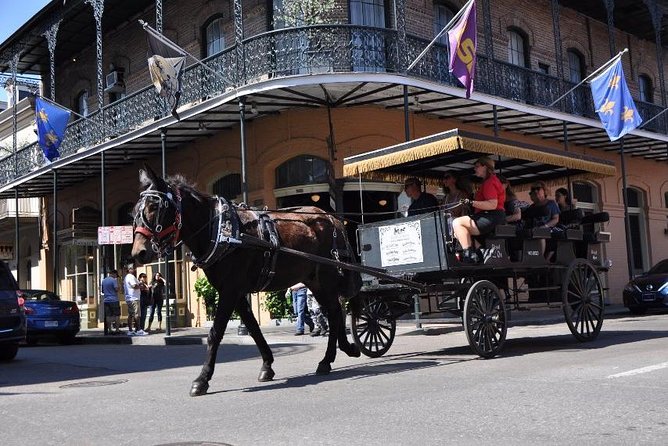
The French Market gives the ride another angle on the Quarter. This historic market area overlooks the Mississippi and helps connect the neighborhood’s residential streets with its trading past.
You should not confuse seeing the market area from the carriage with having time to shop or eat there. Snacks are not included, and the tour is designed around sightseeing rather than a market tasting. Still, the guide’s comments can help you decide if you want to return after the ride.
This is also a useful point for orientation. The French Quarter can feel like a maze during a first visit, especially when every street seems to contain another balcony, courtyard, or restaurant. Seeing the market in relation to Decatur Street and the river makes later walks easier.
Napoleon House and the city’s unusual stories
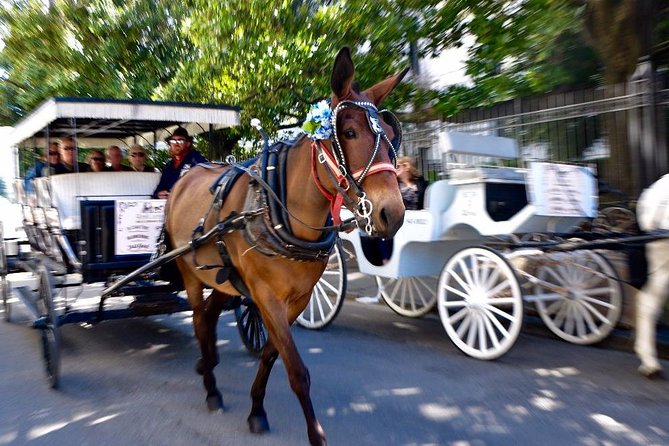
Napoleon House is one of the more distinctive stops on the route. The Spanish colonial building is associated with a mold made by Dr. Francesco Antommarchi, one of Napoleon Bonaparte’s physicians at the time of Napoleon’s death. The museum is home to Napoleon’s death mask.
That detail gives the guide an opening for the odd, memorable stories that make New Orleans sightseeing so enjoyable. The ride is not limited to dry architectural labels. Guides also share legends and ghost stories connected with historic buildings and restaurants.
This kind of storytelling is a major part of the value. You may forget a date, but you are more likely to remember the building linked to Napoleon’s death mask or the explanation of why a particular façade looks the way it does.
The tour does not include admission to museums or interior visits. Think of Napoleon House as a landmark explained from the street, with the option to return later if you want a closer look.
Pontalba Buildings and French Quarter architecture
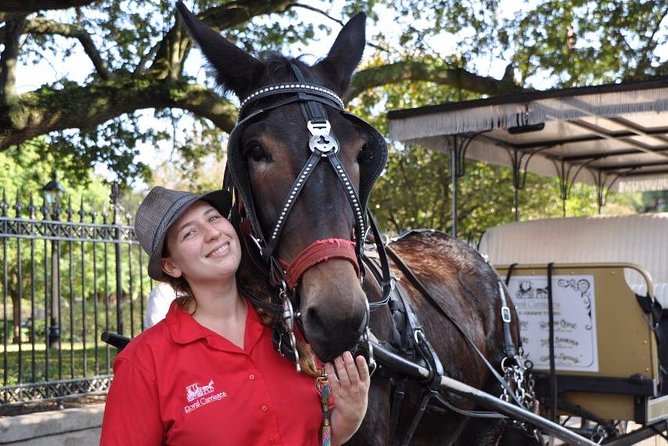
The Pontalba Buildings are often described as the oldest apartment buildings in the United States. They frame Jackson Square and are a fine example of the Quarter’s distinctive blend of elegance and practicality.
From the carriage, you also look at Creole Esplanade architecture, old slave quarters, French coffee houses, Spanish patios, and ironwork balconies. These are not just decorative categories. Together, they show how the neighborhood developed as a place where homes, businesses, courtyards, and public streets had to fit closely together.
The ride is particularly helpful if you are not sure what to look for. A guide can point out the difference between a balcony that is decorative and one that reflects how a building was used. You may also hear how fires and floods influenced the use of brick and iron.
One guide, Marty, was singled out for explaining the effects of past fires and floods. Tony was remembered for lively facts and for introducing the mule, Praline. Names and assignments change, but these examples show the kind of personal detail that can make the hour more engaging.
A glimpse beyond the busiest streets
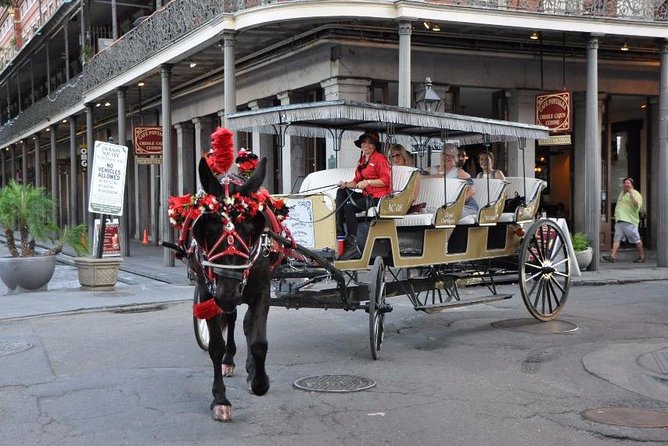
The experience includes the French Quarter and Marigny, giving you a look beyond the most familiar central blocks. Several riders especially liked seeing colorful homes and striking residential architecture outside the main downtown area.
That wider route matters because New Orleans is more than the postcard views around Jackson Square. Marigny adds another layer of homes, façades, and neighborhood character. You may find yourself paying as much attention to residential buildings as to the famous landmarks.
The exact balance between the two areas can depend on the route and traffic. The supplied description places strong emphasis on the French Quarter, so book this for a broad introduction rather than a detailed Marigny walking tour.
Also note what is not promised. The cemetery is not listed as a stop, and one rider specifically wished to see one. If cemetery history is your main interest, you will need a separate activity.
The mule, the carriage, and comfort
The carriage is mule-drawn, although the experience is often described casually as a horse and carriage ride. The mule is part of the appeal, especially for children. One family found that a four-year-old was captivated by the animal, and other riders described the mule as a charming part of the outing.
The covered top is useful, but the ride is not a luxury coach. Some people find the seats uncomfortable after a while. When the carriage pulls over for cars, the road can slope toward the curb, which may make you slide slightly in your seat.
The pace is generally smooth and relaxed. That makes the ride a good choice if you want to limit walking or simply need a slower way to see the Quarter. It also means you should not expect to cover a huge area in one hour.
Service animals are allowed, and most people can participate. The carriages receive deep cleaning. The activity is offered in English, and confirmation is provided when you book.
Is $65 a fair price?
At $65 per person, this is not the cheapest way to look around New Orleans. You can walk through the French Quarter for free, and many buildings can be admired without a ticket.
The value comes from the guide, the mule-drawn carriage, and the time saved getting oriented. You receive an hour of local explanation, a covered ride, a small group, and practical suggestions for the rest of your visit. For a first day in the city, that can be worth more than wandering without context.
I would consider the price fair if you want an easy introduction, have limited walking stamina, or enjoy history presented through stories and architecture. It is less compelling if you are looking for a long tour, interior admissions, food tastings, or a detailed visit to every district.
Gratuity is not included, and snacks are not included. Set aside extra money if you want to thank the guide or eat before or after the ride.
Who should book this ride?
Families can get a lot from it, especially if children are excited by the mule and the carriage. Couples also have a calm way to see the Quarter without turning the first afternoon into a long walk.
I would recommend it to first-time visitors, people who want to hear local stories, and anyone who prefers a gentle introduction before exploring independently. It also suits visitors who cannot comfortably walk long distances.
People with hearing concerns should aim for a front seat. Anyone sensitive to firm seating should be prepared for a basic carriage rather than a padded sightseeing vehicle.
The tour works best as a starting point. Afterward, you can return to St. Louis Cathedral, the French Market, Napoleon House, or the Pontalba Buildings on foot and spend more time where your interest was strongest.
Weather, timing, and cancellation
The ride requires good weather. If poor weather cancels it, you are offered another date or a full refund. You can cancel for a full refund up to 24 hours before the start time, but changes or cancellations inside that 24-hour window are not accepted and are not refunded.
The experience is booked an average of 22 days ahead, so reserve early if your schedule is fixed. With only eight places, popular dates can fill before a short-notice booking is possible.
Should you book the New Orleans carriage ride?
Book it if you want a relaxed, story-led first look at the French Quarter and Marigny, especially with a small group and a guide who can steer you toward good food, music, museums, and evening plans. The most praised qualities are the friendly guides, smooth pace, useful history, and personal feel.
Skip it if you want a cemetery visit, extensive walking time, food included, or a full historical lecture. For most first-time visitors, though, the $65 price buys more than a ride. It gives you a map in your head, a few memorable stories, and a sensible list of places to explore next.
FAQ
Where does the carriage ride start?
The tour starts at 700 Decatur Street, New Orleans, Louisiana 70116.
Where does the activity end?
The carriage ride ends back at the meeting point on Decatur Street.
How long does the tour last?
The experience lasts about one hour.
How many people can join the tour?
The tour has a maximum of eight travelers.
Is the carriage covered?
Yes. The carriage has a covered top to help block strong sun and difficult weather conditions.
Is the ride pulled by a horse?
The included ride is described as a mule-drawn carriage. The experience is also commonly presented as a horse and carriage ride.
Which New Orleans sights are included?
The route includes sights such as St. Louis Cathedral, Place D’Armes, the Spanish Cabildo, French Market, Napoleon House, Pontalba Buildings, and areas of the French Quarter and Marigny.
Are food and snacks included?
No. Snacks are not included.
Is gratuity included?
No. Gratuity is not included in the $65 price.
What happens if the weather is poor?
If poor weather causes a cancellation, you are offered a different date or a full refund. For your own cancellation, you must cancel at least 24 hours before the start time to receive a full refund.
Just added around the USA
- Private Wild Horse Photo Safari from Tooele★ 5.0 · 52 reviews
- Horseback Riding Experience through Kodachrome with a Guide★ 5.0 · 6 reviews
- 2-Hour Horse Rides Capitol Reef★ 5.0 · 35 reviews
- One Hour Guided Horseback Ride★ 4.5 · 12 reviews
- Classic Horse-Drawn Carriage Tour★ 4.5 · 17 reviews
- Horse Country Estate and Vineyard Wine Tasting Tour★ 5.0 · 2 reviews
- Scottsdale Horseback Riding and Horse Country Estate Tour★ 5.0 · 2 reviews
- Horse Drawn Ghost and Folklore Tour in Savannah★ 4.0 · 14 reviews
Horse-Drawn Carriage Tours, compared.
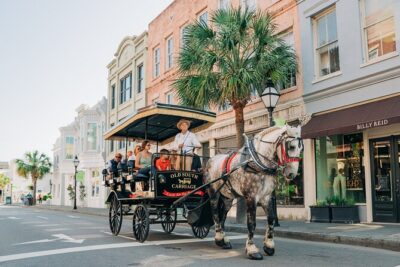
Charleston’s Old South Carriage Historic Horse & Carriage Tour
Read our review →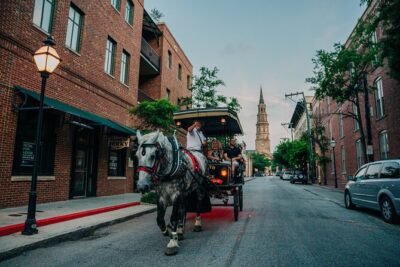
Haunted Evening Horse and Carriage Tour of Charleston
Read our review →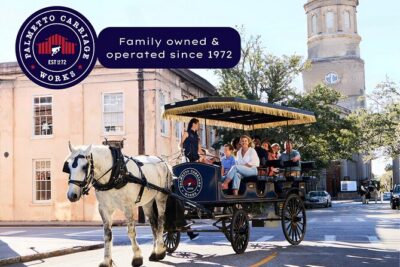
Charleston Horse-Drawn Carriage Tour: Explore Historic Charleston
Read our review →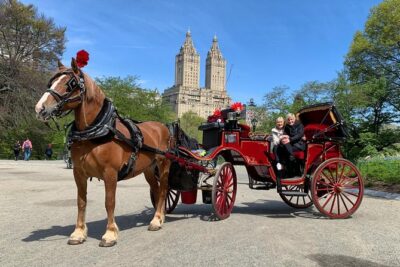
Official NYC Horse Carriage Rides in Central Park since 1979 ™
Read our review →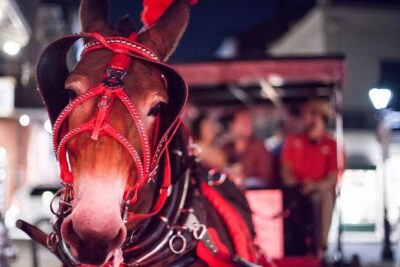
New Orleans Small-Group Haunted History Carriage Tour
Read our review →
Carriage Ride in Central Park (VIP – PRIVATE) Since 1964™
Read our review →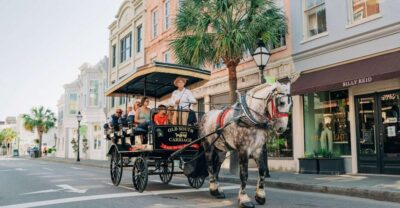
Historical Downtown Tour by Horse-drawn Carriage
Read our review →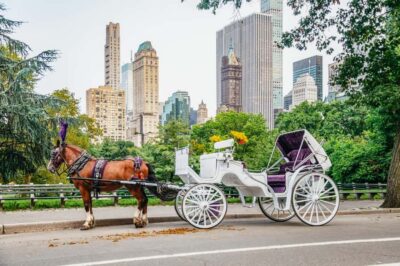
Browse the lists this tour appears in