Review · TOURS
Nairobi: Horseback Riding Tour Through Maize Plantation
A horseback ride through maize fields and forest is a fine change from Nairobi’s traffic and city noise. The route also passes a natural dam and reaches a village on the outskirts, so this feels like a local countryside outing rather than a simple circuit around a riding arena.
I like the choice of pace, and I like that beginners are not left to manage alone. Maina, also known as David, can hold the horse for inexperienced riders, while experienced riders can canter or gallop on selected parts of the route. The main drawback is the short duration: 90 minutes goes quickly, especially if you want a relaxed ride and time to take in the scenery.
Key points to know
- The route leaves the stable grounds: You ride through a maize plantation, a forest area, past a natural dam, and into a nearby village.
- Beginners receive hands-on help: A guide can hold the horse and use a shorter, similar route.
- Experienced riders have room to move: Cantering and galloping are possible only on specific suitable patches.
- The timing can be adjusted: Flexible scheduling helps if your Nairobi plans change.
- The group stays small: No more than 10 participants are included.
- The meeting point is New Muthaiga riding stables: The stable is at the end of the road, and transportation is not included.
From New Muthaiga stables into the countryside
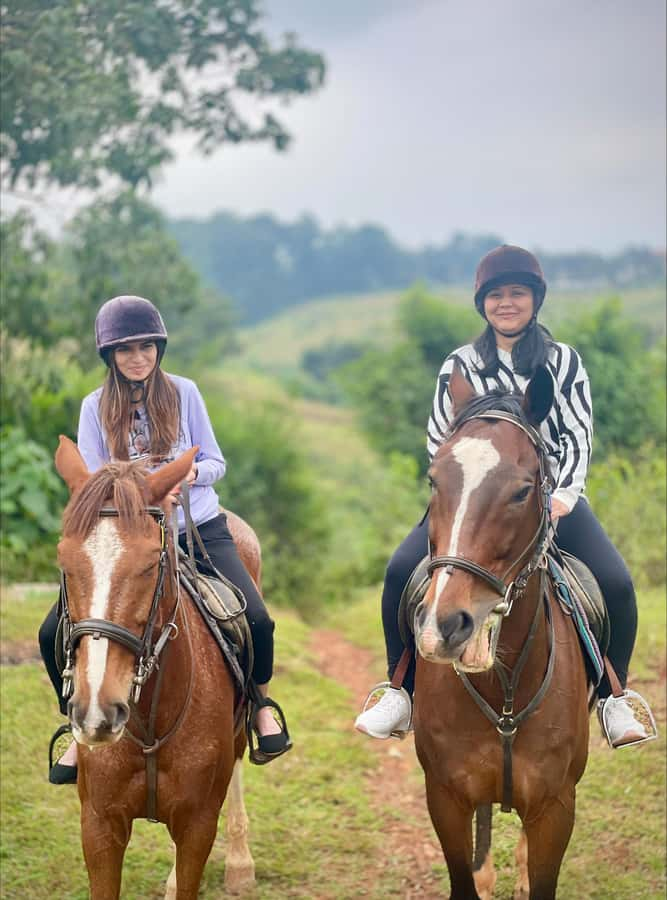
Your ride begins at New Muthaiga riding stables, at the end of the road. You meet the guide, get matched with a horse, put on a helmet, and receive help with saddling up. The start is practical rather than theatrical, which suits this experience. You are there to ride, not watch a long introduction.
The guide asks about your riding background and helps set the pace. This matters because the same outing can feel very different for a first-time rider and someone who is comfortable in the saddle. Experienced riders can request a faster ride, while beginners can stay at an easier pace with the guide close by.
The group is limited to 10 people. That is small enough to make individual help possible, though the exact feel will depend on how many people book your time. If you are new to horses, tell the guide clearly at the beginning. The information provided for this activity specifically allows the guide to hold the horse on a shorter route.
The stables are close enough to Nairobi’s city centre to make a ride practical during a stay in the city. You arrange your own transport, and the stable’s location at the end of the road is worth noting when you plan your arrival. Allow enough time to find the meeting point without rushing into the saddle.
More Horse Riding Tours in the world:
- Charleston’s Old South Carriage Historic Horse & Carriage Tour
★ 5.0 · 10,023 reviews - Jerez de la Frontera: How the Andalusian Horses Dance
★ 4.6 · 6,168 reviews - Punta Cana Zipline Adventure with Buggies and Horseback Riding
★ 5.0 · 5,001 reviews
Riding between maize rows
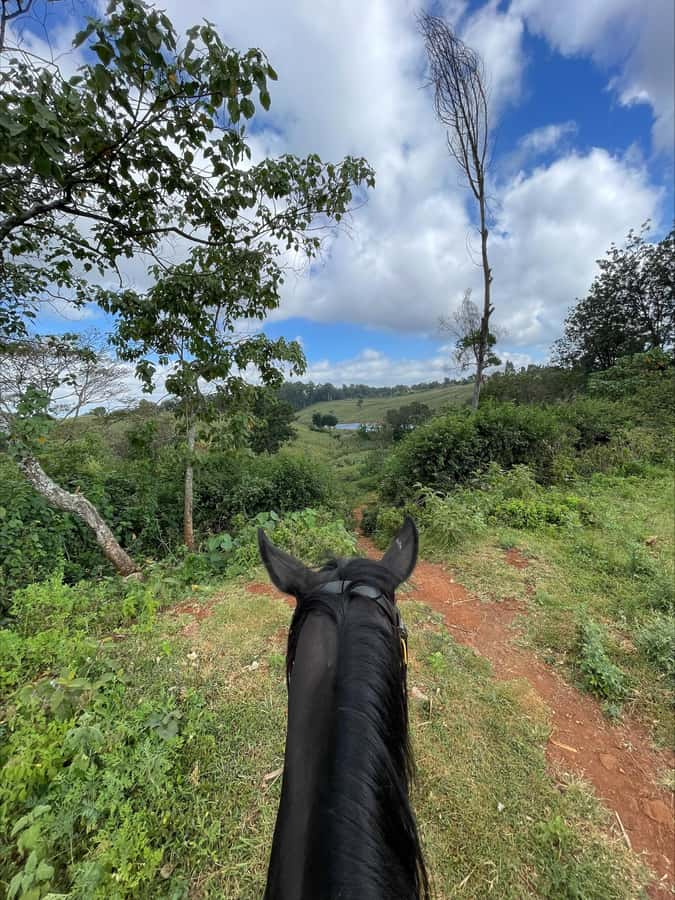
The first major setting is the maize plantation. Riding through growing maize gives you a close view of an important Kenyan crop and a break from the built-up parts of Nairobi. From horseback, the route moves at a gentle height, with the plants and tracks unfolding around you rather than behind a vehicle window.
This section is best for a steady pace. You have time to get used to the horse, settle your hands, and learn how the guide communicates with the group. For a first ride, that gradual start is useful. It gives you a chance to become comfortable before any faster riding is considered.
The route is not presented as a demanding riding lesson or a long-distance trek. It is a short countryside outing, with scenery doing much of the work. You may find the plantation section especially appealing if you want an activity that shows a working rural setting instead of only offering an enclosed riding area.
The tradeoff is that plantation scenery is seasonal and agricultural. You should book this for the pleasure of being outdoors and on horseback, not for a polished sightseeing route with constant attractions. The charm comes from the ordinary setting: crop rows, open tracks, and a guide helping you move through them.
A quieter stretch through the forest
From the plantation, the route continues into a forest area. This changes the mood of the ride. The crops give way to a more enclosed setting, and the horse becomes a calm way to move through the trees and natural surroundings.
I like this part because it adds variety within a 90-minute outing. You are not repeating the same loop around the stables. The plantation, forest, dam, and village each give the ride a different purpose, even though the whole trip remains compact.
The forest section is also a good place for a slower pace. Beginners can concentrate on balance and steering while taking in the surroundings. Experienced riders may prefer the faster sections elsewhere, since cantering and galloping are available only on specific patches of the route.
The guide remains important here. You are not simply released to follow an unknown path alone. The activity includes an experienced guide, and riders who need more help can have the horse held for them. That support can make the difference between a pleasant first ride and a tense one.
Pausing near the natural dam
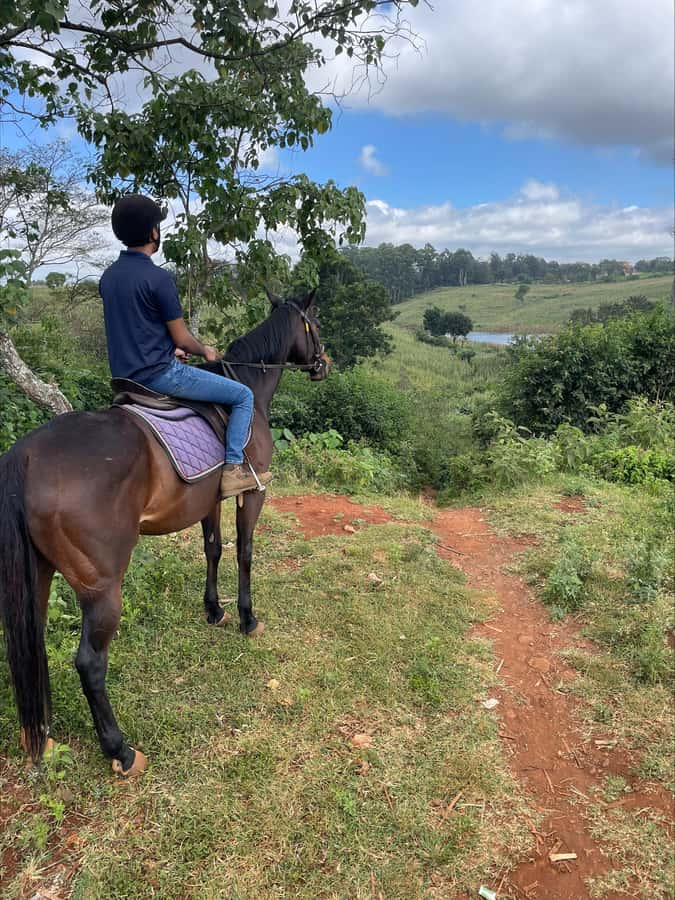
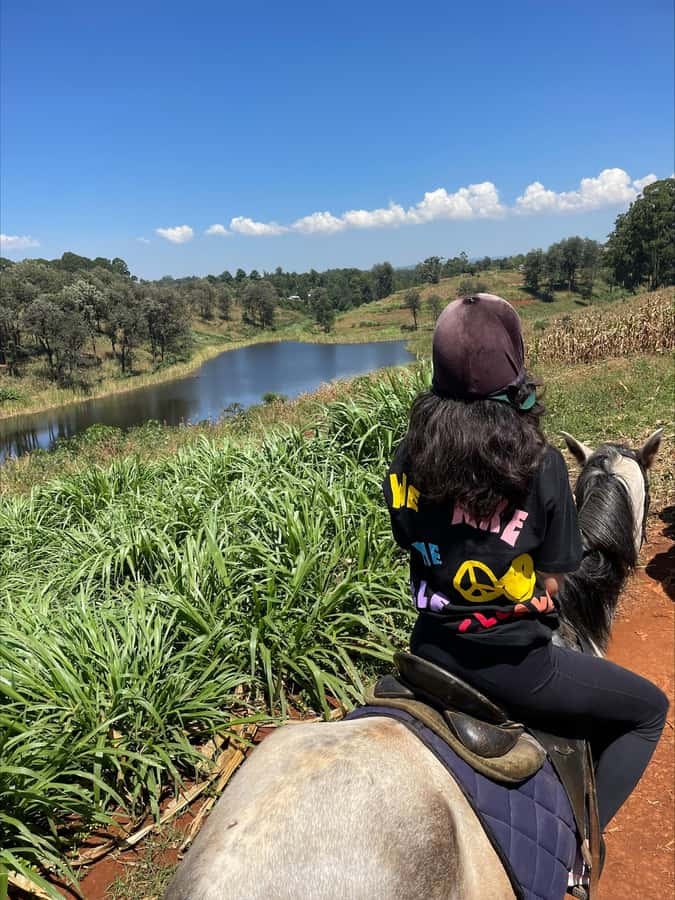
The route passes a natural dam, adding a water feature to the ride. The supplied details do not specify a formal stop or a long break at the dam, so you should think of it as part of the scenic route rather than a guaranteed picnic or viewing session.
Still, it helps give the ride a sense of progression. You move from cultivated ground to forest and then past water before reaching the village area. For a short tour, those changes keep the experience from feeling one-note.
Bring your own water. Food and drinks are not included, and the activity is only 90 minutes, so you may not need a full meal during the ride. A bottle is still a smart addition, especially if you are riding in warm weather or are not used to the effort of sitting and controlling a horse.
Do not expect a full nature excursion with a long stop at the dam. The value is in seeing it as part of the route and in having a natural landmark along the way. If you want a slower outing, ask about timing and pace before you start, since the schedule can be customized.
Same saddle, a completely different route:
- Luquillo Beach Horse Ride from Carabalí Rainforest Adventure Park
★ 5.0 · 4,762 reviews - Haunted Evening Horse and Carriage Tour of Charleston
★ 4.5 · 3,678 reviews - Charleston Horse-Drawn Carriage Tour: Explore Historic Charleston
★ 5.0 · 3,561 reviews - 2-hour Outer Banks Wild Horse Tour by 4WD Truck
★ 5.0 · 2,449 reviews
Reaching the village on the outskirts
The ride continues to a village on the outskirts. This is one of the more distinctive details of the experience. Instead of keeping you inside a private stable property, the route connects the ride to a nearby community setting.
You should treat this as a pass-through experience, not a guided village tour. The information provided describes exploring a village, but it does not promise specific cultural visits, demonstrations, meals, or meetings with residents. That distinction matters. You are paying for a horseback route that includes village scenery, not a full cultural program.
For you, the village section may be the most useful part if you want to see how the countryside meets the edge of Nairobi. It adds a human setting after the plantation and forest. At the same time, you should follow the guide’s directions and keep the group together. The route is designed around riding, so the guide controls how the group moves through each setting.
This is also where a slower pace can help. A fast canter is not suited to every part of the route, and the activity limits faster riding to selected patches. Beginners can stay with the guide on a shorter route, which means you can enjoy the village setting without needing advanced riding skills.
Choosing between a quiet ride and a faster pace
The activity is flexible about speed. You can choose a slower ride, or experienced riders can canter or gallop on specific sections. This is a real advantage for mixed groups, since not everyone needs to ride in the same style.
If you are experienced, be clear about your ability and what you want from the ride. Cantering or galloping is not available everywhere, and the guide decides which patches are suitable. The faster option is part of the route, not a promise of continuous speed from stable to village.
If you are inexperienced, you are not expected to pretend otherwise. The guide can hold your horse and take you along a similar but shorter route. That arrangement keeps the first experience manageable and gives you a chance to focus on basic confidence rather than trying to keep up with stronger riders.
The horse matters, too. Summer was paired with a first-time rider and was described as a good companion. You cannot request a particular horse based on the available information, but the stable does match riders with horses and provides assistance before setting off.
What the guide support really adds
Maina, who also uses the English name David, is a key contact for the riding experience. He is described as speaking calmly to the horse and offering reassuring help to a first-time rider. That kind of steady communication is useful when you are still learning how much pressure to use, how to sit, and how to respond to the horse.
Beatrice welcomes riders at the stable and helps with the start of the visit. The staff also allowed a timing change after a flight delay. That shows practical flexibility, though you should still contact the provider as soon as your plans change rather than assume any time can be moved.
The activity is offered in English and Swahili. This gives you two language options for instructions and conversation. Since riding directions need to be clear, tell the guide if you need a slower explanation before leaving the stable.
The small group size, with a maximum of 10 participants, supports this hands-on approach. A full group may still include riders with different abilities, but the guide can adjust the route and pace. That is much more useful than a fixed ride where everyone must follow the same speed.
Is $90 a fair price for 90 minutes?
At $90 per person, this is not the cheapest short activity in Nairobi. You are paying for a horse, stable support, helmet, guide assistance, and access to a route that includes a plantation, forest, natural dam, and village.
The price makes the most sense if you value a small group and need help as a beginner. A first-time rider may get more from this than from a bare-bones horse rental, because the guide can hold the horse and adjust the route. Experienced riders may also find the price reasonable if the chance to canter or gallop is important to them.
Food, drinks, and transport are not included. Those extra costs are easy to overlook when comparing activities. You need to arrange your way to New Muthaiga riding stables and bring your own water. On the other hand, the stable is close to the city centre, and Uber was used successfully to reach it.
The timing can be customized, which adds value for a Nairobi trip with a tight schedule. The standard duration is 90 minutes, while the included riding time is described as one to one and a half hours. Check the available start times before booking, especially if you are fitting the ride between a flight, meal, or other appointment.
What to wear and bring for the ride
Wear comfortable clothes that allow your legs and arms to move. You do not need to dress formally, and clothing suitable for riding is more useful than a special outfit. Comfortable shoes are required, and they should be suitable for being in stirrups and around the stables.
Bring water. Food and drinks are not provided. A helmet is included, so you do not need to arrange your own riding helmet for this activity.
You may want to avoid clothing that is too loose or uncomfortable in the saddle. The supplied guidance is simple: comfortable shoes and comfortable clothes. Follow it. The ride is short, but you will spend the full period seated on a moving horse, not standing on a sightseeing platform.
The activity suits both experienced and inexperienced riders. That does not mean every rider follows the same route. Beginners may take a shorter route with the guide holding the horse, while experienced riders can use approved patches for faster riding.
Who should book this horseback ride?
I would recommend it most to three kinds of people. First are beginners who want to try horseback riding without committing to a long trek. The 90-minute format, helmet, guide, and option for the guide to hold the horse make the first step less intimidating.
Second are experienced riders who want a short outdoor activity with some room for a canter or gallop. You should understand that faster riding is limited to specific patches, so this is not a full-speed riding session.
Third are Nairobi visitors looking for a weekend activity that feels different from a standard city attraction. The route reaches agricultural, wooded, waterside, and village settings in one outing. That variety gives the short tour a clear sense of place.
I would be less likely to choose it if you want a full-day riding trip, a formal riding lesson, or a structured cultural tour in the village. The activity is compact and flexible, but it does not include meals, transport, or a longer program.
Should you book the New Muthaiga ride?
Book it if you want a manageable horseback outing close to Nairobi, especially if you are new to riding or want a small group with personal help. The strongest reasons are the varied route, the adjustable pace, and the guide support for beginners.
At $90, check the timing and transport costs before you commit. Bring water, wear proper shoes, and tell the stable your riding level. If you want a relaxed countryside ride with the option for faster movement, this is a sensible choice. If you want hours in the saddle, you will need a longer riding program.
Cancellation is free up to 24 hours before the activity, and you can reserve now and pay later. Those policies help if your Nairobi schedule is still shifting, but the main decision remains simple: choose this for a short, guided ride through several local settings, not for an all-day equestrian adventure.
FAQ
Where does the horseback riding tour begin?
The meeting point is New Muthaiga riding stables at the end of the road.
How long does the horseback ride last?
The activity lasts about 90 minutes, with the included tour described as one to one and a half hours.
What areas does the route visit?
You ride through a maize plantation, a forest area, past a natural dam, and into a village on the outskirts.
Is the activity suitable for beginners?
Yes. It is suitable for inexperienced riders, and a guide can hold the horse on a similar but shorter route.
Can experienced riders canter or gallop?
Yes. Experienced riders can canter or gallop on specific patches of the route that are suitable for faster riding.
Is a helmet included?
Yes. A helmet is included in the horseback tour.
What should I bring?
Bring comfortable shoes, comfortable riding clothes, and water.
Are food and drinks included?
No. Food and drinks are not included.
Is transportation to the stables included?
No. You must arrange your own transportation to and from New Muthaiga riding stables.
What languages does the guide speak?
The live guide speaks English and Swahili.
How many people can join the group?
The group is limited to 10 participants.
Can the tour timing be changed?
Yes. Timings can be customized, subject to availability.
Can I cancel for a full refund?
Yes. You can cancel up to 24 hours in advance for a full refund.
Do I have to pay at the time of booking?
No. The reserve now and pay later option lets you book your place without paying immediately.
Just added around the world
- Horse Ride + Swimming with Turtles in Aquarium at Nungwi Beach★ 4.5 · 8 reviews
- Xi’an Half-Day Private Tour of Terracotta Warriors and Horses Museum★ 5.0 · 2 reviews
- Desert Trail in Morocco on Horseback★ 5.0 · 2 reviews
- Zakytnhos Horse Riding Swimming Experience★ 3.5 · 3 reviews
- Half-Day Tour: Terracotta Warriors and Horses Museum★ 5.0 · 7 reviews
- Beach & countryside horse riding outside Westport. Guided. 1 hour★ 5.0 · 56 reviews
- Private tour to Sevan, Dilijan Off-road tour & Horseback riding★ 4.5 · 5 reviews
- Vienna Horse-Drawn Carriage Ride with Sparkling Wine and Food★ 5.0 · 44 reviews
Tours, compared.
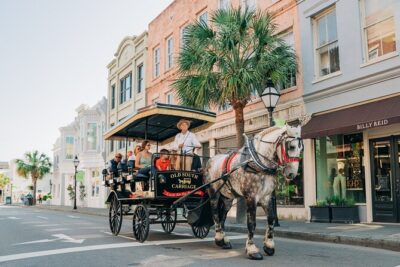
Charleston’s Old South Carriage Historic Horse & Carriage Tour
Read our review →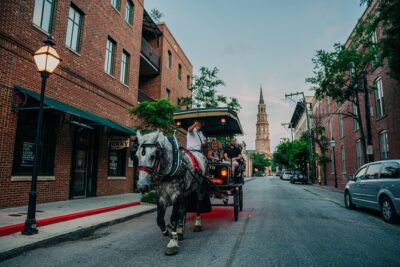
Haunted Evening Horse and Carriage Tour of Charleston
Read our review →
Charleston Horse-Drawn Carriage Tour: Explore Historic Charleston
Read our review →
New Orleans Small-Group Haunted History Carriage Tour
Read our review →
Red Sea & Desert Horse Riding Tour with Swimming
Read our review →
Half-Day Thoroughbred Horse Farm Tour in Kentucky
Read our review →