
Review · HORSE-DRAWN CARRIAGE TOURS
First impression of Luxor-Explore secrets of Luxor by horse carriage
Luxor’s East Bank is at its most atmospheric when you pass between modern streets, Nile views, and ancient temples by horse carriage. This four-hour outing covers Karnak, Luxor Temple, the Avenue of Sphinxes, and Abu Haggag Mosque, with an Egyptologist guide to explain the layers of history.
I like the simple meeting point at Luxor Museum and the chance to avoid haggling with drivers. I also like the mix of carriage travel and walking, since the temples need time on foot. The main concern is animal welfare: one serious account describes an emaciated horse collapsing in the heat, so this tour deserves careful thought from anyone uneasy about carriage rides.
Key points to know before booking
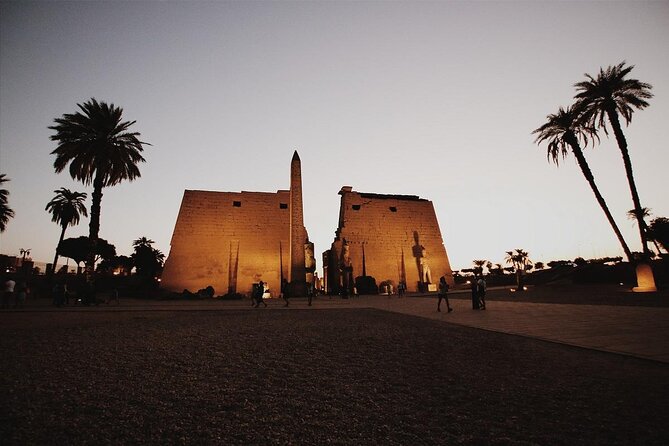
- Four major sights in about four hours: You visit Karnak Temple, Luxor Temple, the Avenue of Sphinxes, and Abu Haggag Mosque.
- The carriage is part of the appeal: You travel between stops by horse carriage, with photo opportunities along the Nile.
- Temple tickets cost extra: Karnak and Luxor Temple admission is not included. The stated combined cost is 200 Egyptian pounds, listed as about $12.
- A guide adds context: An Egyptologist explains ancient worship, royal building projects, and recent archaeological discoveries.
- Meet at Luxor Museum: Look for the tour leader holding a red flag at the museum entrance area.
- Animal welfare needs attention: The horse condition can vary, and one disturbing experience involved a horse falling and being unable to rise without help.
A gentle introduction to Luxor’s East Bank
This tour gives you a quick first look at the part of Luxor that grew around ancient Thebes. You begin at Luxor Museum, then travel toward Karnak by carriage before walking through some of Egypt’s most important temple remains.
That format works well if you have limited time. You get transportation between the main sights, a guide to put the monuments in context, and enough walking time to see the major features without committing to a full-day program.
The listed price is $30 per person. That is a fair price if the carriage transfer, guide, and four-hour schedule all operate as described. You still need to pay for the two temple entrances, so budget for the extra 200 Egyptian pounds quoted for Karnak and Luxor Temple.
The tour is usually booked about 15 days ahead. That does not mean you must reserve exactly that early, but it is a useful sign that you should not leave it until the last moment during a busy period.
More Horse-Drawn Carriage Tours in Egypt
- Luxor: Private Full-Day Customized Tour With Carriage Ride
★ 4.8 · 105 reviews - Luxor City Tour by Horse Carriage Visit Local
★ 4.9 · 13 reviews - Luxor City Tour By Horse Carriage
★ 5.0 · 10 reviews
Meeting at Luxor Museum
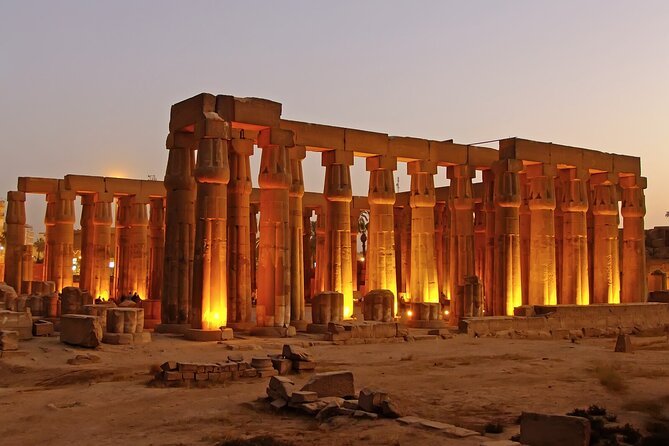
The starting point is Luxor Museum on Kornish Al Nile. The tour leader is meant to hold a red flag, which gives you a clear visual marker in a city where several tours may gather near the river.
The museum itself is a useful landmark, even though this activity does not include a museum visit. You meet outside, spend roughly ten minutes at the first stop, and then continue by carriage.
One practical point deserves attention. A customer expected the carriage to be waiting at the museum but instead walked to the first point of interest before asking about the ride. The operator acknowledged that the tour title and arrangement were unclear. I would confirm the exact carriage meeting procedure before setting out, especially if the ride itself is the reason you chose this experience.
The advertised group limit is 50 people. That is large enough to affect how easily you hear the guide, particularly inside open courtyards or busy temple areas. If your group approaches that limit, stay close to the guide and agree on a clear regrouping point.
Riding toward Karnak Temple
The horse carriage provides a slower view of Luxor than a car or taxi. You can watch the city pass by and take photographs along the Nile while moving toward Karnak.
That is the best reason to choose this outing instead of a standard vehicle transfer. The carriage makes the journey part of the experience rather than treating it as dead time between monuments.
The trade-off is comfort and animal welfare. A carriage offers little control over traffic, heat, or the condition of the horse. One account describes an old, extremely thin horse collapsing on a hot day and needing the harness removed before it could be helped. This is not a minor complaint. If you see a horse in poor condition, or if the weather is harsh, you should feel comfortable asking to stop or choosing another form of transport.
The supplied information does not explain how horses are selected, how often they rest, or what welfare checks are used. Ask about those points before boarding if they matter to you. A pleasant old-fashioned ride is not worth supporting an animal that is unfit to work.
Karnak Temple and the Hypostyle Hall

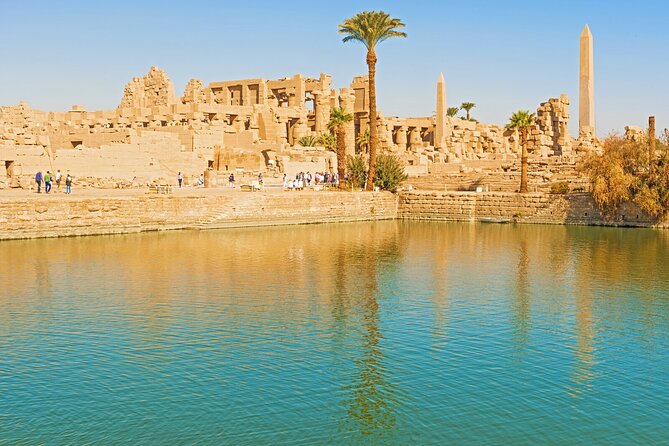
Karnak receives about an hour, not counting the carriage ride and any delays. Its scale makes it the biggest stop on the route.
Construction began roughly 4,000 years ago and continued through many ruling periods until Roman control. Each ruler added, altered, or reused parts of the complex, so Karnak feels less like one finished building and more like a long record of Egyptian religious power.
The central attraction is the Temple of Amun-Ra. Ancient Egyptians regarded it as the earthly home of Amun-Ra, his wife Mut, and their son Khonsu. The guide can help you understand that the site was not simply a place for public worship. It was a major religious center tied to kingship, ritual, and the authority of the state.
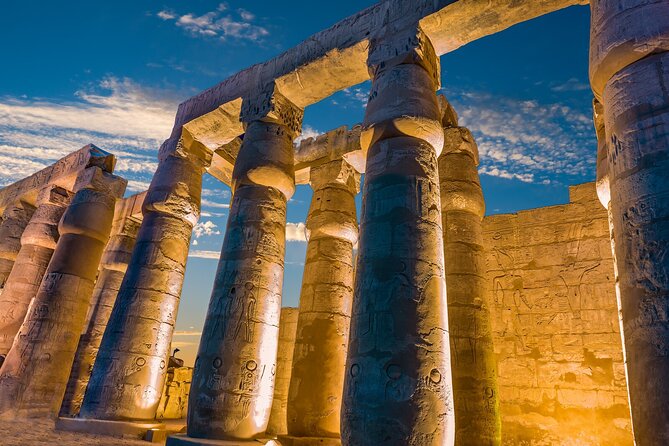
Give special attention to the Hypostyle Hall, built during the reign of Seti I. Its forest of enormous columns is one of the most memorable spaces in Luxor. The scale is easy to underestimate in photographs, so take time to look upward and across the rows rather than rushing straight through.
Karnak admission is extra. The stated ticket cost for Karnak and Luxor Temple together is 200 Egyptian pounds, listed as approximately $12. Since ticket prices can change, confirm the current amount when booking or at the entrance.
An hour gives you a useful overview, but it will not cover every section. If Karnak is your main reason for visiting Luxor, you may want a longer independent visit. If you want an efficient introduction, the scheduled hour keeps the day moving.
More Horse-Drawn Carriage Tours in Luxor:
- Luxor East Bank: Private Half-Day Tour W/Free Carriage Ride
★ 5.0 · 8 reviews - 3-Hour Private Luxor Horse Carriage City Tour
★ 4.5 · 5 reviews - Horse Carriage City Tour in Luxor city with meal and soft drink
★ 5.0 · 3 reviews - Discover Luxor City Tour by Horse Carriage
★ 5.0 · 3 reviews
Luxor Temple and the story of kingship
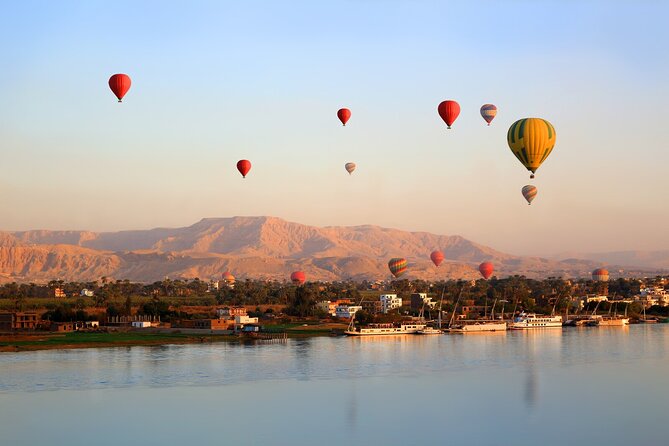
The next major stop is Luxor Temple, with about an hour on foot. This temple differs from Karnak in feel and purpose, though the two sites were connected by the Avenue of Sphinxes.
Amenhotep III, Ramses II, Tutankhamun, and other rulers added to the complex over hundreds of years. It was linked to the annual renewal of the king, when Amun was believed to experience rebirth during a ceremonial event known as the First Occasion.
The Great Colonnade Hall is the feature to watch for. It measures almost 61 meters long and contains 28 columns, each about 21 feet high. Much of its decoration was carried out under Tutankhamun around 1330 BC.
The temple also shows how ancient sites changed after the pharaohs. Some sidewalls were dismantled and reused as building material. That mixture of grand surviving work and missing sections is part of what makes the place interesting. You are not looking at a perfectly preserved monument, but at a site altered by many centuries of religious, political, and practical use.
Your ticket covers neither temple through the tour price. Build that extra expense into your budget, and keep some flexibility in case local ticket prices differ from the stated amount.
Walking the Avenue of Sphinxes

The Avenue of Sphinxes receives about 30 minutes and admission is listed as free. It once connected the major temple areas, creating a ceremonial route lined with statues.
Work on the avenue began in the New Kingdom and was completed under Nectanebo I of the 30th Dynasty, who ruled from 380 to 362 BC. Over time, sand covered the road. Archaeological work began uncovering sections in the mid-20th century, with groups of statues found between 1949 and 1964.
Egypt reopened the 3,000-year-old avenue in a large public ceremony on November 25, 2021. Its modern presentation gives you a sense of how Luxor continues to connect ancient remains with present-day archaeology.
Thirty minutes is enough for photographs and a short explanation, but not a detailed study of every statue or excavation phase. The stop works best as a link between the two temples rather than as the central feature of the tour.
Abu Haggag Mosque inside Luxor Temple
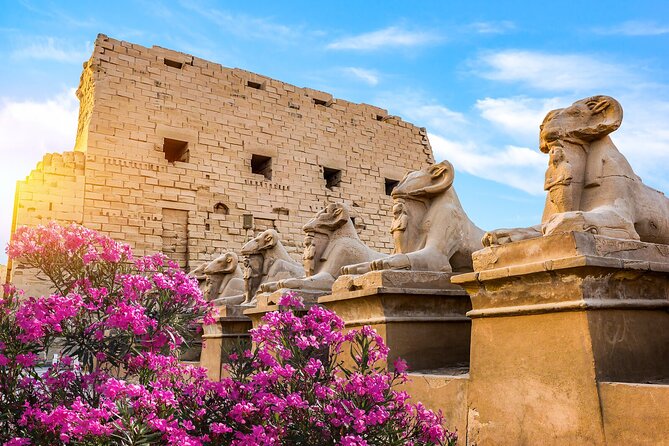
The final stop is Abu Haggag Mosque, built into Luxor Temple. This is one of the most unusual details in the route because it shows how a sacred place can continue in use long after the civilization that first built it has changed.
The mosque is associated with Abu Haggag and occupies part of the ancient temple structure. Its location helps you see that Luxor is not a museum sealed off from modern life. Ancient stone, later religious buildings, and present-day worship exist in the same setting.
The stop is scheduled for about ten minutes. That is enough for a brief explanation and a look at the unusual connection, but it is not a full mosque visit. Follow any local instructions about access and dress, and remember that this is an active religious place rather than only a historic monument.
What the guide adds
The tour includes an Egyptologist guide. That matters most at Karnak and Luxor Temple, where the number of rulers, gods, rebuilding phases, and ceremonies can become confusing without help.
A good explanation can show you why Amun-Ra mattered, how different pharaohs left their mark, and why Luxor Temple was tied to the king’s renewal. The guide is also expected to discuss current archaeological discoveries, which adds a modern connection to the ancient remains.
One particularly positive account praises a host named Ababoub. If Ababoub is assigned to your group, you may find the personal hosting style a strong part of the day, but guide assignments can change, so it is best not to book on the assumption that one named person will lead the tour.
Because the group may include up to 50 people, ask questions early and stay within hearing distance. The short stops leave little room to catch up after wandering off for photographs.
Value, timing, and practical limits
At $30 per person, the outing sits in the affordable range for a guided four-hour introduction to Luxor’s East Bank. The value comes from combining transportation, an Egyptologist guide, four sites, and a route that avoids arranging separate rides between the temples.
The extra temple tickets raise the real cost. You should also remember that the experience begins and ends at Luxor Museum, so you need to arrange your own way to the meeting point.
The tour is listed as suitable for most participants, with service animals allowed and public transportation nearby. No special mobility details are provided, and the temples involve walking across historic sites. If you need a specific level of accessibility, ask the operator before booking.
The experience ends back at the meeting point. That makes it easy to continue along the Nile afterward, return to your accommodation, or visit the museum separately.
Free cancellation is available if you cancel at least 24 hours before the start time. Inside that window, the amount paid is not refunded, and changes are not accepted. The cut-off follows Luxor local time.
Who should book this experience?
I would consider it for a first day in Luxor, especially if you want an overview before returning to the temples on your own. The route gives you the key East Bank sights without asking you to plan every transfer yourself.
It also suits someone who likes historic transport and short guided visits. The carriage ride offers a different view of the city, while the guide supplies the background that helps the monuments make sense.
I would hesitate if you are deeply concerned about working animals, sensitive to heat, or hoping for a small, quiet group. The horse welfare concern is serious, and the possible 50-person group may feel crowded. The unclear meeting arrangement is another reason to confirm details before you go.
Should you book the Luxor horse-carriage tour?
Book it if you want a reasonably priced introduction to Karnak, Luxor Temple, the Avenue of Sphinxes, and Abu Haggag Mosque, and you are comfortable with a horse-carriage ride after checking the animal’s condition.
The guide, the simple meeting point, and the combination of carriage travel with temple walks are genuine strengths. The schedule is efficient, and the route covers the essential East Bank sights.
Skip it or choose a vehicle-based alternative if animal welfare is a firm concern. If you do book, confirm where the carriage will meet you, ask about the horse’s condition, and keep the extra temple entrance fees in mind. Those few checks will help you decide if the $30 price matches the experience you want.
FAQ
Where does the tour begin?
It begins in front of Luxor Museum on Kornish Al Nile in Luxor City. The tour leader is identified by a red flag.
How long does the experience last?
The tour lasts approximately four hours.
How much does the tour cost?
The listed price is $30 per person.
Are temple entrance tickets included?
No. Entrance to Karnak Temple and Luxor Temple is extra. The stated combined price is 200 Egyptian pounds, listed as about $12.
Which places does the tour visit?
The route includes Karnak Temple, Luxor Temple, the Avenue of Sphinxes, and Abu Haggag Mosque. The meeting point is Luxor Museum.
Is transportation included?
Yes. Transportation by horse carriage is included. The tour ends back at the original meeting point.
How large can the group be?
The activity can have a maximum of 50 travelers.
Can I cancel for a full refund?
Yes, if you cancel at least 24 hours before the experience start time. Cancellations or changes made within 24 hours are not refunded or accepted.
Just added around Luxor
- Luxor City Tour By Horse Carriage★ 5.0 · 10 reviews
- Rural Horse Riding Adventure★ 5.0 · 6 reviews
- Horse Carriage City Tour in Luxor city with meal and soft drink★ 5.0 · 3 reviews
- Discover Luxor City Tour by Horse Carriage★ 5.0 · 3 reviews
- Luxor City Tour By Horse Carriage in Egypt★ 5.0 · 2 reviews
- 3-Hour Private Luxor Horse Carriage City Tour★ 4.5 · 5 reviews
- Horse Carriage Tour to Valley of the kings and Hatshepsut temple★ 5.0 · 2 reviews
- Private City Tour One Hour By Horse Carriage & 1 hour River Nile boat tour-Luxor★ 5.0 · 2 reviews
Horse-Drawn Carriage Tours, compared.

Charleston’s Old South Carriage Historic Horse & Carriage Tour
Read our review →
Haunted Evening Horse and Carriage Tour of Charleston
Read our review →
Charleston Horse-Drawn Carriage Tour: Explore Historic Charleston
Read our review →
Official NYC Horse Carriage Rides in Central Park since 1979 ™
Read our review →
New Orleans Small-Group Haunted History Carriage Tour
Read our review →
New Orleans French Quarter and More Carriage Ride
Read our review →
Carriage Ride in Central Park (VIP – PRIVATE) Since 1964™
Read our review →
Historical Downtown Tour by Horse-drawn Carriage
Read our review →Browse the lists this tour appears in