
Review · HORSE-DRAWN CARRIAGE TOURS
Gettysburg: Horse-Drawn Carriage Battlefield Tour
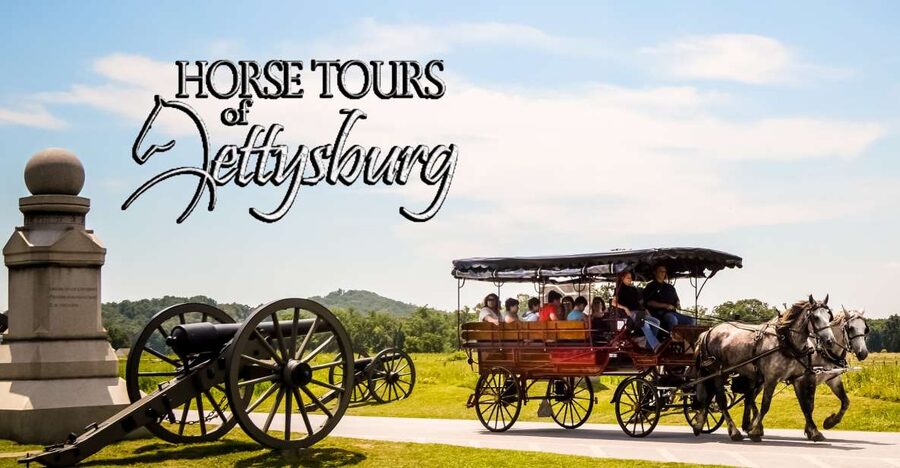
Gettysburg’s battlefield is vast, and a slow horse-drawn carriage is a memorable way to take it in. You sit in the open air while a licensed guide connects the broad fields, monuments, soldiers, and townspeople to the three brutal days of July 1863. The small group, limited to 10 people, keeps the talk personal.
I especially like the unhurried pace, which gives you time to look across the fields instead of rushing from marker to marker. I also like the chance to ask questions throughout the ride, with guides such as Jim, Dale, Truman, and Chris praised for turning military events into clear, engaging stories. The main drawback is simple: this is outdoors in all weather, and the slow carriage ride may not cover every part of the battle in equal detail.
Key points at a glance
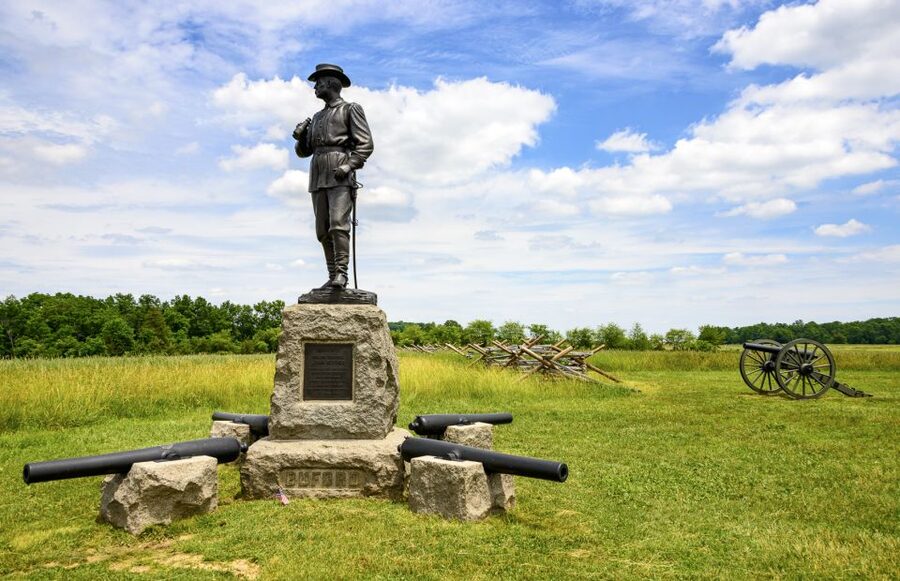
- Two hours in an open-top carriage: Expect fresh air, wide views, and exposure to heat, cold, wind, or rain.
- A licensed English-speaking guide: The format allows frequent questions and a more personal conversation than a recorded tour.
- Small groups of up to 10: You should have a better chance of hearing the guide and following the story.
- Calm horses and a relaxed pace: The horses may be available for gentle petting and photographs after the ride.
- A useful introduction to Gettysburg: The tour helps you understand the battle before exploring more on your own.
- $74 per person: The price pays for a two-hour guided experience, carriage, guide, and parking, not just transportation.
Why a carriage makes sense at Gettysburg
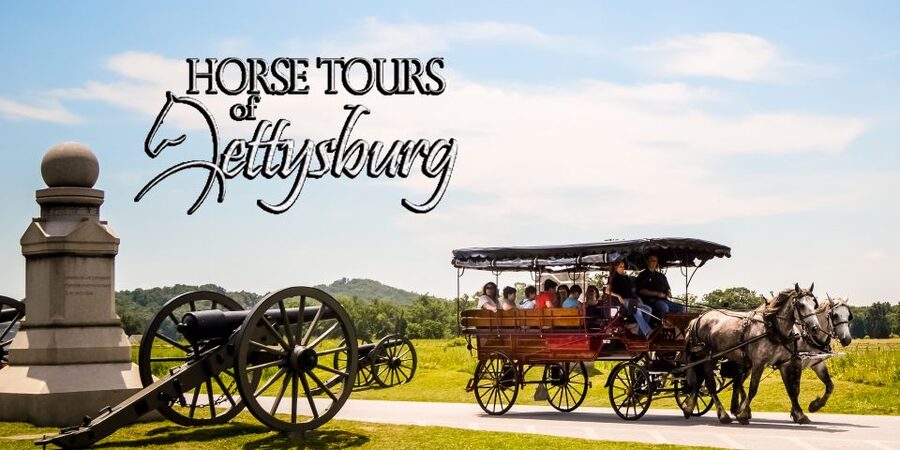
Gettysburg is not one compact historic site. The battlefield spreads across open country, with roads, fields, monuments, ridges, and long sight lines that are difficult to grasp from a museum room. Walking every important area would take far more than two hours, and driving yourself can leave you focused on directions rather than the story.
The carriage solves part of that problem. You remain seated as the horses carry you at a slow, comfortable pace, while the guide explains what happened around you. That pace is not built for covering every acre. It is built for giving each view time to register.
I like the physical rhythm of the ride. The clip-clop of the horses, the open air, and the broad fields make the setting feel less like a standard bus excursion. You still see modern roads and passing vehicles, and this is not a time machine. But the carriage adds a quiet, old-fashioned quality that fits the subject better than a sealed vehicle might.
The ride also gives you a useful pause between serious subjects. Gettysburg can be emotionally heavy. A carriage seat, a calm team of horses, and a guide who can answer questions make the experience easier to absorb, especially for families with children or teenagers.
More Horse-Drawn Carriage Tours in the USA
- Charleston’s Old South Carriage Historic Horse & Carriage Tour
★ 5.0 · 10,023 reviews - Haunted Evening Horse and Carriage Tour of Charleston
★ 4.5 · 3,678 reviews - Charleston Horse-Drawn Carriage Tour: Explore Historic Charleston
★ 5.0 · 3,561 reviews
At the meeting point and into the open-top carriage
When you arrive, a staff member directs you to parking. Do not park on the grass. Parking is included, which is a practical help in a destination where you may already be paying for other attractions.
The staff handles the horses and carriage, while the battlefield guide leads the historical portion. You may meet different guides depending on the departure, including Jim, Dale, Truman, Chris, Don, Jeff, or others on the team. The important point is that the guide is there in person, rather than delivering a fixed audio track.
The carriage is open-top, so dress for the forecast, not just the temperature when you leave your hotel. Summer sun can feel strong in an exposed carriage. In cooler months, wind makes the ride feel colder than a walk through town. Blankets may be available in chilly weather, but you should still bring layers.
The activity runs rain or shine. That is worth taking seriously. Weather can add atmosphere to the setting, but it can also make two hours less comfortable. A light rain jacket, hat, sunscreen, and water are sensible choices. One person specifically wished cold water were handed out, so bring your own bottle.
The seats are described as comfortable, though a carriage seat is still a carriage seat. One person suggested bringing a cushion if you prefer extra padding. The ride is not designed for people with mobility impairments or wheelchair users, and the activity is listed as unsuitable for wheelchair users. A separate account says a parent using a cane managed the wagon well, but you should ask the operator about your own needs before booking.
The ride across the July 1863 battlefield
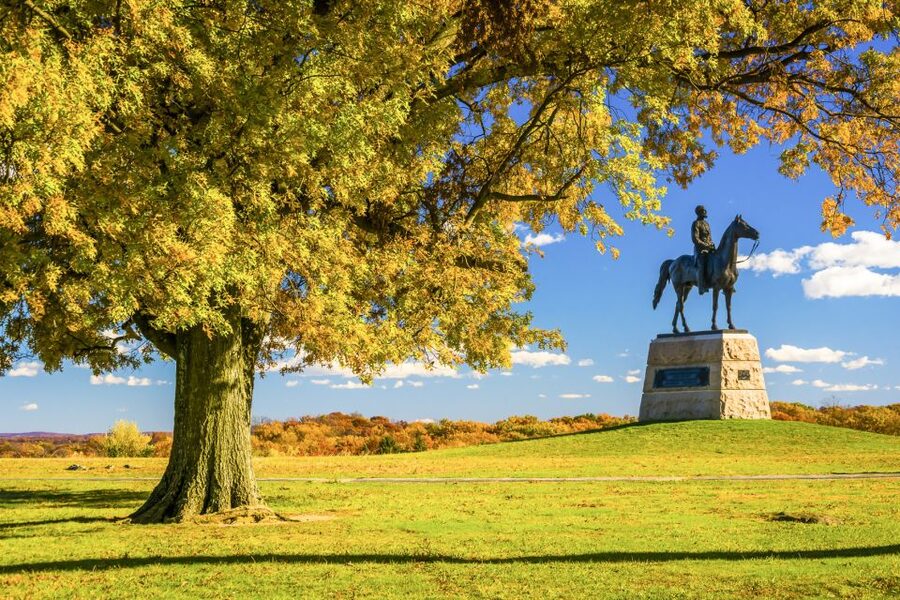
Once the carriage leaves, the guide sets the pace. You move slowly enough to watch the fields and monuments while hearing how the battle developed. The guide’s job is not simply to name landmarks. It is to explain why a position mattered, how troops moved, and how the terrain shaped decisions.
That context is the real value here. Gettysburg can look peaceful today, with green fields spread across the horizon. Without explanation, it is easy to see only pretty countryside and stone monuments. A good guide helps you picture the confusion of July 1863 and understand why particular hills, roads, and ridges became so important.
The guides use stories as well as dates. Jim has been praised for adding personal stories and making the past easier to connect with. Dale is known for humor alongside clear explanations. Truman brings strong subject knowledge, while Chris has been singled out for telling the story in a way that keeps children and adults involved.
You should feel free to ask questions. This is one of the strongest reasons to choose the small carriage rather than a larger group format. Questions have included other Civil War battles, the commanders on both sides, and the events leading up to Gettysburg. The guides are expected to handle more than a memorized route.
One particularly effective style of teaching is interactive. During one ride, the guide asked the group to imagine firing a cannon. That kind of exercise can help younger visitors picture the scale and noise of the battle without turning the subject into a game.
The approach remains respectful. You are crossing ground where tens of thousands of soldiers died, and where local residents were caught in the fighting. The ride gives you room to remember that this was not only a contest between generals. It affected ordinary families and the town itself.
What you may see, and what the route may not cover
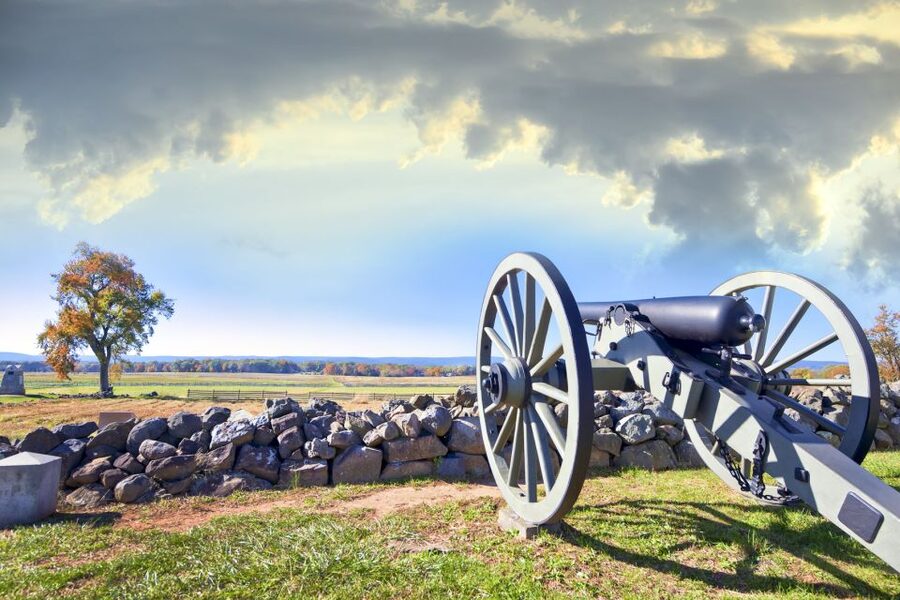
You will see expansive battlefield fields and monuments from the carriage, but the supplied information does not promise a complete circuit of every Gettysburg site. One detailed account said the ride concentrated on the battle’s second day and did not include the cemetery. That means you should not book this as your only source of Gettysburg history if you want all three days covered in equal depth.
I would treat the carriage ride as a strong orientation. It can give you a working map and a basic understanding of the battle, then help you decide where to spend more time afterward. Several people found it useful after driving around the battlefield themselves, while another used it as an introduction before an auto tour.
The distinction matters. A private vehicle lets you stop longer, visit additional areas, and follow a route at your own speed. The carriage gives you a guide’s attention and removes the need to navigate. You are paying for interpretation and atmosphere, not maximum coverage.
If the cemetery is important to you, confirm the route before departure. One person specifically wished there had been time to visit it. Do not assume that a battlefield carriage ride includes every major Gettysburg landmark simply because the experience lasts two hours.
Same saddle, a completely different route:
- 2-hour Outer Banks Wild Horse Tour by 4WD Truck
★ 5.0 · 2,449 reviews - Official NYC Horse Carriage Rides in Central Park since 1979 ™
★ 5.0 · 2,365 reviews - New Orleans Small-Group Haunted History Carriage Tour
★ 4.5 · 2,289 reviews - Half-Day Thoroughbred Horse Farm Tour in Kentucky
★ 5.0 · 1,924 reviews
The horses are part of the experience
The horses are not just transport. They are a visible part of the outing, and the staff gives them careful attention. The horses are often identified by name, including Fred and George, Nash and Trina, Hank and Hunter, and other teams used on different departures.
You may have time to pet the horses and take photographs after returning. That extra moment matters for children, animal lovers, and anyone who wants a gentler ending after the serious history. Several accounts singled out the horses as calm, friendly, beautiful, and well handled.
The drivers and horse handlers also contribute to the experience. They explain something about the team, help guests settle in, and manage the carriage on the roads. You should expect the horses to set the speed. That is part of the charm, but it also explains why the ride takes time to reach some battlefield sections.
The slow pace can be a benefit or a limitation. If you want a peaceful ride with time to look around, it works well. If you want rapid coverage and a tightly packed historical route, you may find the carriage too slow. One person enjoyed the views but felt that reaching the battlefield took a while.
Is $74 a fair price?
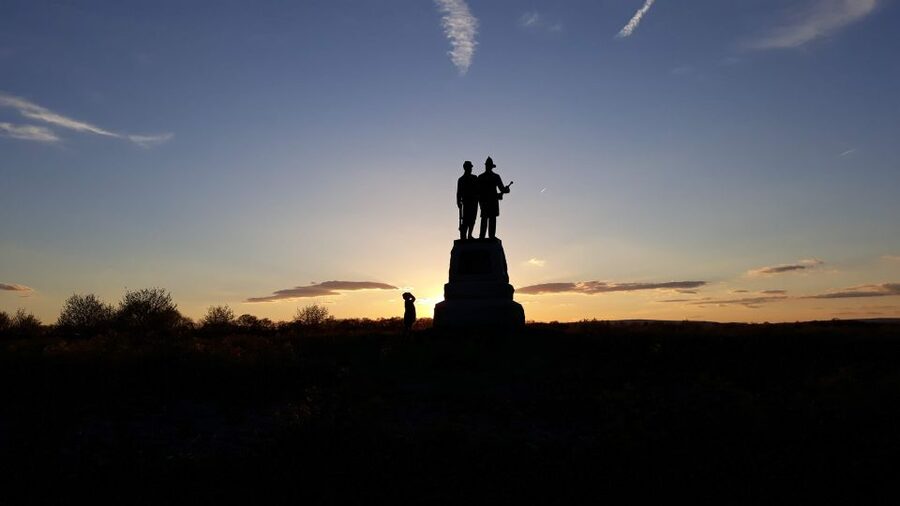
At $74 per person, this is not the cheapest way to see Gettysburg. The fee includes the two-hour carriage ride, a licensed battlefield guide, and parking. You are also paying for a small group of no more than 10 people, which is important when you want to ask questions or hear detailed explanations.
The value depends on what you want. If you only need transportation around the fields, the price may feel high. If you want an informed guide, a special way to travel, and a more personal format, the cost is easier to justify.
I think the strongest value comes from combining this with other Gettysburg sights. Use the carriage ride early in your stay to understand the main story. Then visit the museum, cemetery, or additional battlefield areas at your own pace. If you already know the battle well, the carriage may be more about the setting and the horses than new information.
The high rating of 4.8 from 896 reviews suggests broad satisfaction, but the details matter more than the number. The most consistent strengths are the guides, the relaxed pace, the horses, and the chance to ask questions. The recurring cautions are the exposed weather, the carriage seating, the lack of a guaranteed cemetery stop, and possible limits in battlefield coverage.
Who will enjoy this two-hour ride?
I would recommend it to families, couples, small groups, and first-time visitors who want history explained without a long walk. It also suits adults who prefer a calm pace and a live guide rather than a recording.
Children and teenagers can do well here because the carriage adds movement and the guides use stories, questions, and simple visual details. The ride is not merely a lecture, though younger children still need to be ready for a serious subject and two hours of sitting.
It can be a good choice for anyone who has trouble walking long distances, but do not confuse that with full accessibility. The carriage reduces walking, yet the activity is not suitable for wheelchair users or people with mobility impairments. Ask before booking if climbing into the carriage or sitting for two hours may be difficult.
History fans should know that the quality of the ride depends partly on the guide assigned that day. The available guides have been praised for being friendly, funny, and well versed in the Civil War. The small group gives you a better chance of shaping the conversation around your interests.
Practical advice before you book
Book with the weather in mind. In warm months, wear light clothing and sun protection. In spring or autumn, bring a jacket. In wet weather, use proper rain gear rather than assuming the open carriage will shield you.
Arrive ready to park where staff directs you, and keep off the grass. Bring water, especially on a hot day. If you want photographs with the horses, leave a little time after the ride rather than rushing away as soon as the carriage returns.
Keep your expectations clear. This is a guided carriage tour, not a complete three-day battlefield study. It may focus on selected areas, and one account specifically found the coverage centered on the second day. If you want every major stop, plan another visit by car or use a separate auto tour as well.
Free cancellation is available up to 24 hours before departure, and you can reserve now and pay later. Starting times vary, so check availability when choosing your date. The tour is conducted in English.
Should you book the Gettysburg carriage tour?
Book it if you want Gettysburg’s story delivered at a human pace, with room for questions and a memorable ride through the open air. The guides are the main reason to choose it, while the horses and quiet carriage make the setting feel distinct from a standard sightseeing vehicle.
Skip it if you need wheelchair access, dislike being outdoors in uncertain weather, or want a full survey of every battlefield area and the cemetery in one sitting. For most first-time visitors, I would use this as a two-hour introduction, then add the sites it does not cover. At $74, it earns its price when you value personal guiding, a small group, and the unusual pleasure of seeing Gettysburg behind a calm horse team.
FAQ
How long is the Gettysburg horse-drawn carriage tour?
The tour lasts two hours.
How much does the tour cost?
The listed price is $74 per person.
What is included in the price?
The price includes the horse-drawn carriage tour, a licensed battlefield guide, and parking.
How many people are in each group?
The group is limited to 10 participants.
What language is the tour conducted in?
The live tour guide speaks English, and the activity is offered in English.
Does the tour operate in bad weather?
Yes. The activity takes place rain or shine, so you should wear weather-appropriate clothing.
Can I ask the guide questions during the ride?
Yes. The small-group format allows you to ask the guide questions during the tour.
Is the tour suitable for wheelchair users?
No. The activity is listed as unsuitable for wheelchair users and people with mobility impairments.
Can I cancel for a refund?
You can cancel up to 24 hours in advance for a full refund. You can also reserve now and pay later.
Just added around the USA
- Austin: Maverick Horsemanship Trail Ride★ 4.3 · 8 reviews
- Pony Rides For Kids★ 5.0 · 48 reviews
- New York: Carriage Ride in Central Park★ 4.2 · 65 reviews
- Horseback Riding with Breakfast in Las Vegas★ 4.0 · 64 reviews
- Jackson Hole: Dinner Cookout & Bridger-Teton Horseback Ride★ 4.6 · 66 reviews
- Private Evening Carriage Tour Charleston – Palmetto Carriage★ 5.0 · 65 reviews
- Horse and Carriage Ride through Moses H. Cone Park★ 5.0 · 68 reviews
- VIP Horse Carriage Ride through Central Park (Up to 4 Adults)★ 4.5 · 67 reviews
Horse-Drawn Carriage Tours, compared.
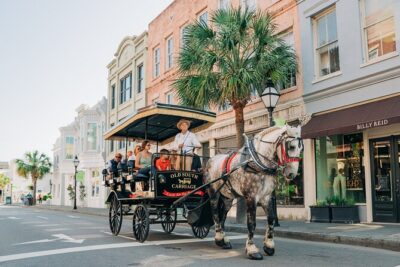
Charleston’s Old South Carriage Historic Horse & Carriage Tour
Read our review →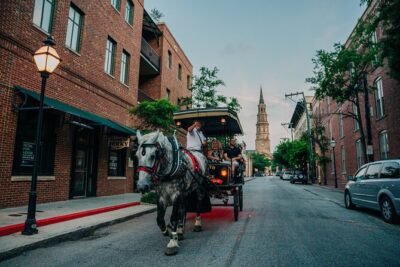
Haunted Evening Horse and Carriage Tour of Charleston
Read our review →
Charleston Horse-Drawn Carriage Tour: Explore Historic Charleston
Read our review →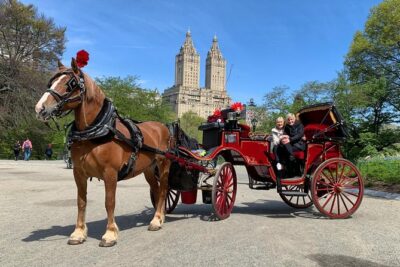
Official NYC Horse Carriage Rides in Central Park since 1979 ™
Read our review →
New Orleans Small-Group Haunted History Carriage Tour
Read our review →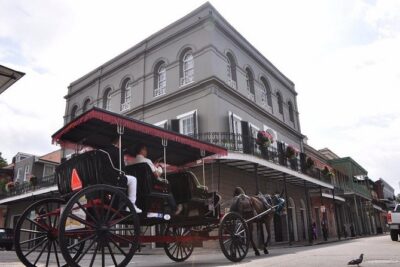
New Orleans French Quarter and More Carriage Ride
Read our review →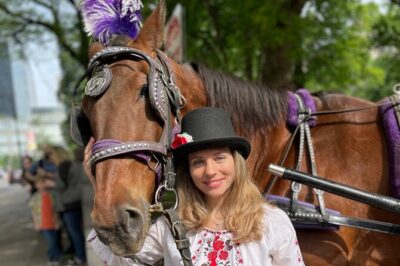
Carriage Ride in Central Park (VIP – PRIVATE) Since 1964™
Read our review →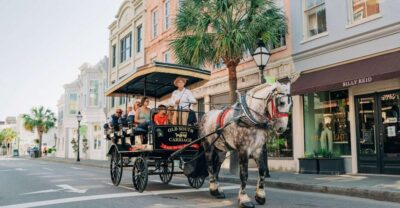
Historical Downtown Tour by Horse-drawn Carriage
Read our review →Browse the lists this tour appears in