Review · GUIDED
Lofoten: Guided Horse Riding Tour Over Hov and Hovsund
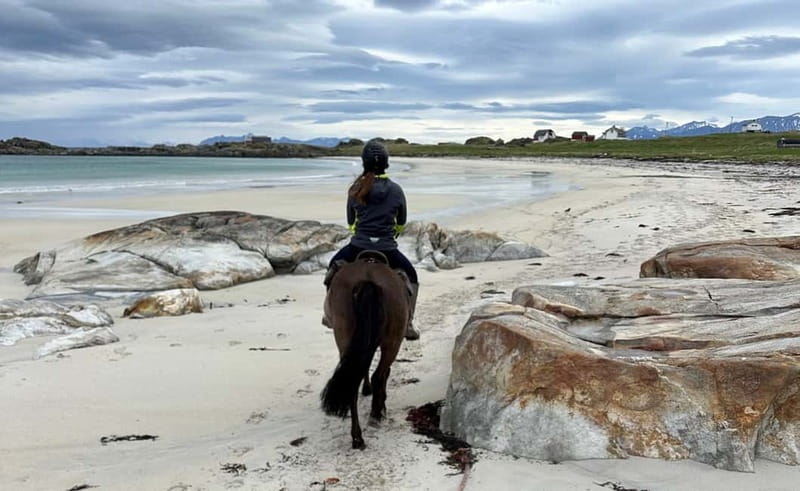
An Icelandic horse carries you from Hov Gård across an Arctic beach and toward the fishing village of Hovsund, with Viking remains and fish-drying racks along the way. This is a scenic ride first, a riding lesson second, and a brisk equestrian outing only if you define brisk very loosely.
I like the slow, calm pace, which makes this a sensible choice for first-time riders. I also like the way the route joins scenery with local life: you see a fishing village, traditional drying racks, and old settlement remains rather than simply circling a riding arena.
The main drawback is clear: experienced riders cannot adapt the tour to a faster pace. You should also note the 95-kilogram weight limit, the ban on backpacks and professional cameras, and the fact that you must make your own way to Hov Gård.
Key points at a glance
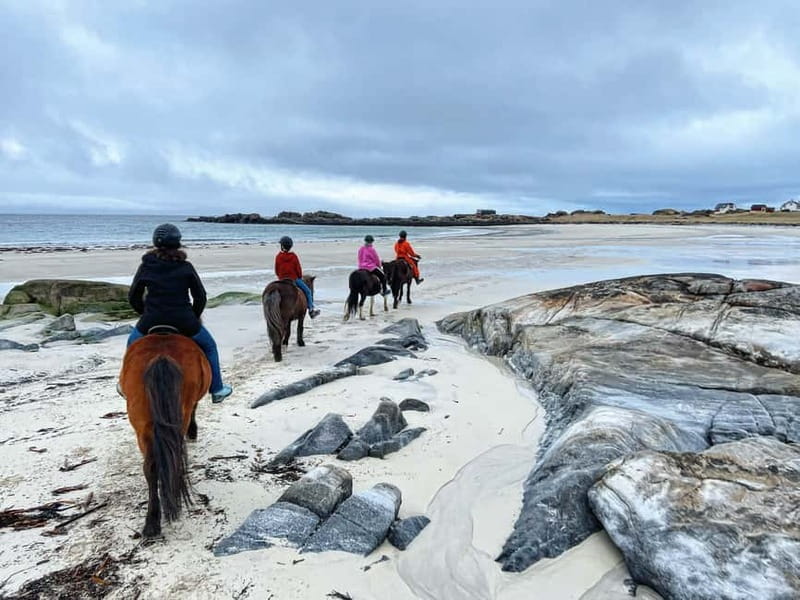
- Icelandic horses on Gimsøya: Ride friendly, trained horses suited to a relaxed outing.
- A beach-to-village route: Travel over Hov’s Arctic beach, climb for coastal views, and continue toward Hovsund.
- Viking and fishing history: Pass ancient settlement remains and traditional racks used to dry Norway’s famous stockfish.
- Beginner-friendly instruction: Your guide explains the reins and how to handle your horse before the ride begins.
- Weather-ready equipment: Helmets, gloves, rubber boots, and rain or warm clothing are supplied.
- Best for a gentle scenic ride: The tour lasts 1.5 hours and does not offer a faster option for experienced riders.
Starting at Hov Gård on Gimsøya
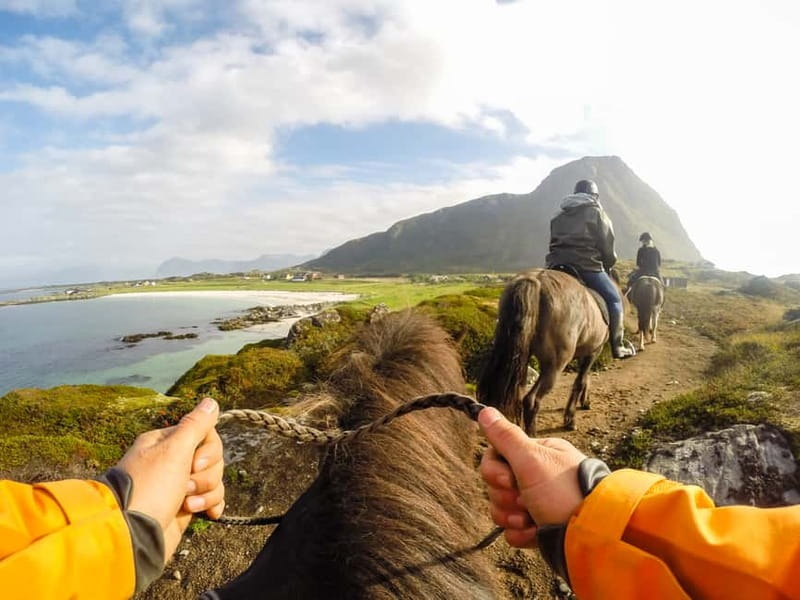
You meet your guide in the stables at Hov Horse Farm in Gimsøysand. There is no hotel pickup or drop-off, so plan your route to the farm before booking. This matters in Lofoten, where a scenic location can also mean a longer drive from where you are staying.
The first stage is practical and reassuring. You meet your horse, get fitted with a helmet, and receive a short lesson on handling the reins. The tour does not require previous riding experience, and the guide matches you with a suitable horse. A recent booking specifically praised Sarah for pairing riders with the right horses and patiently helping beginners.
You receive gloves, rubber boots, and rain or warm clothing for the ride. Still, wear comfortable shoes and long pants, as requested. The supplied equipment is useful in changeable coastal weather, but comfortable clothing remains your responsibility underneath the borrowed gear.
You need to provide each rider’s name, weight, height, age, and riding experience in English when booking. The maximum rider weight is 95 kilograms, or 209 pounds. Children under eight and pregnant women cannot take part.
More Guided Trips in the world:
- NYC: Guided Central Park Horse Carriage Ride
★ 4.8 · 877 reviews - NYC: Private Central Park Horse Carriage Ride with Guide
★ 4.9 · 790 reviews - Akrotiri: Guided Horseback Riding Day Trip to a Beach
★ 4.9 · 477 reviews
Hov beach at a horse’s pace
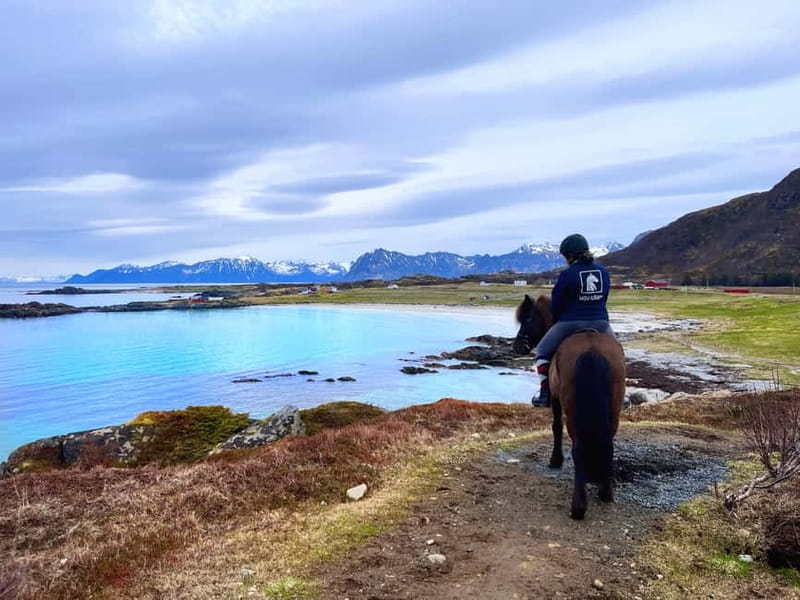
Once the group leaves the stable, the route crosses Hov and reaches an Arctic beach. This is the visual heart of the outing. The horses move slowly, giving you time to look across the shore, watch the changing weather, and settle into the rhythm of riding outdoors.
The pace is important. You are not signing up for a gallop along the sand. The horses walk at a relaxed speed, with the guide controlling the order and flow of the ride. This makes the route approachable if you have never ridden before, or if you feel rusty and want a low-pressure introduction.
I would also choose this pace for the views. A faster ride can be exciting, but it leaves less room to look around. Here, you can focus on the coastline and the horse beneath you without needing advanced riding skills.
Summer may bring local birdlife, including the chance to see a sea eagle. That sighting is not guaranteed, so treat it as a welcome possibility rather than a promised part of the itinerary. The open coast gives you the best reason to bring your attention away from your phone, though professional cameras and backpacks are not allowed.
One practical point: this is an organized ride, not an independent beach ride. You follow the guide and remain at the group’s pace. An experienced rider who expects to choose a faster gait may find the format limiting. One rider enjoyed the scenery despite being experienced, while another hoped for more opportunity to gallop. That contrast tells you exactly how to judge the tour.
Climbing toward Hovsund
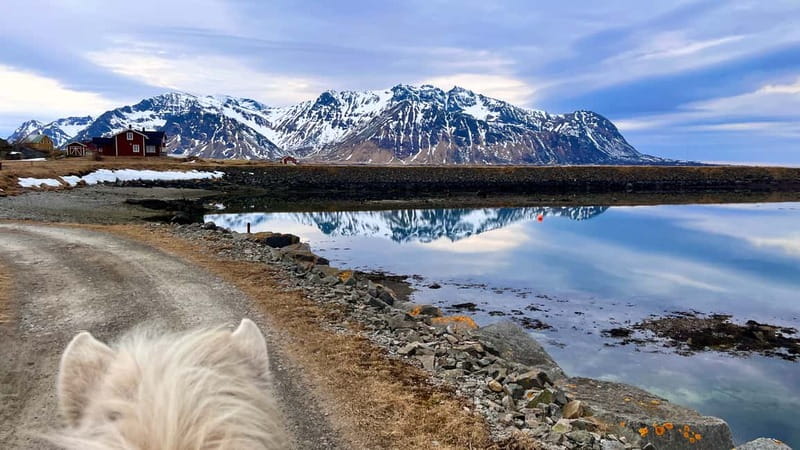
From the beach, the horses take a gentle climb toward Hovsund. This change in height adds a second view of the coast and gives the route more variety than a flat out-and-back ride.
The climb is described as gentle, but the ride remains slow. You are not tackling a demanding mountain trail. Instead, you gain broader views while your guide continues to lead the horses and explain the area.
Hovsund brings a human scale to the ride. Lofoten is often pictured as sharp peaks and dramatic water, but this route also shows the working side of the islands. The fishing village helps connect the scenery to daily life, and the route gives you a chance to see how coastal traditions remain part of the setting.
Your guide provides information about the surroundings and horse riding. The style can vary by guide, but recent bookings singled out Julia and Sarah for patience, clear help, and local explanations. English is the tour language.
Viking remains and fish-drying racks
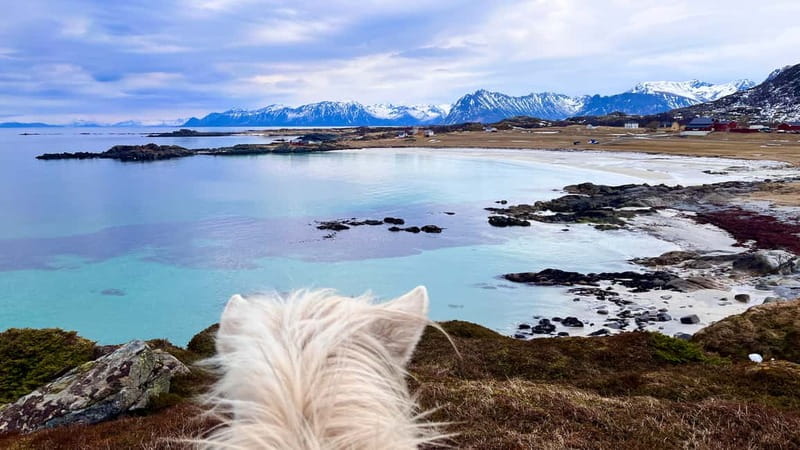
The route passes ancient remnants linked with the Viking age. You should not expect a large archaeological site or a long museum-style stop. The value is that the remains appear as part of the ride, in the same coastal setting where the route’s older and newer stories meet.
That combination makes the experience more than a horseback photo opportunity. You get a short introduction to the area’s past while sitting on a horse that is itself part of a long rural riding tradition. The guide’s explanations help give meaning to what you see, especially if you would otherwise pass the remnants without recognizing them.
You also pass traditional fish-drying racks. Norway’s dried fish, often called stockfish, is one of the clearest signs of the region’s fishing culture. The racks connect the village, the sea, and local work in a way that a viewpoint alone cannot.
For me, this is one of the route’s strongest features. The tour does not only show you pretty coastline. It gives you several small clues about how people have lived here, from Viking settlement to fishing and drying fish in the coastal air.
More Horse Riding Tours in the world:
- Charleston’s Old South Carriage Historic Horse & Carriage Tour
★ 5.0 · 10,023 reviews - Jerez de la Frontera: How the Andalusian Horses Dance
★ 4.6 · 6,168 reviews - Punta Cana Zipline Adventure with Buggies and Horseback Riding
★ 5.0 · 5,001 reviews - Luquillo Beach Horse Ride from Carabalí Rainforest Adventure Park
★ 5.0 · 4,762 reviews
Returning with calm horses and coastal views
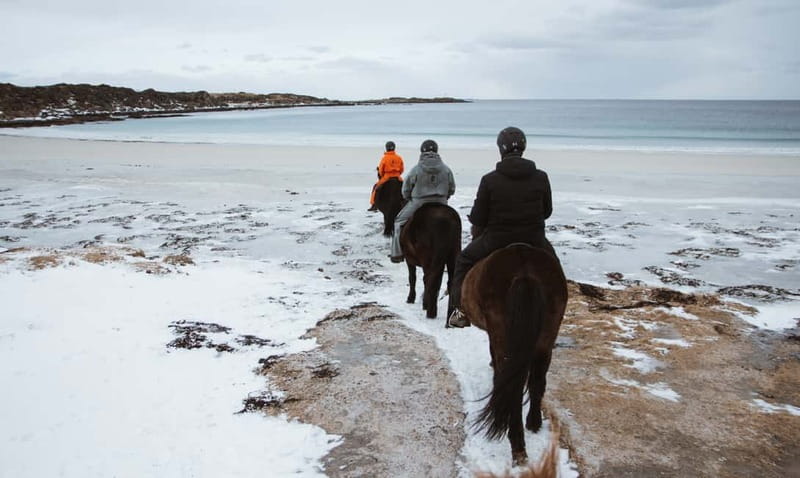
After the climb, village views, historic remains, and fish-drying racks, you return to the stable. The full outing lasts 1.5 hours, including the introduction and riding time, so expect a compact experience rather than a half-day expedition.
The horses are described as friendly, trained, calm, and well behaved. That matters more than speed on this route. A steady horse allows a beginner to pay attention to posture, reins, scenery, and the guide’s instructions without feeling rushed.
There may be a small chance to trot near the end, but you should not book this expecting a long trot or gallop. The tour provider says the pace cannot be adapted for more experienced riders. Think of it as a scenic walk on horseback, with riding instruction built in.
The short duration also makes it easy to combine with other activities on Gimsøya or elsewhere in Lofoten. At the same time, the 1.5-hour length limits how far the route can go. If you want a full-day riding experience, this is not the right format.
What $145 buys you
At $145 per person, the price is not low for a 1.5-hour activity. The value comes from the combination of horse, guide, instruction, riding helmet, gloves, rubber boots, and rain or warm clothing. You are paying for a guided coastal experience with trained horses, not simply access to a stable.
The included clothing is especially useful if the forecast is damp or cold. Lofoten’s coastal weather can change quickly, and one winter booking described a ride in strong wind, rain, and snow that was still enjoyable. That does not mean you should ignore the forecast, but it does show why the supplied outerwear matters.
The price makes the most sense if you are a beginner, a casual rider, or someone who wants a scenic activity with local context. It is less convincing for a skilled rider who wants speed, technical riding, or a long trail. In that case, the fixed pace may feel like a restriction rather than a benefit.
The strong rating of 4.8 from 176 bookings fits the tour’s strengths: friendly guides, gentle horses, good views, and a simple route that works for people with different levels of confidence. The consistently positive comments about staff and horses are more useful here than the number alone. They point to the central promise being delivered: a safe, relaxed ride in a memorable setting.
Weather, clothing, and booking details
You should arrive ready for coastal weather, even in summer. Wear long pants and comfortable shoes, then use the supplied boots and outer layers as needed. Gloves are provided, along with a riding helmet.
Do not bring a backpack or professional camera. A phone may be more practical if permitted by the guide, but the supplied information specifically prohibits backpacks and professional cameras, so pack lightly and follow the stable’s instructions.
Cancellation is free up to 24 hours before the start time, and you can reserve now and pay later. The tour runs in English. Starting times depend on availability, so check the date you want rather than assuming a fixed departure.
Most important, give accurate rider details at booking. The stable keeps a high safety standard for both riders and horses, and the weight, age, height, and experience information helps the staff prepare properly.
Who will enjoy this ride most
I would recommend this tour to:
- First-time riders who want patient instruction
- Families with children aged eight and older, provided riders meet the other rules
- Casual riders who prefer scenery over speed
- Couples and solo visitors looking for a quiet outdoor activity
- Anyone interested in seeing the coast, fishing traditions, and Viking remnants in one short outing
- Riders visiting in cooler or wetter weather who appreciate supplied clothing
I would hesitate to recommend it to advanced riders seeking a brisk ride. The route is not designed around athletic riding, and the guide cannot speed it up for experienced participants. You may still enjoy the scenery, but you need to accept the relaxed format before you book.
It also may not suit anyone over the 95-kilogram limit, pregnant participants, children under eight, or anyone who needs hotel transport. Those are firm practical limits, not minor details.
Should you book Hov Gård?
Book it if you want a calm introduction to horseback riding in Lofoten, with a beach, fishing village, Viking remnants, and traditional fish-drying racks packed into 1.5 hours. The horses and guides are the main strength, and the supplied equipment makes the activity easier to manage in uncertain weather.
Skip it if your main goal is galloping on the beach, riding for several hours, or setting your own pace. For everyone else, $145 is a fair price for a guided outing that blends scenery, local life, and a genuinely beginner-friendly ride. Arrive with long pants, accurate rider details, modest expectations about speed, and a willingness to let the horse set the rhythm.
FAQ
Where does the horse riding tour meet?
You meet the guide in the stables at Hov Horse Farm in Gimsøysand on Gimsøya.
How long does the ride last?
The experience lasts 1.5 hours.
What language does the guide speak?
The live tour guide speaks English.
Do I need previous horse riding experience?
No. The tour does not require riding experience, and the guide explains how to handle the reins before you leave.
What kind of horses are used?
The tour uses friendly, trained Icelandic horses.
What places will I see during the ride?
You ride along Hov’s Arctic beach, toward the fishing village of Hovsund, and past Viking remnants and traditional fish-drying racks.
What equipment is included?
The tour includes a guide, Icelandic horse, riding helmet, gloves, rubber boots, and rain or warm outfits for the ride.
What should I bring?
Bring comfortable shoes and long pants.
Who cannot join the tour?
The tour is not suitable for children under eight, pregnant women, or people over 95 kilograms, or 209 pounds.
Just added around the world
- Horse Ride + Swimming with Turtles in Aquarium at Nungwi Beach★ 4.5 · 8 reviews
- Zakytnhos Horse Riding Swimming Experience★ 3.5 · 3 reviews
- Xi’an Half-Day Private Tour of Terracotta Warriors and Horses Museum★ 5.0 · 2 reviews
- Desert Trail in Morocco on Horseback★ 5.0 · 2 reviews
- Half-Day Tour: Terracotta Warriors and Horses Museum★ 5.0 · 7 reviews
- Beach & countryside horse riding outside Westport. Guided. 1 hour★ 5.0 · 56 reviews
- Private tour to Sevan, Dilijan Off-road tour & Horseback riding★ 4.5 · 5 reviews
- Vienna Horse-Drawn Carriage Ride with Sparkling Wine and Food★ 5.0 · 44 reviews
Guided, compared.
Akrotiri: Guided Horseback Riding Day Trip to a Beach
Read our review →
Gettysburg: Licensed Guided Battlefield Horseback Tour
Read our review →
Pompeii Guided Tour & Horse Riding on Vesuvius with Lunch
Read our review →
Horseback Riding Experience through Red Canyon with a Guide
Read our review →