
Review · HORSE-DRAWN CARRIAGE TOURS
Stanley Park Horse Drawn Tour in Vancouver
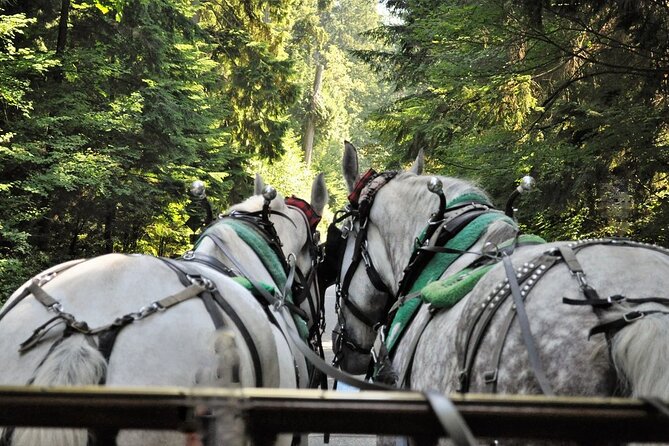
Stanley Park is big enough to tire your feet, yet this horse-drawn carriage ride lets you see its main sights at an easy clip. You roll along Park Drive with the ocean nearby, hear stories about Vancouver and the park, and stop at the totem poles for photos. I like the unhurried pace and the chance to focus on the scenery rather than a map or bike traffic.
I also like that the guides, including Steph and Emily, add plenty of local detail and talk about the horses as well as the park. The main drawback is the short stop at the totem poles, which may not leave enough time for both photographs and the nearby gift shop. The carriage covers an enjoyable section of Stanley Park, but not every corner.
Key points at a glance
- Five-minute totem-pole stop: Get out for photographs, then return to the same carriage before the ride continues.
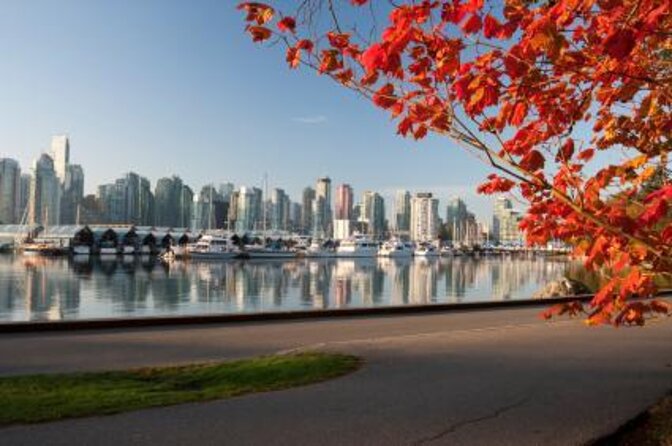
- Views beyond the trees: Look toward Coal Harbour, North Vancouver, the Seawall, and Lion’s Gate Bridge.
- A calm alternative to walking or cycling: The one-hour ride helps you see the park without a long hike or a bike rental.
- Small group setting: The carriage holds a maximum of nine people, creating a more personal outing.
- Seasonal departure hours: Service is listed from 10:00 a.m. to 3:00 p.m. from March through April, and from 10:00 a.m. to noon from May through October.
- Weather matters: The tour requires good weather, so poor conditions can lead to a new date or a full refund.
Beginning beside Coal Harbour
The tour starts at 735 Stanley Park Drive, beside the Stanley Park information booth. The custom-built departure station overlooks Coal Harbour and the downtown core, giving you a useful first view of Vancouver before the carriage even gets moving.
The starting area can be a little confusing to find, so allow time to locate the ticket and boarding point. It is near public transportation, but you should still check the exact station once you reach the park. Parking is not included, and the fee for parking inside Stanley Park can vary.
The carriage carries no more than nine people. That limit matters. You are not being packed into a large sightseeing vehicle, and the guide can speak to the group in a more direct way. The exact carriage arrangement may affect which side gives you the clearest views, but one useful tip is to sit on the right side for better scenery during much of the ride.
More Horse-Drawn Carriage Tours in Canada
- Banff: Family Friendly Horse-Drawn Sleigh Ride
★ 4.2 · 237 reviews - Banff: Wagon Ride with Cowboy Cookout BBQ
★ 4.8 · 116 reviews - Beacon Hill Park Horse-Drawn Carriage Experience in Victoria
★ 5.0 · 100 reviews
Park Drive and the Seawall
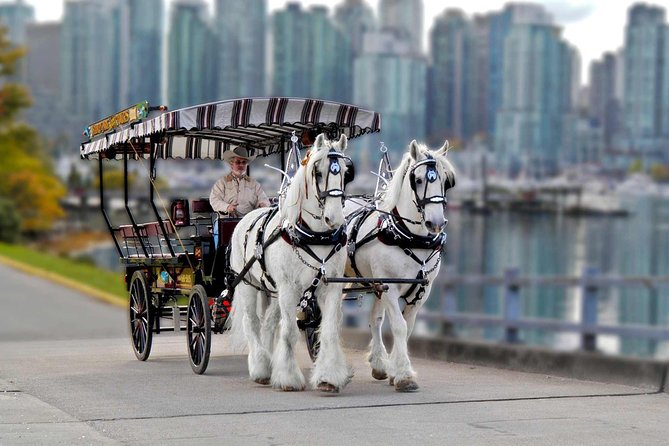
Once underway, the carriage follows Park Drive, with views toward the Seawall and the water. The slow pace is the point here. You have time to look up at the trees, watch the shoreline, and listen without trying to keep up with a walking group.
This route gives you a broad introduction to Stanley Park rather than a close look at every attraction. You see how the park meets the water and how it connects Vancouver’s downtown edge with views toward the North Shore. On a clear day, the open sightlines make good photo opportunities.
The guide provides commentary during the ride. The best guides, such as Steph and Emily, combine facts about Stanley Park with stories about Vancouver and the horses. The carriage’s gentle pace leaves room for longer explanations than you might get on a faster bus ride.
The ride is also useful if you have a temporary injury or simply do not want to spend an hour walking. One person described using it while recovering from a broken leg, and that is exactly the kind of situation where this outing earns its price. You can see a meaningful part of the park while remaining seated.
Royal Vancouver Yacht Club and Deadman’s Island
The carriage passes the Royal Vancouver Yacht Club and Deadman’s Island, also called HMCS Discovery. This is a Royal Canadian Navy Reserve site, adding a piece of Vancouver’s military and maritime story to the route.
The stop is not designed as a long visit to each location. Instead, the guide uses the passing scenery to explain what you are seeing. If you want a slow, detailed look at every building or shoreline point, walking will give you more freedom. If you want context while moving through the park, the carriage works well.
This part of the ride helps keep the tour from being only a pretty circuit. You get facts about the city and park, along with views that change from harbor activity to wooded park roads. The mix is especially useful on a first visit, when you want a sense of how the major pieces fit together.
The totem poles and the five-minute photo stop
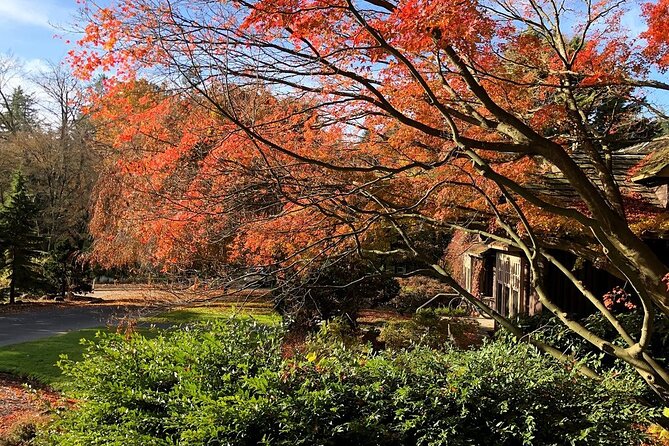
The most defined stop is at Stanley Park’s famous First Nations totem poles. The carriage pauses for about five minutes, and you may get out to take photographs. You must return to the same carriage when it is time to leave.
Five minutes is enough for a quick look and a few pictures, but it is not a lot of time. If you want to browse the nearby gift shop as well, you will likely need to choose between shopping and staying with the tour. I would focus on the poles during the scheduled stop and save shopping for another part of your day.
The totem poles are one of the park’s key sights, so including this stop adds real value. You are not simply circling the park and viewing everything from a seat. You get a chance to step down, stand close to the displays, and take home your own photographs.
Still, keep your expectations realistic. The stop is brief, and the carriage waits for the group rather than allowing everyone to wander at length. If the poles are your main reason for visiting Stanley Park, plan separate time to return on foot.
Same saddle, a completely different route:
- Rafting Adventure on the Kicking Horse River
★ 5.0 · 590 reviews - Banff National Park: 1-Hour Bow River Horseback Ride
★ 4.6 · 518 reviews - Banff National Park: 1-Hour Spray River Horseback Ride
★ 4.7 · 315 reviews - Whitewater Rafting Adventure | Kicking Horse River
★ 5.0 · 291 reviews
Girl in a Wetsuit and the Empress of Japan
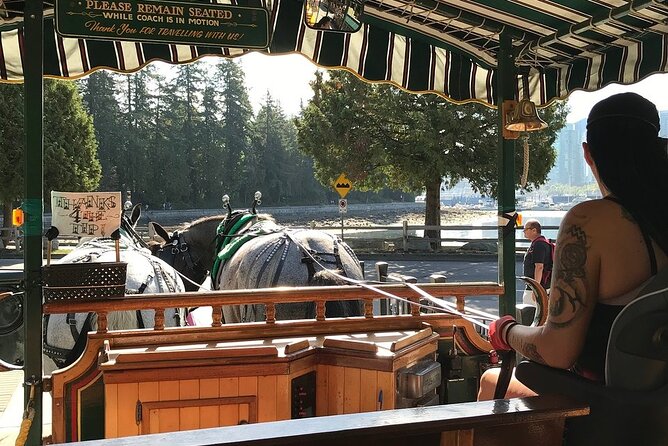
After the totem poles, the ride continues to the Girl in a Wetsuit Statue and the Empress of Japan Figurehead. These are distinctive public artworks, and they give the tour a nice change of pace after the natural scenery and First Nations displays.
The Girl in a Wetsuit Statue sits offshore on a rock and is one of Stanley Park’s most recognizable sights. The Empress of Japan Figurehead adds a maritime connection, tying the park back to Vancouver’s waterfront setting.
You may be able to take photographs from the carriage, though the amount of time and the exact viewing angle can vary. This is another reason not to treat the tour as a dedicated photography session. It offers photo chances throughout the route, but the carriage keeps moving.
The guide’s commentary makes these stops more useful than a quick pass. A good explanation gives you something to remember beyond the image itself, especially if you are new to Vancouver.
North Vancouver and Lion’s Gate Bridge views
The route then reaches the north side of Stanley Park, where you look toward North Vancouver and Lion’s Gate Bridge. The bridge crosses the First Narrows of Burrard Inlet and links Vancouver with the North Shore.
This is one of the strongest visual parts of the ride. You get water, mountainside direction, and the bridge in a single view, with the park’s trees framing the scene. Bring your camera, but also give yourself time to simply look. The carriage is slow enough to make the view feel unhurried.
The exact visibility depends on weather. Since the tour requires good conditions, a clear day gives you a much better chance of enjoying these outward views. If clouds or rain move in, the carriage may be less comfortable and the bridge view may lose some of its impact.
The ride ends back at the original departure point. That makes it easy to continue exploring Stanley Park, return to downtown Vancouver, or use the park as part of a larger day out.
Why the one-hour pace works
A one-hour tour is long enough to provide a real overview but short enough to fit into a busy Vancouver schedule. You can pair it with other time in Stanley Park, including a separate walk, a visit to the totem poles, or time near the waterfront.
I like the pace because it avoids the common problem of rushing through a large park. You are not trying to read signs while walking, watch traffic while cycling, and keep track of the route at the same time. The carriage does the navigating, while the guide supplies the story.
That same pace may feel limited if you want to explore independently. You cover a selected route along Park Drive, not the whole park. One-hour carriage tours are best viewed as an introduction and orientation, not a complete Stanley Park visit.
The ride also has a quieter character than a hop-on, hop-off bus. You do not get the same ability to leave and rejoin the route, but you do get a smaller vehicle, the sound of the horses, and a slower view of the park.
The horses and the human side of the ride
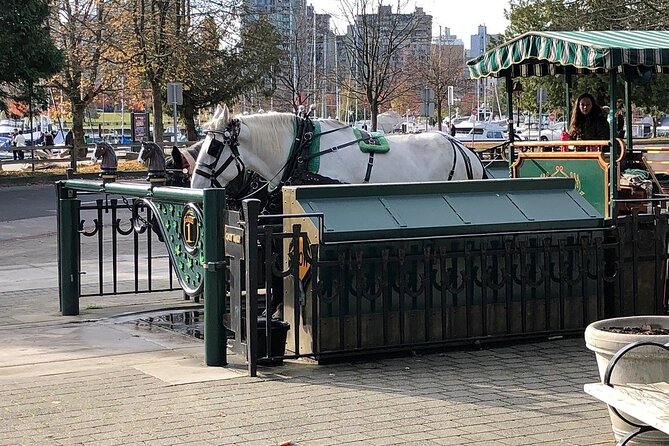
The horses are a central part of the experience, not just a way to move the carriage. Guides talk about them during the outing, and some rides may give you a chance to see or pet a draft horse such as Comet.
The horses used for the tours are described as well trained and well cared for. That will matter to you if animal welfare is part of your booking decision. The experience provider is Stanley Park Horse-Drawn Tours, and the guide team includes drivers and narrators such as Steph, Emily, Budd, and Lonnie.
The guide can shape the whole outing. Steph is noted for combining park information with an easy, entertaining manner, while Emily is described as funny and engaging. Since the exact guide depends on the departure, you should expect the style to vary a little, but the common thread is live commentary rather than a silent ride.
You should also remember that a horse-drawn carriage moves slowly and shares the road with normal park activity. That is part of its charm, but it means the tour will not cover as much ground as a vehicle with an engine.
Price, timing, and practical value
At $48.91 per person, this is not the cheapest way to enter Stanley Park. The value comes from combining transportation, a guide, a totem-pole stop, and a relaxed view of the park in one hour. Taxes, fees, handling charges, GST, and the professional guide are included.
I think the price makes the most sense if you want an easy overview or have a reason to limit walking. It is also a good fit if you value live stories and the old-fashioned carriage setting. If you are comfortable walking or cycling for several hours, you can see more of the park independently and spend less.
The tour is listed in English only. Departure times are flexible within the operating window, but the schedule changes by season. From March 1 through April 30, departures are listed daily from 10:00 a.m. to 3:00 p.m. From May 1 through October 15, departures are listed daily from 10:00 a.m. to noon.
That seasonal pattern is worth checking carefully because the later spring and summer dates show a shorter listed window. Demand, weather, and capacity can change the operating schedule. Booking around 28 days ahead is the usual pattern, so I would reserve early if your Vancouver plans are fixed.
Children must be accompanied by an adult, and most people can take part. The small maximum of nine people helps keep the ride personal, though seating and views may depend on the carriage.
Weather, cancellation, and planning your day
Because this is an outdoor experience, weather can affect the schedule. If poor weather causes a cancellation, you are offered another date or a full refund. You can also cancel for a full refund up to 24 hours before the start time.
Do not put this tour at the very end of a tightly planned day. A schedule change could affect your plans, and the operating hours are limited. Give yourself enough time to reach Stanley Park, find the departure station, and deal with parking if you are driving.
I would plan additional time in the park before or after the carriage ride. The one-hour route gives you a good overview, but the short totem-pole stop is not enough for a full visit. Adding independent time lets you slow down at the attractions that matter most to you.
Who should choose this carriage tour?
This outing suits you best if you want:
- A low-effort introduction to Stanley Park
- A calm activity for couples, friends, or families
- Live stories about the park, Vancouver, and the horses
- A way to see major sights without walking the full route
- A small group rather than a large sightseeing vehicle
- A classic carriage ride with time for photographs
It is also useful for solo visitors. You can sit back, listen, and see the park without arranging a bike or planning a route.
You may prefer another option if you want a long stop at the totem poles, full access to every corner of Stanley Park, or the freedom to stop whenever you wish. The carriage offers comfort and context, but not the independence of walking or cycling.
Should you book the Stanley Park Horse-Drawn Tour?
I would book this tour if you want a relaxed first look at Stanley Park, especially if walking is difficult or you enjoy guided local stories. The combination of Park Drive, the Seawall, the totem poles, the Girl in a Wetsuit Statue, and Lion’s Gate Bridge gives you a useful cross-section of the park in one hour.
Book it with realistic expectations. This is a scenic introduction, not a full-day exploration. Arrive early enough to find the station, sit on the right side if possible, keep the totem-pole stop focused on photographs, and leave extra time to explore the park afterward. At $48.91, it earns its keep when comfort, commentary, and atmosphere matter as much as covering ground.
FAQ
How long is the Stanley Park horse-drawn tour?
The tour lasts approximately one hour.
Where does the tour begin?
It begins at 735 Stanley Park Drive in Vancouver, beside the Stanley Park information booth.
Where does the tour end?
The carriage returns to the original meeting point at the end of the ride.
What sights are included?
The route includes Park Drive, the Seawall, the Royal Vancouver Yacht Club, Deadman’s Island, the First Nations totem poles, the Girl in a Wetsuit Statue, the Empress of Japan Figurehead, and views toward North Vancouver and Lion’s Gate Bridge.
Does the carriage stop at the totem poles?
Yes. The tour includes a stop of about five minutes. You may get out for photographs, but you must return to the same carriage.
How many people can join the tour?
The maximum group size is nine people.
Is the tour offered in English?
Yes. The tour is offered in English.
What is included in the price?
The price includes taxes, fees, handling charges, GST, and a professional guide.
Is parking included?
No. Parking in Stanley Park is not included, and the parking fee is variable.
Just added around Canada
- Pony Express City Tour★ 4.0 · 9 reviews
- Horse Drawn Historical Guided Tour★ 5.0 · 24 reviews
- 4 Hour Sulphur Mountain Horseback Ride★ 5.0 · 16 reviews
- 2-Day Sundance Overnight Backcountry Lodge Trip by Horseback★ 4.5 · 22 reviews
- The Montagnarde: Guided horseback ride on mountain trails.★ 4.9 · 13 reviews
- The Canmore HISTORY TOUR – Cowboys and Coal Miners 2H Walk★ 4.7 · 17 reviews
- Prince Edward Island: Horse-Drawn Carriage Tour★ 4.8 · 49 reviews
- La Bleuetière: A charming introduction to horseback riding★ 4.7 · 13 reviews
Horse-Drawn Carriage Tours, compared.
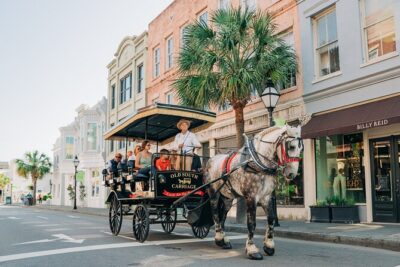
Charleston’s Old South Carriage Historic Horse & Carriage Tour
Read our review →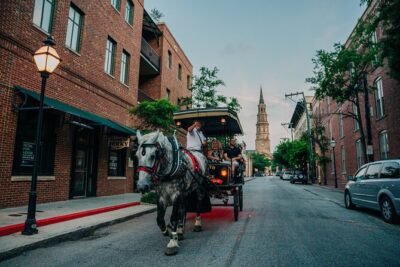
Haunted Evening Horse and Carriage Tour of Charleston
Read our review →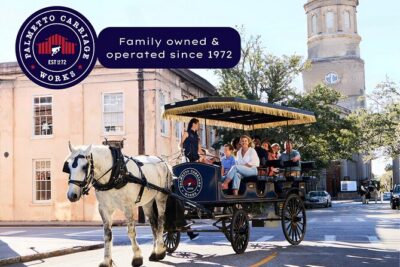
Charleston Horse-Drawn Carriage Tour: Explore Historic Charleston
Read our review →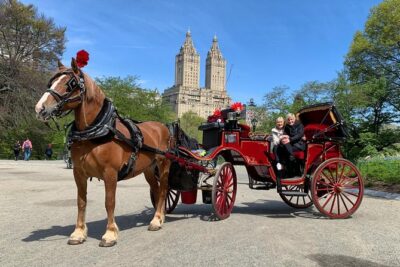
Official NYC Horse Carriage Rides in Central Park since 1979 ™
Read our review →
New Orleans Small-Group Haunted History Carriage Tour
Read our review →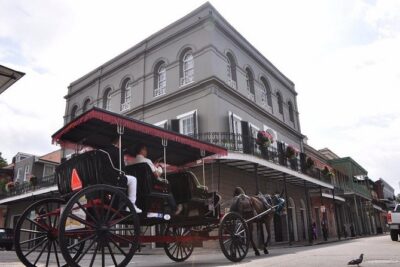
New Orleans French Quarter and More Carriage Ride
Read our review →
Carriage Ride in Central Park (VIP – PRIVATE) Since 1964™
Read our review →
Historical Downtown Tour by Horse-drawn Carriage
Read our review →Browse the lists this tour appears in