
Review · TOKYO HORSE RIDING TOURS
Tokyo: Sumo Morning Practice -Stable Visit Tour with a Guide
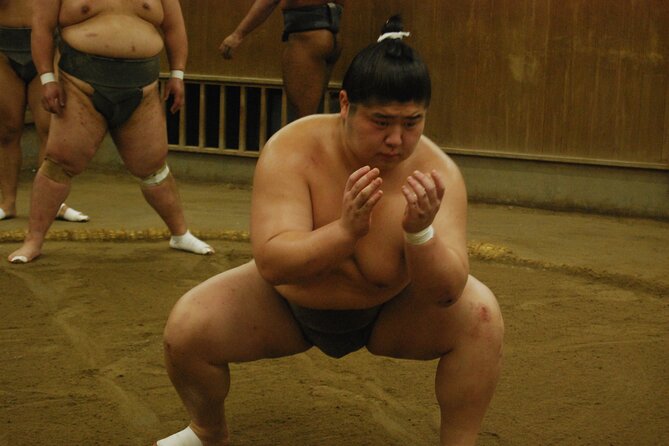
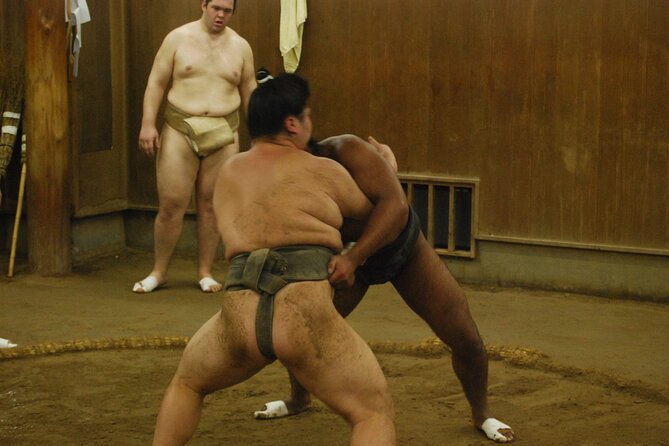
At the Ikazuchi Sumo Stable, you watch Japan’s national sport before the crowds, bright lights, and formal pageantry of a tournament. The wrestlers train only a short distance away, close enough for you to hear bodies collide, catch their breathing, and see the strain on their faces. The coach’s sharp voice is part of the morning rhythm.
I like two things right away: the small group limit of 10 keeps the visit personal, and the chance to ask questions and take photos after practice gives the morning a proper human finish. The special brochure also helps you follow the action instead of simply watching a series of unfamiliar drills.
The main consideration is that this is a working training session, not a show. You must stay quiet, avoid private conversation, and leave video cameras and flash photography at home. At $82 for about two hours, the price is fair for close access to a place most people cannot visit, but it will suit you best if you value access and atmosphere over a long sightseeing itinerary.
Key points to know before you book
- Watch practice from close range: You can observe breathing, facial expressions, collisions, and the pressure of a serious morning session.
- Visit the Ikazuchi Sumo Stable: This is a real training space, not a staged demonstration for tourists.
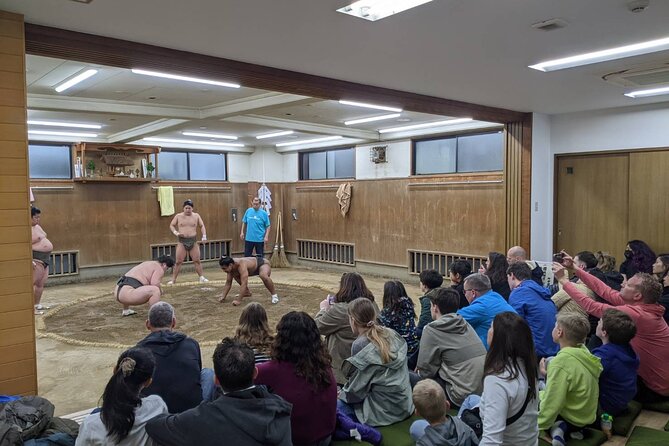
- Keep the group intimate: The maximum group size is 10 people.
- Meet wrestlers afterward: You can take photos and ask questions once practice ends.
- Respect strict stable rules: No video, no flash, no snacks, and no private conversation during training.
- Start early in Oshiage: The meeting time is 8:30 am, with the activity ending back at the meeting point.
Why morning practice feels different from a tournament
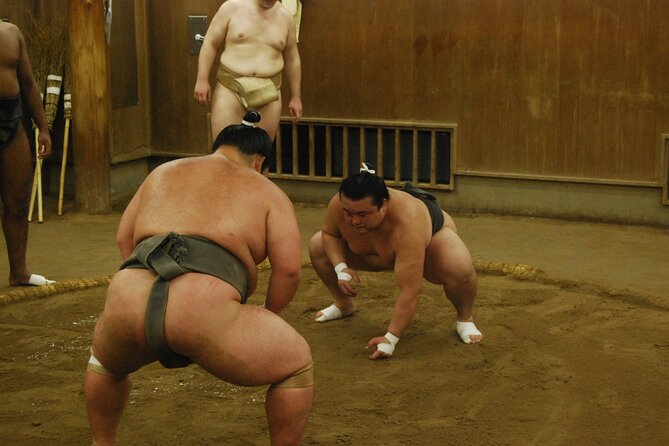
A professional sumo tournament gives you ceremony, crowds, music, formal bouts, and a seat in the Kokugikan. Morning practice gives you something more stripped down. You see the work behind the spectacle.
The wrestlers and their apprentices train every morning to preserve the sport and pass it on. That daily repetition matters. You are not watching a performance created for your group. You are observing athletes doing the hard, controlled work that prepares them for competition.
From a close position, small details carry more weight. You can hear the slap of bodies meeting and the force of a wrestler’s breathing. You can see facial expressions change as concentration and fatigue take hold. The coach’s voice may sound harsh at first, but the tone belongs to a demanding training culture built on trust between the coach and the wrestlers.
That closeness is the reason to choose this experience. It gives you a better feel for sumo as a discipline, not just as a colorful Japanese tradition. You see effort, patience, hierarchy, and concentration in a plain working setting.
More Sunrise and Morning Trips in the world:
- Cappadocia: Horseback Tour with Sunrise and Sunset Options
★ 4.9 · 1,755 reviews - Morning Horseback Ride with Breakfast from Las Vegas
★ 5.0 · 1,674 reviews - Cappadocia: Horse Riding Tour with Sunrise or Sunset Options
★ 4.8 · 1,377 reviews
Arriving in Oshiage at 8:30 am
Your morning begins at the meeting point in Oshiage, in Tokyo’s Sumida City. The scheduled start is 8:30 am, and the activity ends back at the same meeting point. The area is near public transportation, which makes the early start manageable, but you still need to plan your route carefully.
I would not treat the meeting time casually. A sumo stable is a working place with its own schedule, and the practice cannot be held back for late arrivals. Check your route the night before and allow time to find the exact meeting point at 1-1-1 Oshiage, Sumida City, Tokyo. The supplied address appears in a slightly unusual format, so use the booking confirmation and map details rather than relying only on a quick street search.
The tour includes a guide, and that matters here. A guide helps you understand what is happening without turning the practice into a noisy lecture. The guide also gives you the special brochure prepared for the visit, which can provide useful context as you watch.
The group limit of 10 is one of the strongest practical features. A large crowd would work against the quiet atmosphere required inside the stable. With fewer people, you have a better chance of seeing clearly and keeping the visit calm.
Inside the stable: an hour of serious work
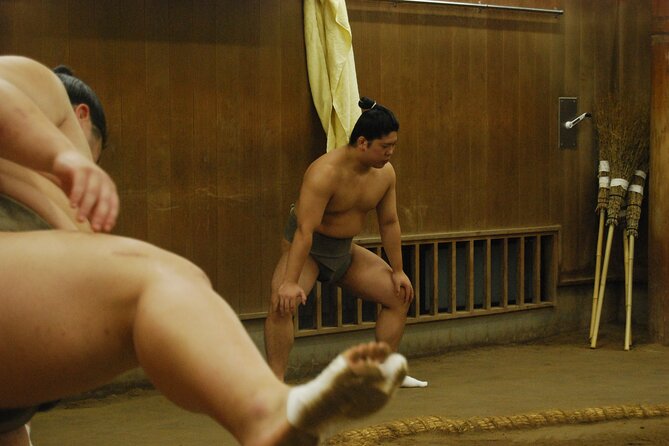
The main part of the experience lasts about an hour. You watch wrestlers and apprentices train at close range, with the session focused on practice rather than explanation.
Expect a quiet setting from your side of the room. The instructions specifically ask you not to hold private conversations during practice, because the wrestlers need concentration. This is not an unreasonable rule. Even low chatter can change the feeling of a small training room, and the point of the visit is to observe the stable on its own terms.
You will hear the coach giving commands in a strong, sometimes startling voice. That sound may surprise you if you have only seen sumo on television. The intensity is not presented as entertainment. It is part of the relationship between the coach and the wrestlers, and part of how the stable maintains discipline.
The physical sound of practice is just as important. Sumo is often reduced to the brief moment when two wrestlers push against each other, but the morning session shows the preparation around those moments. You may notice breathing, stance, tension, repeated movement, and the force of contact. The close distance makes the scale of the athletes easier to understand.
You should also adjust your expectations about photography. Still photographs without flash are allowed, but video recording and flash photography are prohibited inside the stable. That rule protects the training environment and keeps the visit from becoming a photo shoot.
Keep your phone ready for still pictures only, and follow the guide’s directions. Avoid taking photos during moments when the group is expected to remain especially quiet. The most respectful approach is to watch first and photograph only when permitted.
The questions and photos after practice
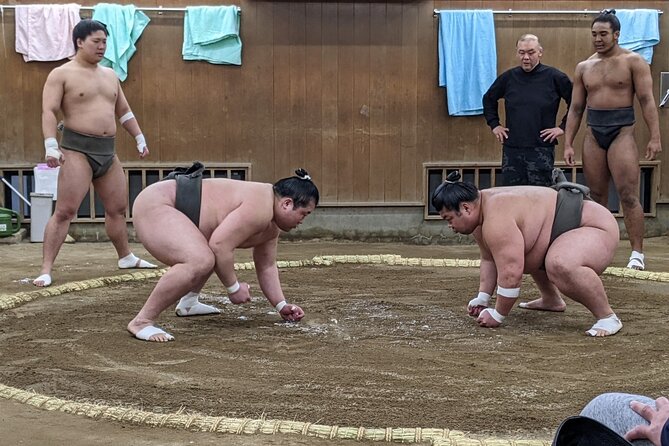
Once training ends, the mood changes. You can take photos with the sumo wrestlers and ask questions. This is an important part of the visit because it gives you a chance to connect the formal practice you have just seen with the people doing it.
A child-friendly question-and-answer session is especially useful for families. One available account describes a visit with children and points to the questions at the end as a strong part of the experience. That makes sense: younger visitors may not know what to ask while the wrestlers are training, but afterward they can engage more directly.
The post-practice moment also gives you a chance to take a souvenir photo without using flash. Keep your questions brief and polite, and remember that the wrestlers have just completed a demanding session. The best exchange is likely to be focused and respectful rather than a long personal conversation.
If you feel moved to support the wrestlers, the tour information suggests leaving a tip after practice. This is optional, not a required extra fee. Bring the idea into your budget if you want to show appreciation, but do not assume that a tip is included in the $82 price.
More Guided Trips in the world:
- NYC: Guided Central Park Horse Carriage Ride
★ 4.8 · 877 reviews - NYC: Private Central Park Horse Carriage Ride with Guide
★ 4.9 · 790 reviews - Akrotiri: Guided Horseback Riding Day Trip to a Beach
★ 4.9 · 477 reviews - Pompeii Guided Tour & Horse Riding on Vesuvius with Lunch
★ 5.0 · 419 reviews
What the $82 price really covers
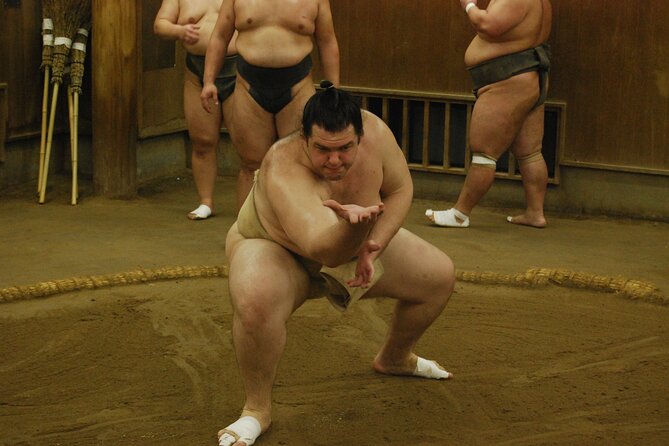
At $82, this is not a cheap way to fill two hours in Tokyo. The price becomes easier to justify when you look at the access involved.
You are paying for a guided visit to a working sumo stable, a small group, about an hour of practice, a brochure, and the chance to ask questions and take photos afterward. The stable visit is the central value. You cannot recreate the same atmosphere by attending a public tournament from a distant seat or watching sumo online.
Still, the tour is short. The full activity lasts approximately two hours, while the practice itself is listed at about one hour. If you want a full morning of sightseeing, you will need to add another plan before or after it. The tour does not include a longer neighborhood walk, a meal, or admission to a tournament.
I see this as a specialist experience. It works well if sumo is high on your Tokyo list, or if you want a close look at a traditional sport in its everyday setting. It is less compelling if you are looking for a broad introduction to Tokyo or a long, flexible excursion.
The maximum of 10 people improves the value. You are not paying for a large bus tour with a quick photo stop. You are paying for access in a setting where quiet and space matter.
Food, drinks, and stable etiquette
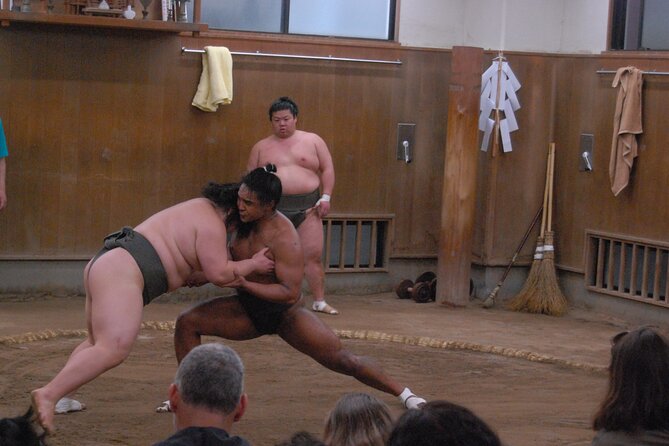
You cannot bring snacks, bread, rice balls, or other food into morning practice. Bring a drink if you need one, but it must have a lid.
This is an easy rule to overlook on an early start, especially if you normally carry breakfast on the way to a tour. Eat before you arrive, or plan to have food afterward. Do not count on eating during the session.
The etiquette rules are not decorative. No private conversation is allowed during the tour, and flash photography and video are prohibited. These limits help protect the wrestlers’ focus and keep the stable from feeling like a public stage.
You should also expect the guide to give instructions about where to stand, sit, or take photographs. Follow those directions even if you spot a better angle. The stable is a place of work, and your access depends on respecting its routines.
Who will enjoy this sumo experience most
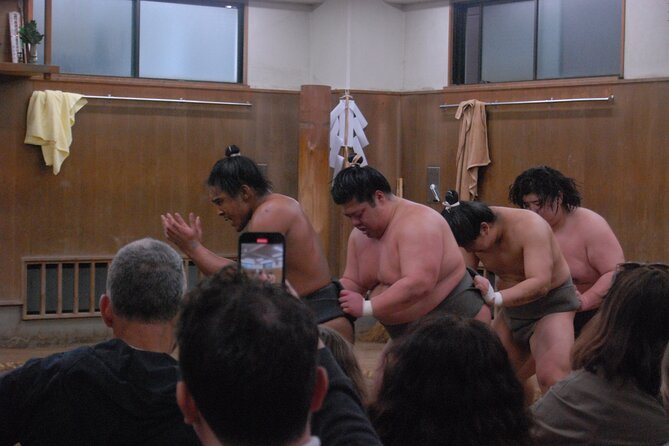
I would recommend this tour to you if you want to see the daily discipline behind sumo, not only the sport’s public image. It is a good fit for first-time visitors who want an unusual Tokyo experience and for people already interested in the rules, training, and culture of sumo.
Families can also enjoy it. The available family experience shows why the post-practice questions are useful for children. The session itself requires quiet behavior, so children should be comfortable sitting still and following instructions for about an hour.
It also suits repeat visitors to Japan. Even people who live in Japan do not get to visit a sumo stable every day, and the access is unusual. You do not need to be a technical expert, but you should be curious enough to watch carefully.
I would think twice if you dislike early starts, quiet observation, or strict photography rules. This is not a hands-on lesson, and you should not expect to enter the practice or speak freely with the wrestlers while they train.
A practical plan for your morning
Before leaving, confirm three things: the exact meeting point, your route to Oshiage, and the start time of 8:30 am. Save the confirmation on your phone because the activity uses a mobile ticket.
Wear something comfortable for a quiet morning visit, and bring only what you need. A phone for still photos is fine, but do not plan on recording video. Carry a drink with a lid if needed, and eat before the tour so you are not tempted to bring breakfast inside.
Set your expectations properly. The practice may feel intense, formal, and a little severe. That is part of the experience. You are seeing a training session shaped by concentration and trust, not a performance designed to entertain a room full of sightseers.
The activity returns to the meeting point, so it is easy to continue your day from Oshiage afterward. Since the visit takes about two hours, you can pair it with other Tokyo plans, but leave enough time for the morning schedule rather than trying to squeeze in a distant attraction immediately beforehand.
Booking, cancellation, and group details
Confirmation is provided when you book. The activity is near public transportation, and most people can participate. The group maximum is 10.
Free cancellation is available if you cancel at least 24 hours before the scheduled start time. Inside that 24-hour window, you will not receive a refund, and changes are not accepted. The cut-off uses local Tokyo time.
The tour requires a minimum number of participants. If the provider cancels because that minimum is not met, you can choose another date or experience, or receive a full refund.
Should you book the Ikazuchi Sumo Stable visit?
Book it if you want close access to a real morning practice and are willing to behave like a respectful observer. The best parts are the low group size, the force and sound of training at close range, and the short question-and-photo session afterward.
At $82, the tour is not a bargain in the ordinary sightseeing sense. Its value lies in access that is difficult to arrange independently. You are buying a rare look at the work behind sumo, not a long list of included attractions.
Skip it if you need a relaxed, flexible morning with food, video, and plenty of conversation. But if sumo interests you, this is one of the clearest ways to see the sport as a living practice rather than a staged cultural display.
FAQ
Where does the sumo stable tour begin?
The tour begins at the meeting point in Oshiage, Sumida City, Tokyo. The listed start time is 8:30 am, and the activity ends back at the meeting point.
How long does the experience last?
The full activity lasts approximately two hours. The morning practice portion lasts about one hour, followed by the opportunity to take photos and ask questions.
How large is the group?
The activity has a maximum of 10 participants.
Can I take photos inside the sumo stable?
Yes, still photographs without flash are allowed. Flash photography and video recording are prohibited inside the stable.
Can I eat during morning practice?
No. Snacks, bread, rice balls, and other food are not allowed during practice. Drinks are allowed if they have lids.
Can I ask the sumo wrestlers questions?
Yes. After practice, you can ask questions and take photos with the wrestlers. Private conversation should be avoided during the training session.
What happens if I cancel?
You receive a full refund if you cancel at least 24 hours before the experience start time. Cancellations or changes made less than 24 hours before the start are not refunded or accepted.
Just added around the world
- Horse Ride + Swimming with Turtles in Aquarium at Nungwi Beach★ 4.5 · 8 reviews
- Xi’an Half-Day Private Tour of Terracotta Warriors and Horses Museum★ 5.0 · 2 reviews
- Desert Trail in Morocco on Horseback★ 5.0 · 2 reviews
- Zakytnhos Horse Riding Swimming Experience★ 3.5 · 3 reviews
- Half-Day Tour: Terracotta Warriors and Horses Museum★ 5.0 · 7 reviews
- Beach & countryside horse riding outside Westport. Guided. 1 hour★ 5.0 · 56 reviews
- Private tour to Sevan, Dilijan Off-road tour & Horseback riding★ 4.5 · 5 reviews
- Vienna Horse-Drawn Carriage Ride with Sparkling Wine and Food★ 5.0 · 44 reviews
Tokyo Horse Riding Tours, compared.
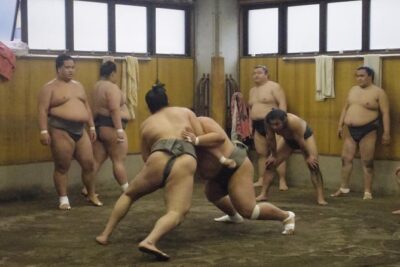
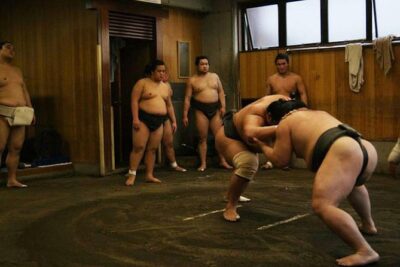
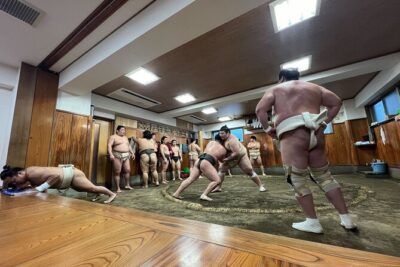
Tokyo Sumo Morning Training/ Sumo Practice with Wrestlers
Read our review →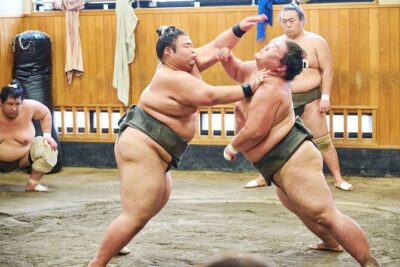
Tokyo: Sumo Morning Practice Viewing Tour at a Real Stable
Read our review →Tokyo: Sumo Morning Practice Viewing Tour at a Real Stable
Read our review →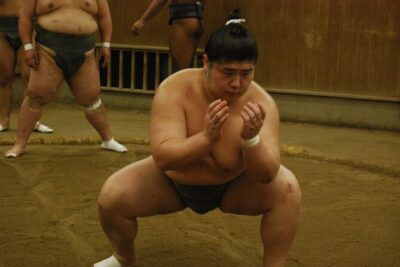
Tokyo: Sumo Morning Practice -Stable Visit Tour with a Guide
Read our review →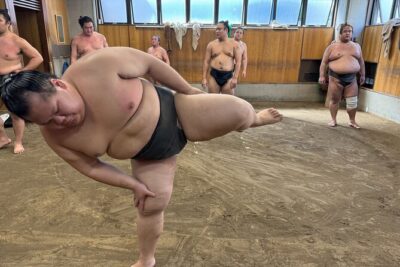
TOKYO , No1 Yokozuna Stable Morning Practice in Ryogoku
Read our review →Browse the lists this tour appears in