
Review · TOKYO HORSE RIDING TOURS
Tokyo Sumo Morning Training/ Sumo Practice with Wrestlers
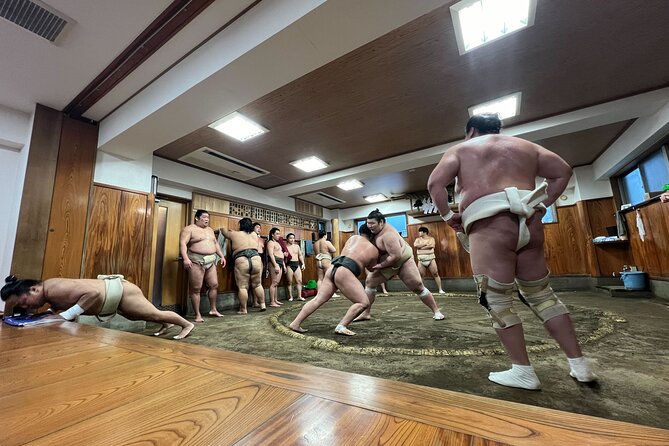
Tokyo Sumo Morning Training puts you close to one of Japan’s most disciplined sports. You enter a working sumo stable, sit quietly near the practice area, and watch wrestlers repeat the same powerful movements that shape their daily lives. The guide explains the rules, training, and customs as you go.
I like the close view of practice and the chance to take a photo with a wrestler at the end. I also like that the guide helps explain what you are seeing, since sumo can look slow or mysterious until you understand the rituals and training patterns.
The main caution is that the schedule and length can change. You may sit on the floor for an hour or more, and the most famous wrestler at the stable may not be present. Practice can also end early before a major tournament.
Key points to know before booking
- You watch a real training session: This is not a staged tournament, and the wrestlers may spend much of the time repeating drills rather than performing dramatic bouts.
- The guide adds useful context: Expect explanations about sumo, the wrestlers’ routine, and what is happening in the ring.
- The stable follows strict rules: Keep your phone silent, do not eat, do not use flash or shutter sounds, and do not record video.
- Floor seating is possible: Some stables have no chairs, so comfortable clothing and realistic expectations matter.
- The famous name is not guaranteed: The stable may be associated with a Yokozuna, but you will not know until the morning if he is training there.
- The advertised price is $99.10: That is fair for rare access, but less attractive if you expect a polished show or guaranteed interaction.
Why a sumo stable is different from a tournament
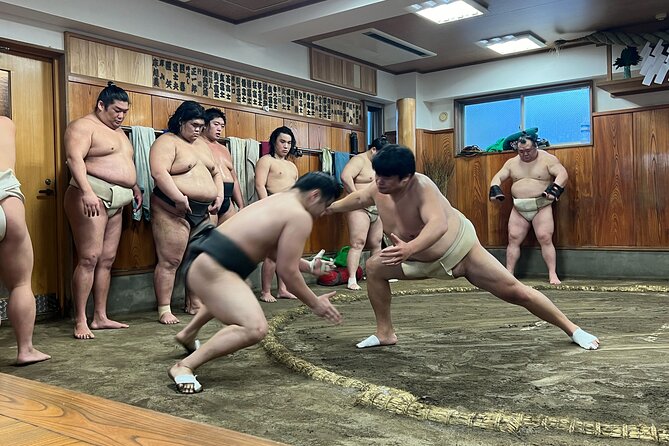
A tournament gives you the drama of competition. A stable gives you the daily work behind it.
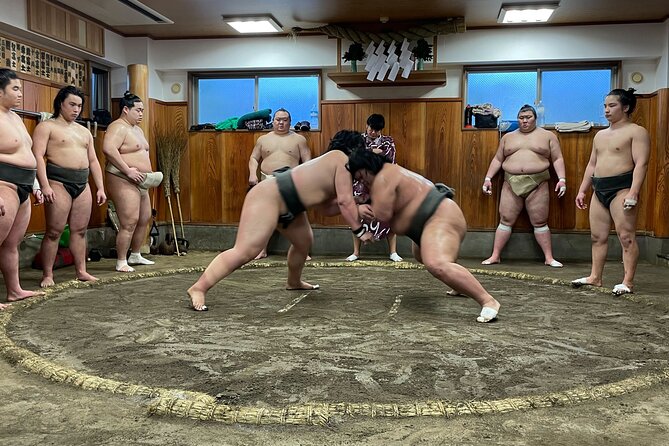
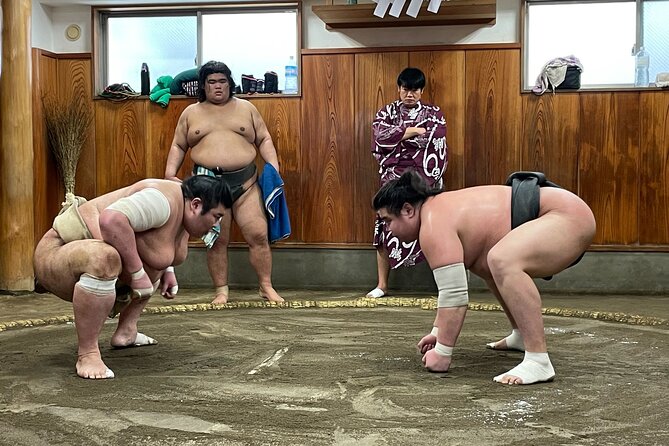
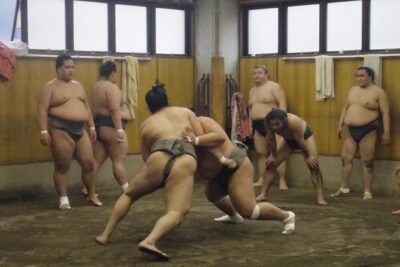
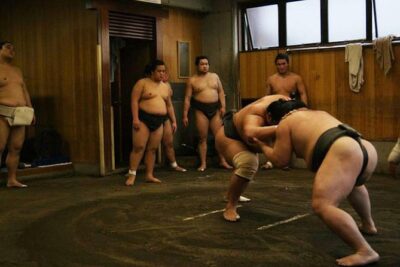
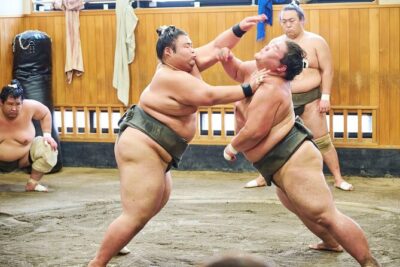
That difference matters. At practice, you may see warmups, repeated pushing drills, footwork, balance exercises, and bouts that look more like controlled tests than formal matches. The wrestlers are not performing for an audience. Their attention stays on the ring, their partners, and the instructions from the stable.
I find that setting more revealing than a short exhibition. You see the pauses, the repetition, the concentration, and the physical strain. Sumo is not only about two large men colliding. It depends on timing, balance, ritual, leg strength, and mental control.
It also means you should adjust your expectations. If you want constant action, loud announcements, and a clear winner every few minutes, a tournament is a better choice. If you want to understand how wrestlers prepare, this visit gives you something a tournament cannot.
More Sunrise and Morning Trips in the world:
- Cappadocia: Horseback Tour with Sunrise and Sunset Options
★ 4.9 · 1,755 reviews - Morning Horseback Ride with Breakfast from Las Vegas
★ 5.0 · 1,674 reviews - Cappadocia: Horse Riding Tour with Sunrise or Sunset Options
★ 4.8 · 1,377 reviews
Meeting in Sumida City and reaching the stable
The stated meeting point is 1-chōme-2-8 Chitose, Sumida City, Tokyo 130-0025. The activity ends back at the meeting point.
The exact location and time can change by date. After booking, Japan Wonder Travel sends the confirmed details. Check your messages carefully, especially on the day before the visit. If the operator does not send the information, contact them rather than assuming the original details still apply.
The meeting point is near public transportation, but the information provided does not identify a single station or fixed walking route. Give yourself extra time. Missing the group or arriving late can mean losing the experience without a refund, particularly if you have not checked the operator’s update.
The initial meeting is brief. The guide explains the basic idea of sumo and the rules for entering the stable, then leads you inside. One practical point matters right away: use the restroom before you arrive. You cannot leave during practice, and once you leave the stable, you cannot go back in.
Entering a working stable
A sumo stable is not a theater. It is the wrestlers’ training space and living environment, so the tone is quiet and formal.
You remove your shoes before entering the practice area. Some participants may sit on chairs, but some stables use floor mats only. Prepare to sit cross-legged or with your legs folded for a long stretch. One person found more than two hours in that position difficult, even though the extra practice time made the visit worthwhile.
Wear comfortable clothing. Men who take part in the Sumo Practice with Wrestlers option must remove their shoes before stepping onto the dohyo, the sumo ring. Women can join the tour and watch from the designated seating area, but cultural and religious rules do not permit female participants to enter the ring.
That distinction should be clear before you book. Women are fully included in the observation and training experience, but access to the dohyo is not the same for everyone.
Inside, keep your legs positioned respectfully. Do not stretch your feet toward the ring, since showing the soles of your feet to the wrestlers is considered impolite. This is a small detail, but it is exactly the sort of cultural rule a guide helps you handle correctly.
The 55-minute practice session
The stated stable visit lasts about 55 minutes, following a short five-minute introduction. In practice, the session may be shorter or longer depending on the day’s training.
You are expected to watch quietly. Put your phone on silent, and do not use flash photography or shutter sounds. Photos are allowed, but videos are not. You may drink water or a sports drink inside, but eating is not allowed.
This silence is part of the value. You are not watching a performance designed to entertain you. You are watching athletes work. The room can feel intense even when nobody speaks, especially when the wrestlers begin repeated drills or close-contact practice.
The guide may provide live commentary through a headset or pass written notes during the session. That helps you follow the action without forcing a conversation in the room. One useful warning: any briefing given outside near a road or station may be hard to hear, so do not be shy about asking the guide to repeat important points before entering.
The practice itself can vary sharply. On one day, you might see a full sequence of warmups and bouts. On another, you might encounter a quieter period with more explanation than action. The wrestlers may also be retired professionals or former competitors rather than current top-division athletes, depending on the stable and option offered.
That is why I would book this for access and atmosphere, not for a promised lineup.
Same saddle, a completely different route:
- Charleston’s Old South Carriage Historic Horse & Carriage Tour
★ 5.0 · 10,023 reviews - Jerez de la Frontera: How the Andalusian Horses Dance
★ 4.6 · 6,168 reviews - Punta Cana Zipline Adventure with Buggies and Horseback Riding
★ 5.0 · 5,001 reviews - Luquillo Beach Horse Ride from Carabalí Rainforest Adventure Park
★ 5.0 · 4,762 reviews
How to watch sumo when you do not know the rules
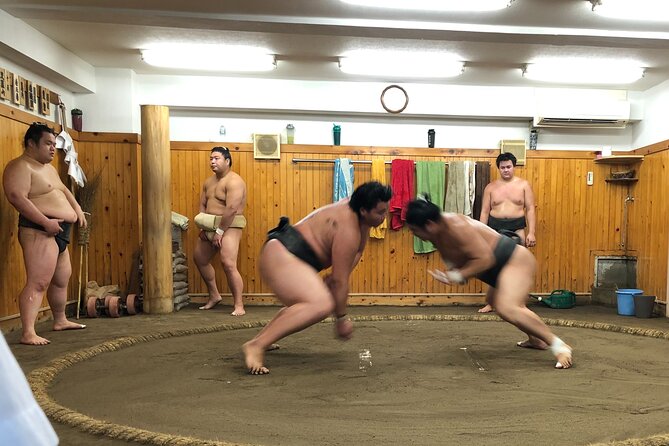
At first, sumo practice can seem repetitive. The guide helps you see the purpose behind the movements.
Pay attention to the contrast between ritual and force. Wrestlers may perform slow, deliberate motions before the physical work begins. Those movements are not filler. They prepare the body, reinforce balance, and reflect the sport’s formal customs.
Then notice how quickly a bout can end. A match may last only seconds, yet the wrestlers spend hours building the strength and control needed for that moment. A push at the wrong angle, a lost step, or a shift in balance can decide everything.
The guide’s role is especially valuable here. You can ask questions along the way, and the explanations help you understand the daily routine rather than simply watch large athletes collide. Several of the strongest experiences came from learning about the wrestlers’ lives, training schedule, rules, and the meaning of their actions.
If you already follow sumo, you may appreciate the chance to observe technique at close range. If you know almost nothing about the sport, the briefing keeps the session from becoming a silent hour of puzzlement.
The photo with a wrestler
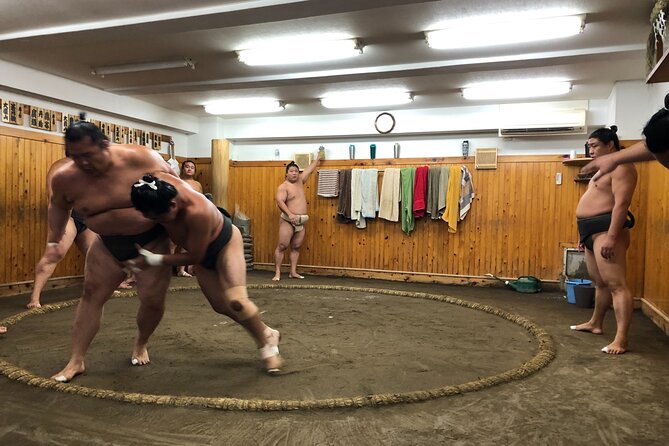
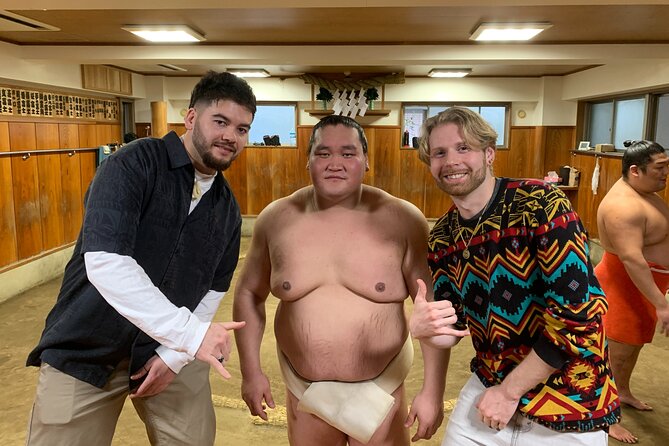
The experience includes a photo opportunity with a sumo wrestler. This usually comes after the practice, when the wrestlers have finished their work and the setting allows it.
Keep your expectations polite and modest. The wrestlers are not there to put on a long meet-and-greet. You may have a short chance to speak with them and take a picture, but the length and availability of that interaction can depend on the stable and the day.
The photo is a useful part of the visit because it gives you a personal memory of an otherwise quiet observation. It also lets you appreciate the size and physical presence of the wrestlers in a way that is hard to grasp from television.
Do not assume a Yokozuna will be available. The stable may be one where a Yokozuna trains, but you will not know before the session if he is present. A former Yokozuna has appeared on some visits, but that is a fortunate possibility, not part of the guaranteed program.
How authentic is the experience?
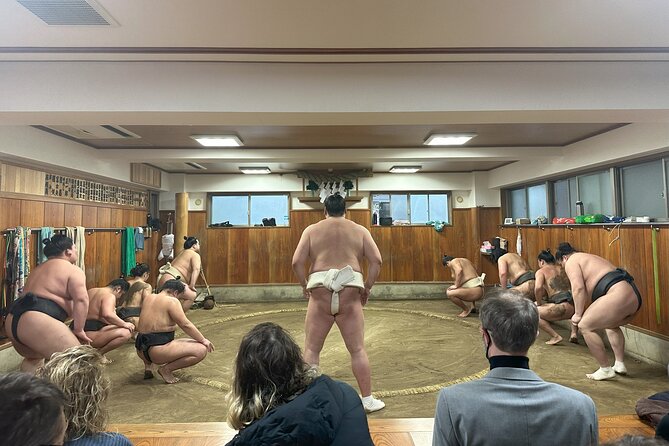
The answer depends on what you mean by authentic.
The setting can be a real stable, and the practice can be genuine daily training. You are not promised a tournament, a staged match, or a fixed cast of wrestlers. That is a strong point if you want a look at ordinary training rather than a tourist show.
At the same time, some versions of the experience may involve retired sumo wrestlers or former competitors. One account described interaction with retired wrestlers and taxi drivers rather than current professionals. Another found the event so focused on talking and limited practice that it did not feel like a real stable visit.
This variation is important. Read the option title carefully when booking. The Sumo Practice with Wrestlers option includes specific rules about clothing, the dohyo, and women’s access. The stable observation format focuses on sitting quietly and watching the daily routine. The supplied information does not promise the same performers or schedule for every date.
I would describe this as a genuine cultural access experience with some uncertainty, not a guaranteed top-level sports event. That is a fair description, and it helps prevent disappointment.
What $99.10 buys you
At $99.10 per person, the price is reasonable if close access to sumo is high on your Tokyo list.
You are paying for more than an hour of entertainment. The fee covers the guide, entry arrangements, explanations, and access to a place that is normally difficult to visit independently. The photo with a wrestler adds value, especially for first-time visitors.
The price is harder to justify if you expect a full show, a guaranteed Yokozuna, extensive hands-on training, or a meal. Eating chanko is mentioned in one account of the experience, but it is not part of the stated itinerary, so do not book this expecting lunch.
I would also compare the cost with your alternatives. A tournament ticket gives you competition and spectacle. This experience gives you proximity and context. For a dedicated sumo fan, the latter may be the better buy. For someone who simply wants to see a few bouts, the price may feel high.
The high overall rating and 96 percent recommendation suggest that the basic format works well for many people, but the lower ratings point to real risks: cancellations, limited action, difficult seating, and unclear expectations about who will be training.
Weather, timing, and the risk of schedule changes
The experience is often described as morning training, but the actual start time can vary by date. One cancellation account involved a late-afternoon start, so rely on the confirmed message rather than the tour title alone.
Training schedules change around major tournaments. Practice may finish earlier than usual, and the total visit may not match the advertised one-hour estimate. In other cases, practice can run longer. Build flexibility into your day instead of scheduling a tight museum visit or restaurant reservation immediately afterward.
You may also wait outside before entering. On a cold, rainy day, that can be unpleasant, and the stable itself may remain chilly. Wear layers and bring weather protection. You will remove your shoes, so clean, comfortable socks are a good idea.
The tour has a maximum of 25 participants. That is not a private visit, but it is small enough for a guide to manage. Your view may depend on where you are seated, and a floor position can be less comfortable than a chair.
Rules that protect the practice
The restrictions can seem strict, but they preserve the training environment.
You cannot leave halfway through practice. You cannot re-enter once you leave. Phones must stay silent, flash and shutter sounds are prohibited, and video recording is not allowed.
Do not eat inside. Water and sports drinks are permitted. Avoid stretching your legs toward the dohyo, and do not distract the wrestlers while they concentrate.
These rules are not minor technicalities. Sumo training depends on focus, and the stable is not set up for a crowd moving around or talking over the action. If you can sit quietly and follow instructions, the format feels respectful rather than restrictive.
If you are ill, do not attend. The close indoor setting makes this a basic courtesy to the wrestlers and everyone else.
Who will enjoy this most?
I would recommend the experience to you if:
- You already follow sumo or want to understand it beyond a television broadcast.
- You value access to everyday Japanese sporting culture.
- You can sit quietly and comfortably for at least an hour.
- You are happy watching practice rather than a formal contest.
- You can keep your schedule flexible.
- You will respect strict rules about photos, silence, food, and movement.
Families can enjoy it, and children may find the wrestlers impressive, but younger children must be able to remain quiet. The format is not designed for noisy participation or constant movement.
I would hesitate if you need guaranteed seating, a fixed start time, a guaranteed star wrestler, or a polished show. I would also reconsider if sitting on the floor is difficult for you or if you dislike experiences where the length and content depend on the day’s practice.
Should you book the Tokyo sumo training visit?
Book it if you want a close, respectful look at sumo as a way of life rather than a short performance. The strongest reasons are the working stable, the guide’s explanations, the chance to watch training from nearby, and the photo afterward.
Go in with the right picture: practice may be quiet, repetitive, chilly, longer than expected, or shorter than advertised. The best wrestler at the stable may be absent. A cancellation is also possible, so keep your booking messages close and avoid building an unmovable schedule around the visit.
For a sumo fan, $99.10 can be good value for access that is difficult to arrange alone. For a casual sightseer, the price only works if you appreciate cultural context and real training more than spectacle.
FAQ
How long does the sumo training experience last?
The listed duration is about one hour, including a short introduction and roughly 55 minutes inside the stable. The actual length may be shorter or longer depending on the training schedule.
Where does the tour meet?
The stated meeting point is 1-chōme-2-8 Chitose, Sumida City, Tokyo 130-0025, Japan. The precise meeting location and time may change by date, and confirmed details are sent after booking.
Does the activity include a photo with a sumo wrestler?
Yes. The experience includes a photo opportunity with a sumo wrestler, usually after the practice. The available wrestler and length of the interaction can vary.
Can I take photos or videos inside the stable?
Photos are allowed without flash or shutter sounds. Video recording is not allowed.
Can I eat or drink inside the stable?
Eating is not allowed. You may drink water and sports drinks inside the stable.
Can women enter the sumo ring?
Women may join the tour and watch from designated seating areas, but cultural and religious rules do not permit female participants to enter the dohyo.
Do I need to remove my shoes?
Yes. Shoes must be removed before entering the practice area. Men taking part in the Sumo Practice with Wrestlers option must remove their shoes before stepping onto the dohyo.
What happens if I cancel?
You can receive a full refund if you cancel at least 24 hours before the scheduled start time. Cancellations or changes made less than 24 hours in advance are not accepted for a refund.
Just added around the world
- Horse Ride + Swimming with Turtles in Aquarium at Nungwi Beach★ 4.5 · 8 reviews
- Desert Trail in Morocco on Horseback★ 5.0 · 2 reviews
- Zakytnhos Horse Riding Swimming Experience★ 3.5 · 3 reviews
- Xi’an Half-Day Private Tour of Terracotta Warriors and Horses Museum★ 5.0 · 2 reviews
- Half-Day Tour: Terracotta Warriors and Horses Museum★ 5.0 · 7 reviews
- Beach & countryside horse riding outside Westport. Guided. 1 hour★ 5.0 · 56 reviews
- Private tour to Sevan, Dilijan Off-road tour & Horseback riding★ 4.5 · 5 reviews
- Vienna Horse-Drawn Carriage Ride with Sparkling Wine and Food★ 5.0 · 44 reviews
Tokyo Horse Riding Tours, compared.
Tokyo: Sumo Morning Practice Viewing Tour at a Real Stable
Read our review →Tokyo: Sumo Morning Practice Viewing Tour at a Real Stable
Read our review →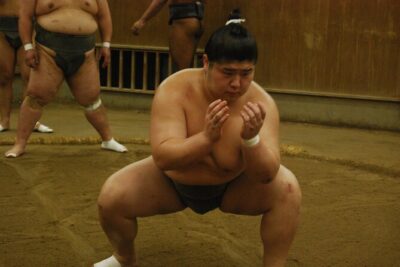
Tokyo: Sumo Morning Practice -Stable Visit Tour with a Guide
Read our review →Tokyo: Sumo Morning Practice -Stable Visit Tour with a Guide
Read our review →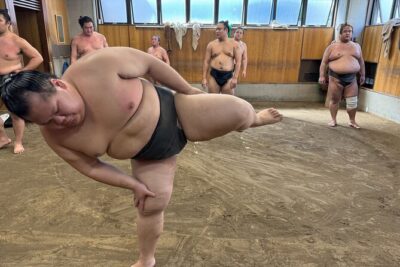
TOKYO , No1 Yokozuna Stable Morning Practice in Ryogoku
Read our review →Browse the lists this tour appears in