
Review · SPAIN HORSE RIDING TOURS
Andalusian Horses Dance Show
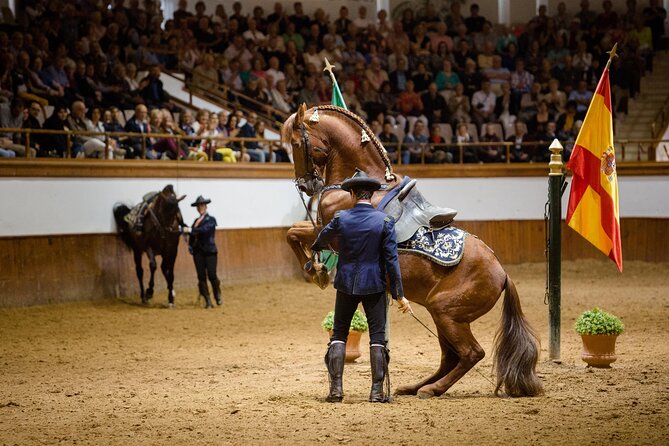
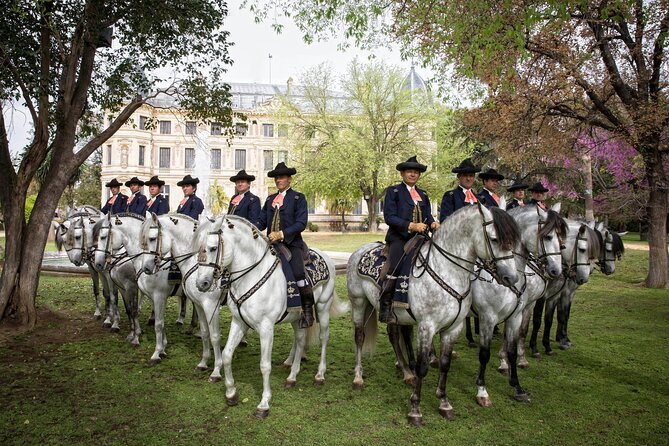
The remarkable thing here is not a few trained horses doing tricks. It is the quiet control behind every step. At Jerez’s Royal Andalusian School of Equestrian Art, riders guide Andalusian horses through classical dressage, cattle-herding maneuvers, carriage work, and acrobatic movements, all set to music.
I like the variety. You may see a lone rider working one-handed at a gallop, then a carriage team moving with old-fashioned precision, followed by a full carousel of horses and riders. I also like that the show suits families and first-time horse fans, not only serious riders. The main caution is seating: tickets are sold by category, not by exact row or seat, so some positions may have a restricted view.
Key points to know before booking
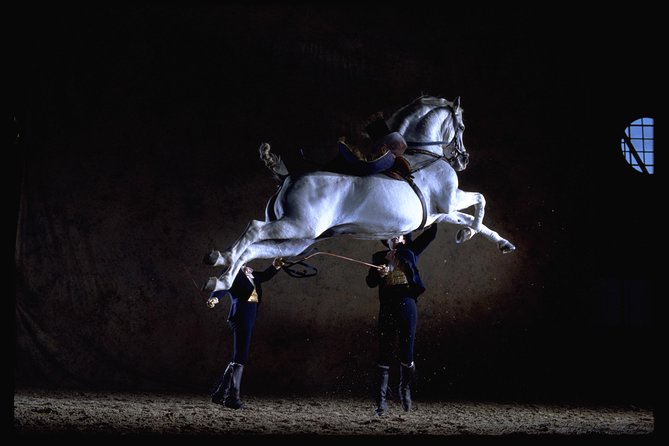
- Six to eight choreographies: The program changes by day but draws from doma vaquera, classical dressage, carriage driving, work in hand, and the final carousel.
- A 90-minute performance: The show is long enough to feel substantial without taking up an entire day in Jerez.
- A proper equestrian school: You are watching formal riding traditions, not a casual tourist demonstration.
- Seats are assigned by ticket category: You cannot choose a specific row or seat number when booking.
- Spanish narration: The riding is easy to follow visually, but explanations before each segment may be in Spanish only.
- Plan for heat and transport: The arena can feel warm in summer, and taxis after the show may be difficult to find.
Why the horses are the real stars
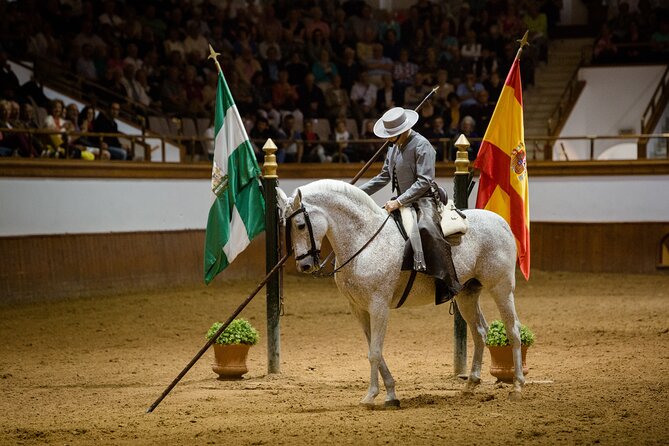
The Andalusian horse is famous for its proud carriage, controlled movement, and ability to respond to very small signals. This performance lets you watch those qualities in action. The best moments are often the quiet ones, when a horse appears to pause, collect itself, and then move forward with almost no visible instruction from the rider.
That apparent effortlessness can fool you. The program includes advanced exercises from classical dressage, including the passage and piaffe, in which the horse lifts and places its legs with great control while maintaining balance. Other sections feature airs above the ground, Spanish walk, levades, caprioles, and courbettes. These movements demand careful training from both horse and rider.
The show is also about the partnership between them. You will notice the rider’s posture, hands, and timing, but the horse often draws your attention first. The effect can feel part ballet, part sport, and part living tradition.
The attraction has earned a 4.5 rating from 483 ratings, and that overall score fits the experience well. Its strongest qualities are the beauty of the horses, the precision of the riders, the music, and the range of acts. Its weaker points are practical: unclear seat views, limited English explanation, hot conditions, and transportation after the performance.
More Shows in Spain:
- Cordoba: Equestrian Show General Entry
★ 4.5 · 2,333 reviews - Fuengirola: Spanish Horse Show with Optional Dinner/Flamenco
★ 4.1 · 339 reviews - Equestrian Show Royal Stables of Córdoba
★ 4.0 · 241 reviews
Arriving at the Royal Andalusian School in Jerez
The meeting point is the Royal Andalusian School of Equestrian Art on Avenida Duque de Abrantes in Jerez de la Frontera. The listed start time is 12:00 p.m., and you need to present your printed receipt at the ticket office to collect admission.
Give yourself extra time before the performance. The grounds and warm-up area are worth seeing, and some visitors have arrived early enough to watch horses and riders practice before the main event. A cafe and shop are available inside the complex, giving you a place to get a drink or light bite before the show.
The school is near public transport, but getting the details right matters. If you are coming by train, check that your route is headed to Jerez de la Frontera, not another town with a similar name. A wrong stop can turn a straightforward visit into an expensive taxi ride.
Driving requires a little caution. Nearby parking can be available, but signs and ticket-window directions may not be as clear as you would like. People may approach you about parking, so do not assume someone directing you to a space is an official attendant. Check the local arrangement before handing over money.
From Cádiz, this makes a sensible half-day outing. From Seville, it can also work as an independent train trip, though you should build in enough time for the journey and the fixed show schedule. If you are arriving from a cruise port, check the taxi fare carefully. The ride can take roughly 30 to 40 minutes, and waiting for a driver during the performance may cost far more than expected.
How the six performance traditions fit together
The exact program varies by day. Each show uses six to eight choreographies selected from the school’s repertoire, with a similar level of difficulty and entertainment value. That means you should not expect every listed act at every performance.
Doma vaquera and the working horse
Doma vaquera comes from traditional cattle-herding techniques. The horseman rides with one hand, first trotting and then galloping around the arena. The display can include sudden changes of rhythm, pirouettes, and arreones, in which the horse breaks sharply into a gallop.
This section gives the program a distinctly Spanish character. It is less polished in appearance than formal dressage, but that is the point. You are seeing practical riding skills adapted for performance. Watch how quickly the horse responds to a change in pace and direction.
More Horse Riding Tours in Spain:
- Jerez de la Frontera: How the Andalusian Horses Dance
★ 4.6 · 6,168 reviews - El Salobre: Horse Riding Adventure with Transfer Options
★ 4.5 · 2,034 reviews - Mallorca: Horseback Riding Experience with Food Options
★ 4.6 · 1,424 reviews - Jerez de la Frontera: Andalusian Horse Dance and Museums
★ 4.7 · 1,289 reviews
Classical dressage and controlled movement
Classical dressage forms the visual center of the show. The horses perform advanced exercises to classical music, with titles in the repertoire including The Colts, Airs on Horseback, Pas de Deux, Passage and Piaffe, Domino on Horseback, Airs Above the Ground, and Fantasy.
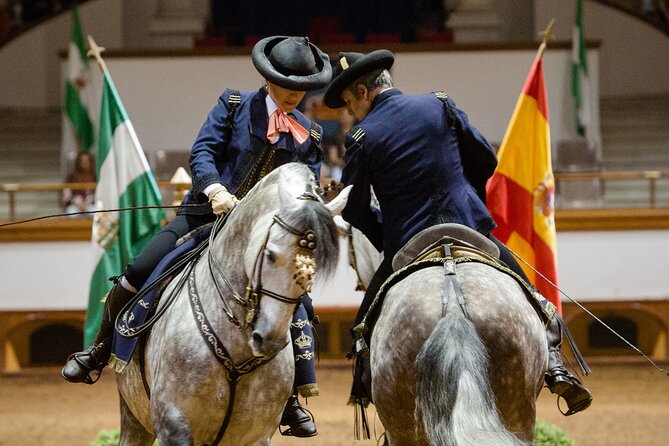
You do not need to know the technical names to enjoy this section. Look for balance, rhythm, and the small distance between command and response. In a pas de deux, two horse and rider teams work together. In the passage and piaffe, the focus is on collected, elevated steps and precise placement.
The names can sound grand, but the appeal is simple: a large animal moves with the timing of a dancer. The music helps you see the pattern, while the riders keep the work controlled rather than theatrical.
Carriage driving and old-style harness
Carriage driving changes the pace and shape of the show. Horses wear classical harness and pull carriages while coachmen guide them through the arena. This recalls the period when such vehicles were used for transport, though here the focus is sport and exhibition.
You get a different view of horsemanship in this section. The rider is no longer sitting directly on the horse, and the team must respond through the harness and reins. The carriage work can be especially interesting for families because the equipment, multiple horses, and coachman create an entirely different picture from dressage.
Work in hand and commands from the ground
In work in hand, the horse obeys even when the rider is not in the saddle. The horse may perform Haute École exercises such as levades, caprioles, courbettes, piaffe between pillars, Spanish walk, and long-rein work.
This is one of the clearest demonstrations of training. Without a rider’s weight and position on its back, the horse still follows carefully timed commands. Some of the movements are athletic, including raised forequarters and jumps, so this can be a highlight if you enjoy seeing how training works rather than simply watching a polished routine.
The carrousel finale
The carrousel brings several horses and riders into the arena together. They work in unison, combining advanced exercises in a coordinated finish.
It is a fitting finale because it shows the school’s central skill: control across a group. One horse performing a difficult movement is impressive. Several horses and riders maintaining spacing, rhythm, and direction at the same time gives the performance its grandest moment.
Seating, sound, and the view from the arena
Seat quality matters more than the ticket price alone suggests. Tickets are sold by price category, but you do not select a particular row or seat number. The school assigns seats according to the order of purchase or booking.
Some positions can have a restricted view of part of the arena. That is a serious consideration because the performance depends on seeing the full movement across the floor. A lower seat may put you close to the horses and riders, while a higher seat can give you a broader view of formations and carriage work. The best choice depends on the category offered, but do not assume that a more expensive ticket automatically means an ideal angle.
The arena can become warm in summer. Bring a fan if you have one, dress for the conditions, and avoid arriving without water beforehand. Bottles and cans are not allowed into the grounds, so plan to drink before entering or use the available facilities.
Photography, filming, and recording are prohibited unless you are an authorized professional. This is worth remembering before the first horse enters. Keep your phone away during the show and enjoy the performance without worrying about capturing every movement.
Narration before the segments may be in Spanish only. Announcements have been made in several languages, but the fuller explanations are not always translated. You can still follow the action visually, though an English guide or written program would make the tradition easier to understand.
Is $33.43 good value?
At $33.43 per person, this is not the cheapest activity you can add to a day in Andalusia. I still consider it fair value if you are interested in horses, dressage, music, or regional traditions. You receive about 90 minutes of organized performance in a purpose-built equestrian setting, with several distinct riding styles rather than one repeated routine.
The value improves if you make a half-day of the visit. Arrive early, look around the grounds, watch the warm-up area if available, and use the cafe before the performance. Then combine the show with time in central Jerez, where you will be close to historic sites, cafes, and other city destinations after the final carousel.
The price is harder to justify if you have little interest in horses or formal performance. The show is not a guided tour of the school, and admission to other facilities is not included. You are paying for the performance itself.
Booking well ahead is sensible. The experience averages 31 days of advance booking, and confirmation arrives within 48 hours, subject to availability. That lead time also gives you a better chance of receiving a preferable seat category.
Who will enjoy this most
I would recommend the show to families, horse enthusiasts, and anyone who appreciates disciplined physical performance. Children do not need to understand dressage terms to enjoy the horses, music, carriages, and synchronized finale.
It also suits adults who want a distinctly Andalusian experience beyond the usual city sights. Doma vaquera connects the performance with rural working traditions, while classical dressage shows the refined side of Spanish equestrian culture.
You may want to skip it if you dislike fixed seating, warm indoor venues, or performances with limited English explanation. It may also disappoint if you expect a fully guided visit to the school rather than a ticketed show.
Practical booking advice for a smoother visit
Print your receipt and bring it to the ticket office. Discount tickets require proof of eligibility, and without the correct document you may need to pay the difference to the full standard price if seats remain.
Allow 30 to 45 minutes before the show if you want time for the grounds, cafe, warm-up area, or ticket collection. Arriving at the last minute adds needless stress, especially if you are driving or finding the correct ticket window.
After the performance, taxis may be difficult to find. If you need one, think about your return plan before the horses enter the arena. Public transport is nearby, but you should confirm the route and stop in advance.
Free cancellation is available if you cancel at least 24 hours before the local start time. Cancellations or changes made less than 24 hours ahead are not accepted for a refund.
Should you book the Andalusian Horses Dance Show?
Book it if you want to see Andalusian horses doing far more than a simple parade. The combination of doma vaquera, classical dressage, carriage driving, work in hand, and the carrousel gives you a broad look at Spanish riding traditions in one 90-minute performance.
I would make three checks before paying: confirm the Jerez location and transport, understand that you cannot choose your exact seat, and prepare for Spanish-only explanations and summer heat. If those points work for you, the show offers a polished and memorable way to spend part of a day in Jerez, with enough variety to justify the trip from Cádiz or Seville.
FAQ
Where does the Andalusian Horses Dance Show take place?
The performance takes place at the Royal Andalusian School of Equestrian Art, Avenida Duque de Abrantes, s/n, 11407 Jerez de la Frontera, Cádiz, Spain.
What time does the show start?
The listed start time is 12:00 p.m.
How long does the performance last?
The performance lasts approximately 1 hour and 30 minutes.
What is included in the ticket?
The ticket includes entrance to the show How the Andalusian Horse Dance.
Is admission to other facilities included?
No. Entrance to other facilities is not included.
Can I choose my exact seat?
No. Tickets are sold by price category, and the school assigns the row and seat according to the order of purchase or booking.
What riding styles are included?
The repertoire includes doma vaquera, classical dressage, carriage driving, work in hand, and a carrousel finale. Each show uses six to eight choreographies, and the program may change by day.
Can I take photographs or record the show?
No. Photography, filming, and recording are not allowed unless you are an authorized professional.
What is the cancellation policy?
You can cancel for a full refund up to 24 hours before the local start time. Cancellations or changes made less than 24 hours before the show are not accepted.
Just added around Spain
- Horseback Riding by the beach or mountain in Tarifa, Spain – 1 to 2 hrs★ 5.0 · 3 reviews
- Horseback riding through the Calblanque Natural Park★ 3.5 · 12 reviews
- Horseback riding route through Doñana + visit to El Rocio-Private tour★ 4.0 · 2 reviews
- Private Horse Carriage Ride and Walking Tour of Seville★ 4.5 · 4 reviews
- Seville Palaces: Dueñas Palace and Pilate House Tour★ 5.0 · 28 reviews
- Jerez and Cadiz with Horse Ballet and Sherry Tasting from Seville★ 4.5 · 45 reviews
- Horseback riding tour of Doñana and visit of El Rocio★ 4.5 · 4 reviews
- Horse-Drawn Carriage Ride through Seville★ 4.0 · 21 reviews
Spain Horse Riding Tours, compared.
El Salobre: Horse Riding Adventure with Transfer Options
Read our review →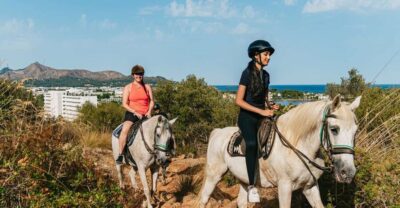
Horseback Riding Experience with Food Options
Read our review →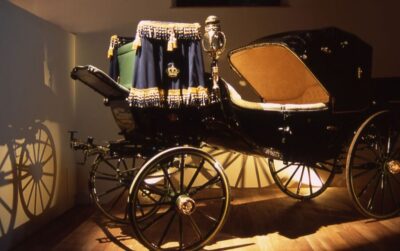
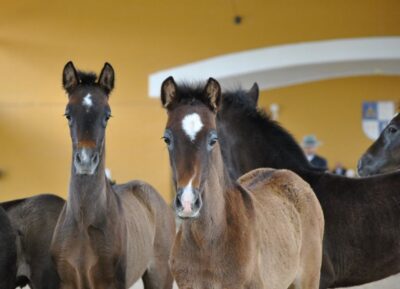
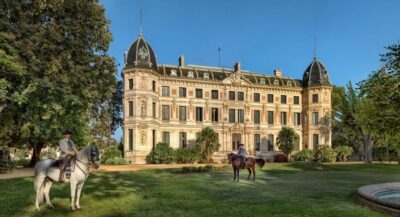
Royal Andalusian School of Equestrian Art Admission
Read our review →
Browse the lists this tour appears in