
Review · SPAIN HORSE RIDING TOURS
Jerez: Royal Andalusian School of Equestrian Art Admission
The finest part of this Jerez visit is getting close to the working side of Andalusian horsemanship. You see the horses in their stables, watch riders train, peek into the tack room, and learn how the school keeps this polished tradition running. The training rings and the immaculate stables are the real stars.
I like the way the visit mixes live action with useful context. The 19th-century palace, gardens, equestrian museum, and carriage collection give the horses a proper setting, while guides such as Javi and Elena have been praised for answering questions clearly. The main thing to watch is the schedule: horse training and saddlery demonstrations are not offered on Saturdays, and this admission does not automatically mean you have booked the famous horse show.
Key points to know before you go
- Watch training rather than a full performance: The admission usually gives you access to daily work in the outdoor rings and indoor arena, not the staged show.
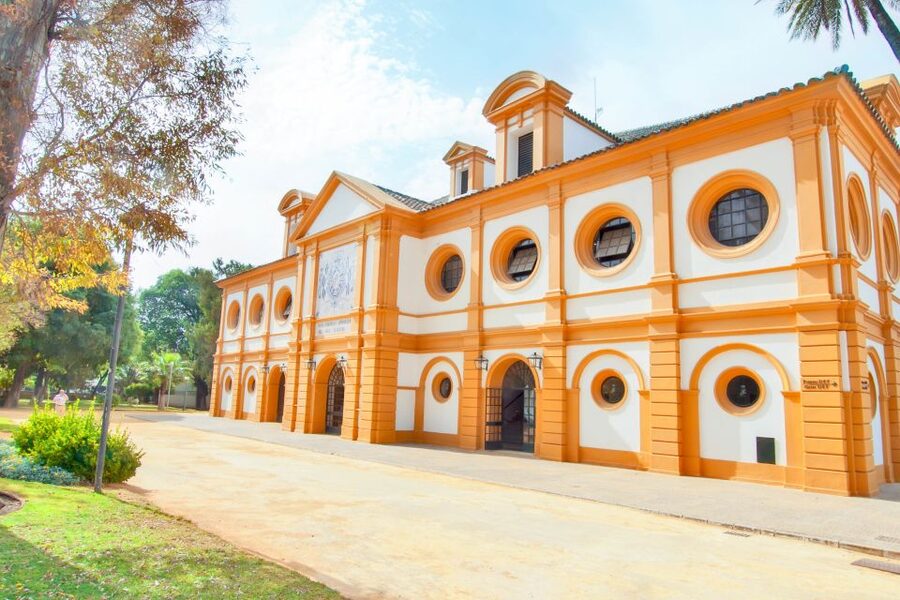
- Go beyond the horses: The visit includes palace rooms, an 11-room equestrian museum, gardens, the saddlery, stables, tack room, and carriage museum.
- Plan around the weekday schedule: Training and saddlery work are listed as unavailable on Saturdays.
- Arrive early for the audio-visual presentation: It is available until 11:00 in the visitor reception area.
- Expect a working school, not a petting zoo: You may get close to the horses, but touching them is not guaranteed.
- Allow more than two hours if you like museums: The stated duration is two hours, though one visitor spent nearly four hours exploring the grounds and collections.
Why the Royal Andalusian School is worth your time
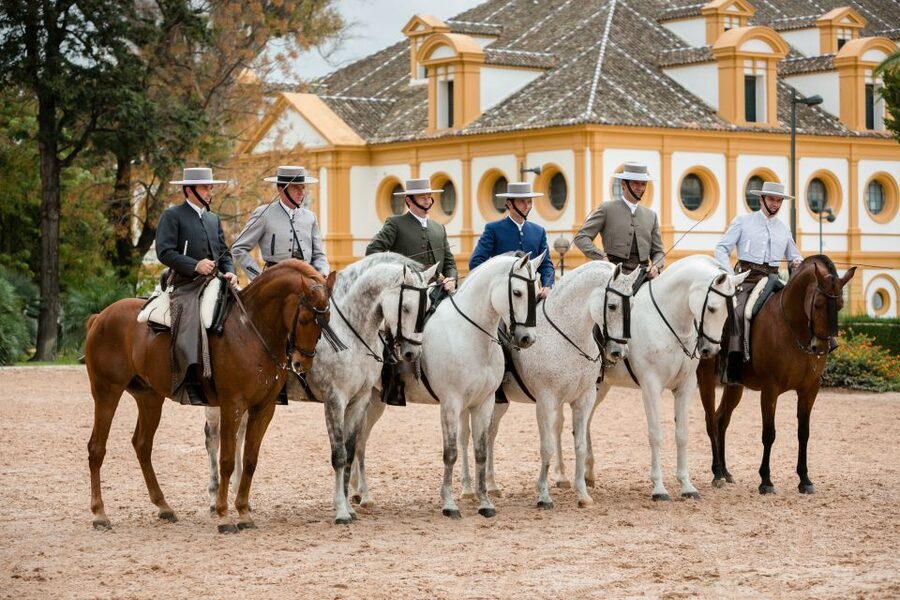
Jerez is closely tied to sherry, flamenco, and horses. At this school, you get to see the horse tradition in practice rather than simply admire a staged image of it.
The school is the home of Andalusian horses trained in dressage and other forms of controlled movement. The visit shows you the full operation: the horses, riders, trainers, stables, equipment, buildings, and displays that explain how the institution works.
I especially like that the admission is not limited to one viewing area. You move through several parts of the property, and each one answers a different question. How are the horses cared for? Where are the saddles and harnesses kept? What does the school’s training space look like? How did equestrian art develop in Andalusia?
At about $18 per person, this is a fair buy for anyone with an interest in horses, riding, Spanish culture, or architecture. It also works well for people who are not serious equestrian fans, since the palace, gardens, and museums give you plenty to see between training sessions.
More Horse Riding Tours in Spain:
- Jerez de la Frontera: How the Andalusian Horses Dance
★ 4.6 · 6,168 reviews - Cordoba: Equestrian Show General Entry
★ 4.5 · 2,333 reviews - El Salobre: Horse Riding Adventure with Transfer Options
★ 4.5 · 2,034 reviews
Start in the gardens and reception center
Your visit begins at the visitor reception center. If you arrive before 11:00, you can see an audio-visual presentation about Andalusian equestrian art. This is a useful introduction, especially if you do not already know the difference between a school training session and a public performance.
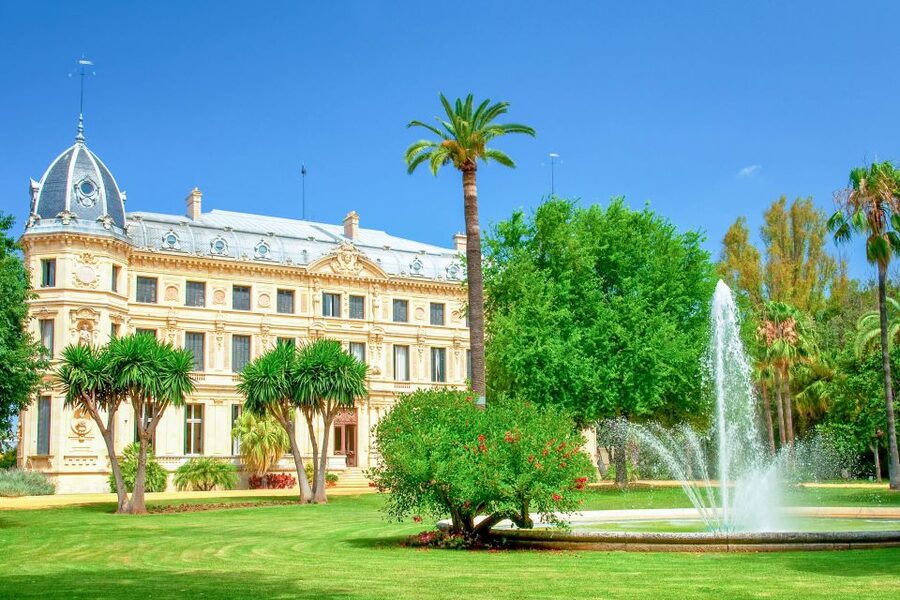
The reception area opens onto formal gardens filled with exotic plants. A large fountain sits in the center, with water jets drawing your eye toward the palace beyond it. The gardens provide a calm start before you reach the busier working areas.
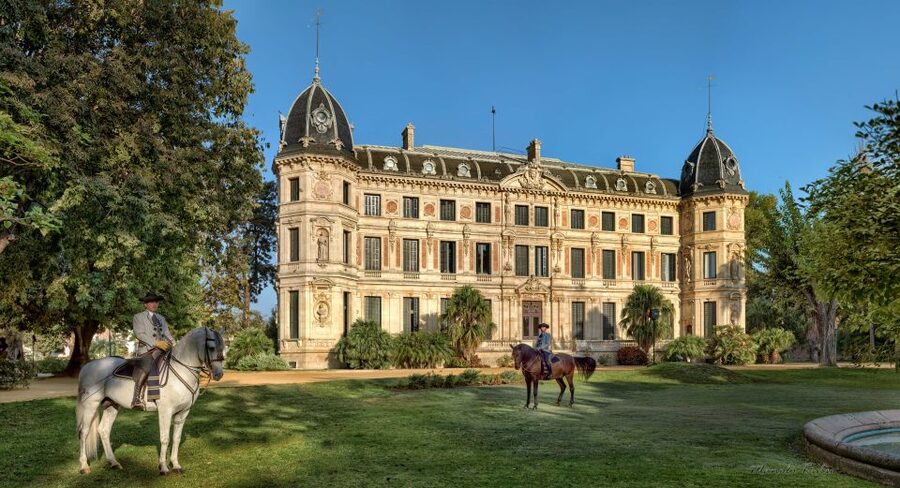
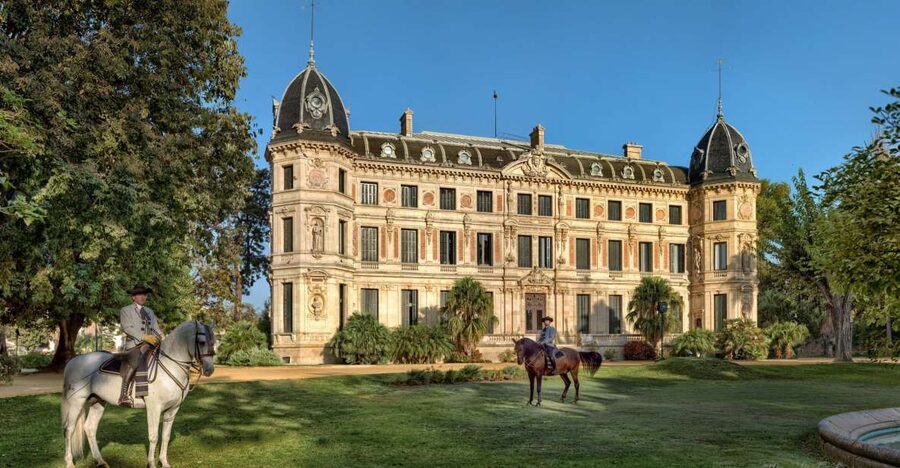
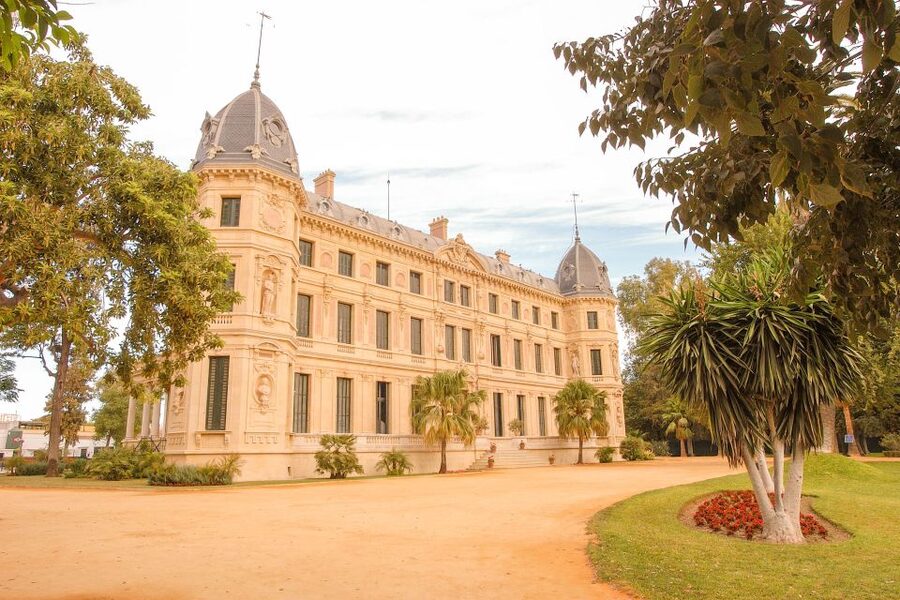
The palace was designed by Charles Garnier and dates from the 19th century. Its exterior gives the visit some ceremony, but the more useful part is inside, where the ground-floor halls are arranged as they were originally conceived.
Do not rush through these rooms. The palace helps explain why the school is more than a stable yard. This is an official institution with an elegant public face, and the formal rooms contrast nicely with the practical work taking place elsewhere on the grounds.
The equestrian museum explains the tradition
In the basement, the Museum of Equestrian Art has 11 rooms devoted to the origins and development of equestrian art and the horse in Andalusia.
This section matters because the horses can be impressive enough to steal your attention completely. The museum gives you a reason to pause and understand the customs, training, and performance traditions behind what you see in the arena.
The exhibits are interactive, and video displays help explain the school, the regional horse tradition, and the movements performed by the animals. Some video screens have not always been working, so do not expect every interactive feature to function perfectly. Even so, the museum covers enough ground to make the visit more than a quick look at expensive horses.
I would place the museum before or after the stable tour depending on your schedule. If you arrive early, the reception presentation and museum give you useful background. If you are eager to see training, head toward the active areas first and return to the museum afterward.
See the saddlery and the working tack room
One of the most interesting stops is the saddlery, where harnesses are made and repaired. The work is done by a master harness maker and apprentices, and it gives you a close look at the craft behind the performances.
This is easy to overlook when watching a horse move. Yet the equipment is central to the school’s work. Saddles, bridles, harnesses, and carriage gear must be maintained with care, and the visit shows that this is skilled handwork rather than a background chore.
The tack room sits at the center of the octagonal stable complex. It holds the harnesses used for daily training and shows. One visitor specifically noted the humidity-controlled tack room, a detail that helps explain the school’s attention to preserving leather equipment.
The saddlery and tack room are also where a guide adds real value. You can ask how the equipment is used and how the horses are prepared. Guides have included school staff, and that matters: you are not just being led through a display but shown part of an active workplace.
Same saddle, a completely different route:
- Mallorca: Horseback Riding Experience with Food Options
★ 4.6 · 1,424 reviews - Jerez de la Frontera: Andalusian Horse Dance and Museums
★ 4.7 · 1,289 reviews - Jerez: Yeguada de la Cartuja Carthusian Horses Tour
★ 4.8 · 970 reviews - Tenerife: Horseback Ride with Instructor
★ 4.4 · 836 reviews
Meet the horses in the octagonal stables
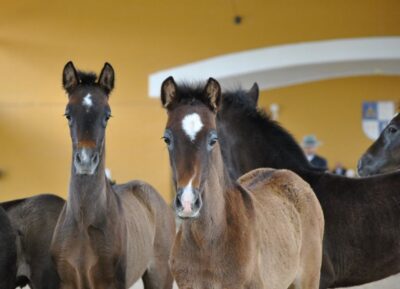
The stable complex houses some of the school’s most emblematic horses. You can see them in their stalls and observe their condition at close range.
This is one of the strongest parts of the visit for horse lovers. The animals are close enough to study, but the experience remains observational. You should not assume that you will be allowed to pet or touch a horse. One visit included that chance, while another visitor wished the school had brought a horse out for direct contact.
That difference is worth keeping in mind. The school is presenting trained working animals, not offering an animal encounter program. The reward is seeing how the horses are housed, cared for, and prepared for work.
Several visitors have praised the cleanliness of the premises and the condition of the horses. The immaculate setting is not just cosmetic. It reinforces the impression of a disciplined institution where care, routine, and presentation all matter.
Watch training in the indoor arena
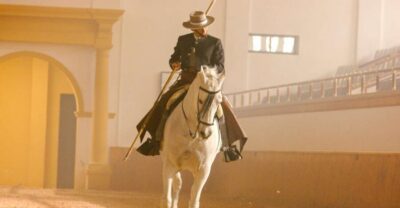
The indoor arena is built in an authentic Andalusian style and can hold 1,600 people. During a normal training visit, you may watch horses and riders working in the arena or in the outdoor exercise rings.
This is not the same as the choreographed horse show. Training can be quieter and less theatrical, but it lets you see the work behind the polished performance. You may watch riders repeat movements, horses respond to cues, stallions being lunged, or carriage driving practice.
The most important booking distinction is simple: admission to the school is not admission to the show. Some visitors expected the famous performance and found they had instead booked the stables, training ring, grounds, and museums. Read the option carefully before paying.
Training sessions are not offered on Saturdays according to the supplied schedule. The management may also alter the program, so treat the exact order and availability as changeable. If seeing horses in action is your main goal, check the date and starting time carefully.
Photography rules can also vary by area. One visitor was not allowed to take pictures inside the arena, so follow staff instructions rather than assuming you can photograph every session.
The carriage museum closes the loop
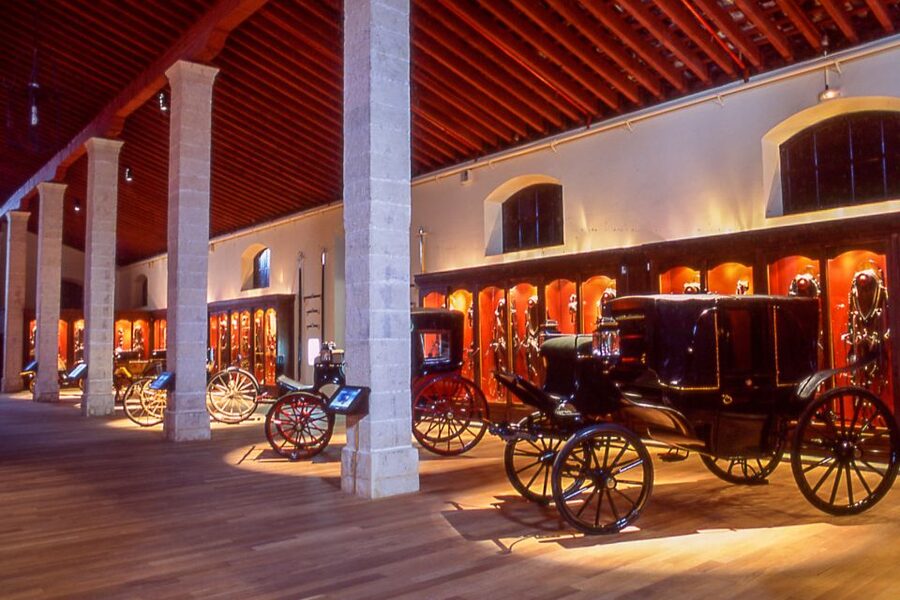
The carriage museum is the final scheduled stop. Its collection includes carriages, horses, harnesses, and equestrian costumes.
This makes a good ending because it broadens the story from riding to transport and ceremony. You can see how horses were presented and used in earlier settings, and how harness work connects the stable, the training ring, and the carriage.
The carriage museum is included in admission, but it may take extra walking and time to reach. On a very hot day, one visitor skipped it after seeing the stables and equestrian museum. That is understandable, but if you are paying for the complete visit, try to leave enough energy for this final section.
The carriage collection is especially useful for families and mixed-interest groups. Someone who is less interested in dressage may still enjoy the vehicles, costumes, and practical equipment.
Timing, language, and the ticket details that matter
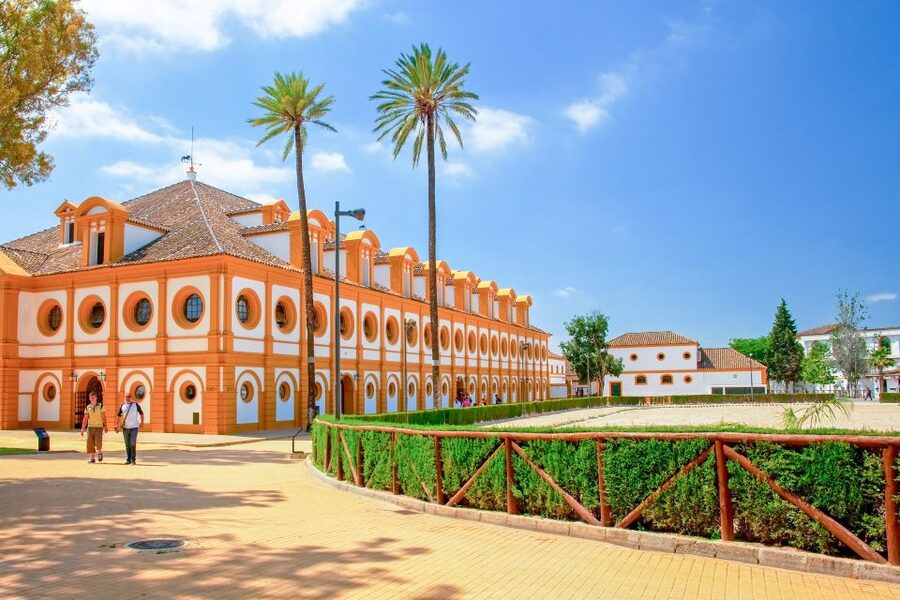
The planned duration is about two hours, but the property can hold your attention longer. If you explore the museums carefully, watch training, and spend time in the gardens, three or even four hours may be possible.
Guided visits are available in Spanish, English, French, and German. Guides have included Javi, Elena, and Harry on different visits, and guide quality can shape the experience. An employee of the school led one visit, which is useful because staff guides can explain the facilities from an insider’s point of view.
Do not be surprised if the exact start of an English tour differs from your expectation. One visitor booked a 10:00 English tour but waited for the introductory video and later joined a larger group because the tour arrangements changed. Another found that the English tour did not begin until 11:15, although there was still plenty to see.
Bring your printed receipt or show it on your mobile at the ticket office. Discount tickets require proof of eligibility. Without the right document, you may need to pay the difference to the standard price if tickets remain available.
The school does not allow bottles, cans, animals, or objects that management considers unsuitable inside the grounds. The management can also change the program. These rules are easy to follow, but they are worth knowing before you arrive.
The site is wheelchair accessible. A cafe has existed on the property, though opening hours and food choices may be limited, so do not build your whole visit around getting a snack there.
Who will enjoy this visit most
I would recommend this admission to:
- Horse lovers who want to see training and stable routines
- Visitors interested in Spanish riding traditions
- Families looking for an activity with animals, museums, gardens, and architecture
- Anyone who has already seen the horse show and wants to understand the school behind it
- People with a spare morning in Jerez who want more than a wine-tasting itinerary
You do not need to know dressage to enjoy the visit. The guides explain the setting, and the museums provide context. Still, the experience is strongest if you care at least a little about horses or want to understand Andalusian equestrian culture.
I would be more cautious if you are expecting constant action or a guaranteed chance to touch a horse. Training can be fascinating, but it is still training. The horses may be resting, the schedule may shift, and the arena rules may limit photography.
Admission compared with the full horse show
This $18 admission is a different product from the school’s performance, often known for its dancing horses. The admission gives you access to the school facilities, including the stables, training areas, palace, gardens, museums, saddlery, tack room, and carriage museum.
The show is the better choice if your priority is a polished, theatrical display. The school visit is better if you want the setting, background, daily work, and behind-the-scenes view.
If time and budget allow, combining both can make sense. The visit helps you understand the horses and equipment, while the show lets you see the finished skill in a formal presentation. If you can choose only one, decide based on your interest: performance for spectacle, admission for access and context.
Should you book the Royal Andalusian School?
Yes, if you want to see the working side of Jerez’s horse culture and are willing to treat the schedule as flexible. The horses, training rings, tack room, and clean, carefully maintained facilities give the visit real substance, while the palace and museums keep it interesting when the horses are not moving.
Book it with three checks in mind. Confirm that you are buying the school admission rather than the performance, avoid Saturday if training is important, and allow more than two hours if you want to see every collection.
At this price, the visit offers strong value. It is not a petting zoo and not a guaranteed live show, but it gives you a rare look at a respected equestrian school from several angles. For most visitors interested in horses, it is one of Jerez’s most worthwhile morning stops.
FAQ
How long does the visit take?
The stated duration is two hours. You may spend longer if you explore the museums, gardens, stables, and carriage collection at a relaxed pace.
What does the admission include?
It includes full admission to the school facilities, including the gardens, palace areas, equestrian museum, saddlery, stables, tack room, training areas, and carriage museum.
Can I watch the horses train?
Training is usually available in the outdoor exercise rings and indoor arena, except on Saturdays according to the supplied schedule.
Does this ticket include the horse show?
The admission described here covers the school facilities and training visit. It does not state that the full public horse show is included, so check the ticket option carefully.
Is the tour guided?
The visit includes a live tour guide, with languages listed as Spanish, English, French, and German.
Is the audio-visual presentation always available?
The audio-visual presentation is available at the reception center until 11:00 AM. The program can be changed by management.
Can I touch or pet the horses?
Direct contact is not guaranteed. You can see the horses in the stables, but the school does not describe the visit as a petting experience.
Is the visit wheelchair accessible?
Yes, the activity is listed as wheelchair accessible.
What should I bring to the ticket office?
Bring your printed receipt or show it on your mobile device. If you bought a discounted ticket, bring proof of eligibility.
Are bottles, cans, and animals allowed inside?
No. Bottles, cans, animals, and objects that management considers unsuitable are not allowed on the grounds.
Just added around Spain
- Horseback Riding by the beach or mountain in Tarifa, Spain – 1 to 2 hrs★ 5.0 · 3 reviews
- Horseback riding through the Calblanque Natural Park★ 3.5 · 12 reviews
- Horseback riding route through Doñana + visit to El Rocio-Private tour★ 4.0 · 2 reviews
- Private Horse Carriage Ride and Walking Tour of Seville★ 4.5 · 4 reviews
- Seville Palaces: Dueñas Palace and Pilate House Tour★ 5.0 · 28 reviews
- Jerez and Cadiz with Horse Ballet and Sherry Tasting from Seville★ 4.5 · 45 reviews
- Horseback riding tour of Doñana and visit of El Rocio★ 4.5 · 4 reviews
- Donana National Park Horse or 4×4 Riding Day Trip★ 5.0 · 4 reviews
Spain Horse Riding Tours, compared.
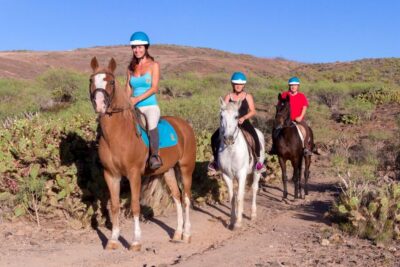
El Salobre: Horse Riding Adventure with Transfer Options
Read our review →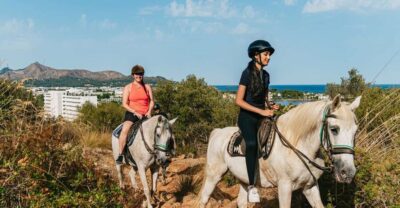
Horseback Riding Experience with Food Options
Read our review →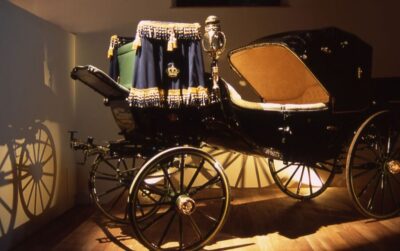
Montserrat Monastery & Horse Riding Experience from Barcelona
Read our review →Browse the lists this tour appears in