
Review · TOKYO HORSE RIDING TOURS
Tokyo: Sumo Morning Practice Viewing Tour at a Real Stable
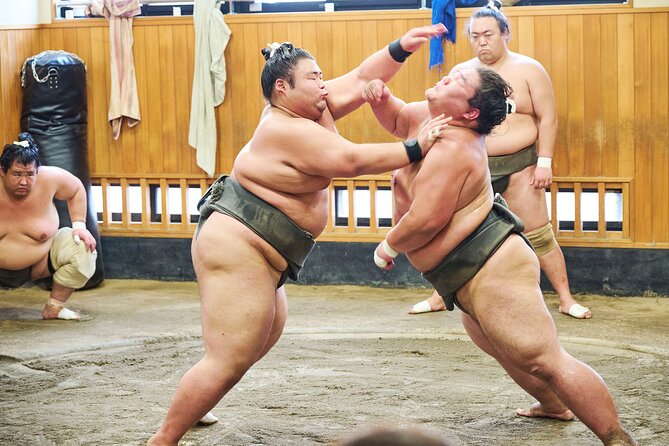
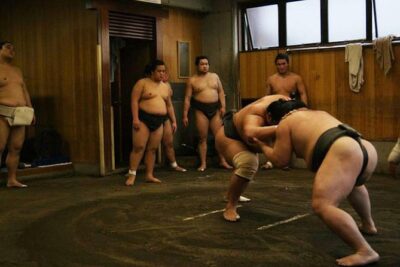
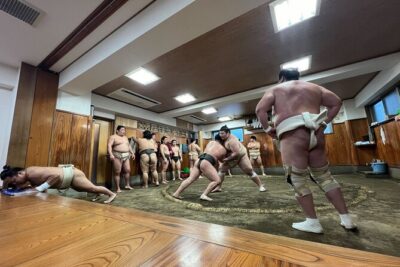
The best part of this Tokyo experience is that you watch real morning practice, not a staged show. At a working sumo stable, wrestlers train close by while you sit quietly and observe the strength, discipline, and ritual that shape their daily lives. Guides such as Tomo and Mao explain what you are seeing before and after the session.
I like two things in particular: the chance to see sumo at close range, and the guide support that makes an unfamiliar sport easier to follow. Mao has even used a WhatsApp group for questions during the silent training period, while Tomo has helped visitors with food suggestions around Tokyo. The main consideration is that this is practice, not a tournament, and strict quiet is expected.
Key points to know before you book
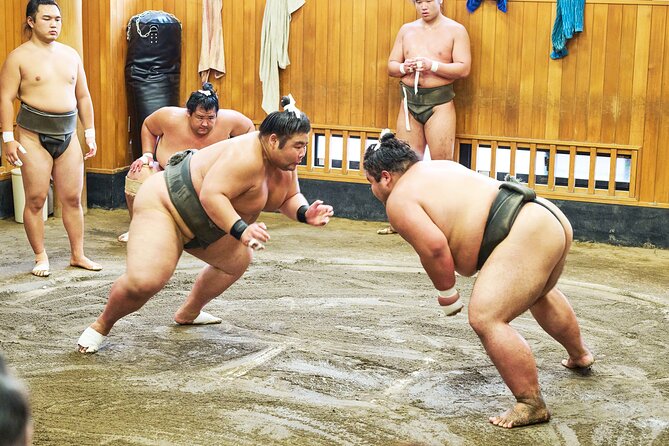
- Watch a working stable at 8:30 am: You see wrestlers train during a normal morning session rather than attend a staged tourist performance.
- Expect about 90 minutes of practice: The full activity lasts about two hours, with the training itself taking roughly an hour and a half.
- Silence is part of the experience: You must not speak during practice, so questions are handled before, afterward, or through the guide’s messaging system.
- Guides make sumo easier to understand: Tomo and Mao have helped explain rules, rituals, and customs to first-time viewers.
- Photo opportunities may follow: The experience includes the chance to take photos with sumo wrestlers, though the timing depends on the stable.
- Meet at Kiyosumi-shirakawa Station: The activity begins at 8:30 am and ends back at the meeting point.
Why morning practice is more revealing than a tournament
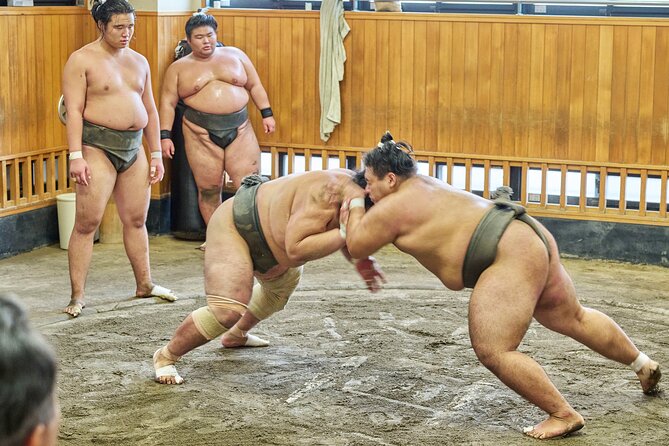
A professional sumo tournament gives you noise, ceremony, packed stands, and the drama of official bouts. This visit gives you something quieter: a look at the work behind the spectacle.
You watch wrestlers train in a place where sumo is lived every day. The practice can show you the athletes as serious competitors rather than as colorful figures from a formal event. You may see repeated drills, physical preparation, and bouts conducted without the showmanship of a public tournament.
That difference matters. If you want guaranteed matchups, a formal schedule, and the excitement of a crowd, this is not a substitute for tournament tickets. If you want to understand how wrestlers prepare, this setting offers a closer look at the sport’s daily discipline.
The stable is a working place, so the atmosphere depends on that morning’s practice. You are observing an active training session, not following a performance designed around sightseeing. That makes the experience feel more genuine, but it also means you should arrive ready to watch quietly and accept the rhythm of the stable.
More Sunrise and Morning Trips in the world:
- Cappadocia: Horseback Tour with Sunrise and Sunset Options
★ 4.9 · 1,755 reviews - Morning Horseback Ride with Breakfast from Las Vegas
★ 5.0 · 1,674 reviews - Cappadocia: Horse Riding Tour with Sunrise or Sunset Options
★ 4.8 · 1,377 reviews
Meeting at Kiyosumi-shirakawa at 8:30 am
The meeting point is outside Kiyosumi-shirakawa Station, at 1-chome-6-13 Shirakawa in Koto City. The start time is 8:30 am, and the activity ends back at the same meeting point.
That early hour is important. Morning practice is the reason you can see the stable in action, so this is not a tour to squeeze into a late morning after a slow breakfast. Give yourself enough time to reach the station without rushing. The meeting location is near public transportation, which makes the start practical, but the operator still expects you to be there at the stated time.
Your guide meets you at the station and takes the group to the stable. This is useful because the stable is not presented as a regular public attraction with a standard museum entrance. The guide handles the transition from station meeting point to the training setting and helps keep the visit orderly.
The tour is listed for a maximum of 50 participants. That is a sizeable possible group, so do not book this expecting a private lesson. The stable itself provides the close-up element, while the guide helps the group understand what is happening.
What you see during the 90-minute training session
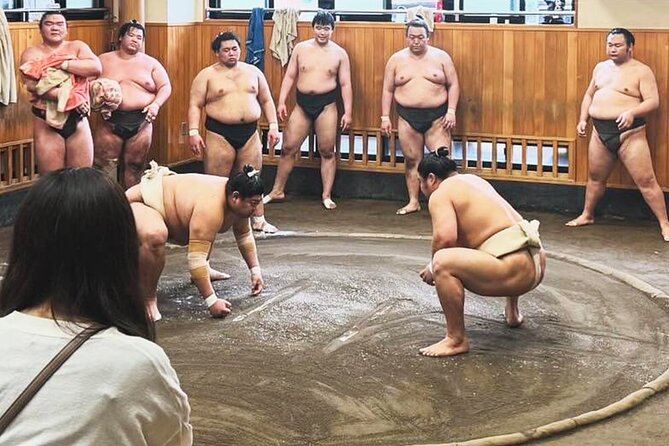
The training portion lasts about an hour and a half. That is long enough to see more than a quick ceremonial glimpse, yet short enough that the required silence should remain manageable for most people.
Before the practice begins, your guide can explain the basic rules and traditions. This preparation is valuable because sumo has its own vocabulary, structure, and rituals. Without help, you might simply see large athletes pushing and grappling. With context, you can better understand why certain movements matter and how training fits into the wider sport.
Once practice starts, the focus shifts to observation. You are expected to remain quiet. One especially useful arrangement described for Mao’s group was a WhatsApp channel where visitors could send questions while the training continued. Mao answered them without interrupting the stable’s routine.
That solution makes sense, especially for first-time viewers. You can stay respectful while still noting questions that come up. If your guide uses a similar system that day, bring a charged phone and make sure you understand how to join it. The key rule remains simple: do not speak during practice.
The silence is not a minor detail. It is one of the clearest ways this experience differs from a normal sightseeing activity. You are entering a place where athletes are working, so your role is closer to that of a quiet observer than an audience member at a show.
Seeing the athletes, not just the spectacle
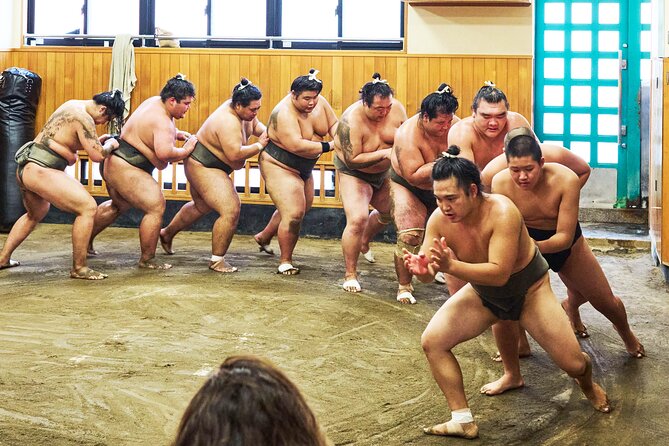
Sumo is often associated with formal entrances, dramatic stamps, colorful belts, and short bouts. Those elements are important, but training reveals another side of the sport.
You can watch the wrestlers as athletes who repeat demanding work to prepare for competition. The physical closeness helps you notice the effort involved, rather than seeing only the brief exchange that happens in an official bout. The setting also gives the visit a more personal scale than a large arena.
I find this particularly useful for anyone who has seen sumo on television but still does not understand what happens outside tournament days. The guide can connect the movements and customs to the broader rules of the sport, giving the session a clear frame.
At the same time, keep your expectations realistic. The tour does not promise a particular wrestler, a particular type of bout, or a fixed sequence of exercises. You are attending an actual practice session, and real training is not arranged like a stage show.
That uncertainty is part of the value. You are seeing the stable’s normal work, but you give up some control over exactly what happens.
Same saddle, a completely different route:
- Charleston’s Old South Carriage Historic Horse & Carriage Tour
★ 5.0 · 10,023 reviews - Jerez de la Frontera: How the Andalusian Horses Dance
★ 4.6 · 6,168 reviews - Punta Cana Zipline Adventure with Buggies and Horseback Riding
★ 5.0 · 5,001 reviews - Luquillo Beach Horse Ride from Carabalí Rainforest Adventure Park
★ 5.0 · 4,762 reviews
The guide makes an unfamiliar sport easier
The guide is central to this experience. Without explanation, the quiet setting could leave you unsure about what to watch. The tour provides commentary on rules, rituals, and traditions so you can follow the practice with more confidence.
Tomo has been praised for answering questions and adding useful suggestions for places to eat in Tokyo. That kind of help can be valuable early in a trip, especially if you want to turn a morning in Koto City into part of a larger day.
Mao has also helped make the silent period easier by organizing questions through WhatsApp. Her guidance has been described as clear and practical, including support from the station meeting point through the visit.
The presence of named guides does not mean you are guaranteed Tomo or Mao on every departure. They are examples of the guide style associated with this experience. The important point is that you should receive explanations from a local guide rather than having to research the rules on your own.
That makes the tour a good choice for families and mixed groups. One person may already follow sumo closely, while another may know almost nothing about it. The guide can give both a better way into the practice.
Photos with wrestlers and the limits of access
The experience includes the opportunity to take photos with sumo wrestlers. For many people, this is the memorable finish to the morning. It gives you a personal record of the visit and a chance to meet athletes outside the training itself.
Keep the wording in mind: it is an opportunity, not a guaranteed private photo session with a named wrestler. The wrestlers are there to train, and the stable’s schedule and customs come first. The guide can help manage what is appropriate, but you should follow instructions closely.
The same respect applies to photography during practice. The supplied information confirms the chance for photos with wrestlers, but it does not promise unrestricted photography throughout the session. Wait for your guide’s direction rather than assuming you can photograph whenever you wish.
This is also why the quiet rule matters. A photo opportunity should not be confused with open interaction during practice. Observe first, ask questions at the proper time, and let the guide explain when photos are suitable.
Is $118.92 good value?
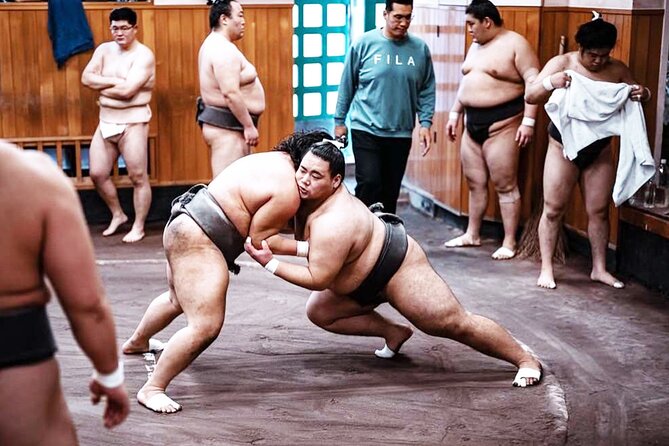
At $118.92 per person, this is not a low-cost morning activity. Its value depends on what you want from Tokyo.
You are paying for access to a real training stable, a guide who explains a complex sport, roughly 90 minutes of close observation, and the chance to take photos with wrestlers. You are not simply paying for transportation or a short photo stop. The main benefit is access to a setting that is not presented as a normal public attraction.
For someone already interested in sumo, the price can make sense because the stable visit is the central experience, not an add-on to a broader city tour. You also avoid having to arrange access and interpret the practice alone.
For a visitor watching the budget, the cost may feel high for an activity that lasts about two hours and requires a quiet viewing style. You should compare it with the price of attending a tournament only if your goal is the same. It is not the same product. Tournament tickets offer a public sporting event, while this tour offers a behind-the-scenes look at training.
The maximum group size of 50 also matters when considering value. A group that size can feel less personal, even though the practice itself may take place close to the viewing area. The guide’s explanations and messaging support help, but you should not expect one-on-one attention throughout.
Who will enjoy this most
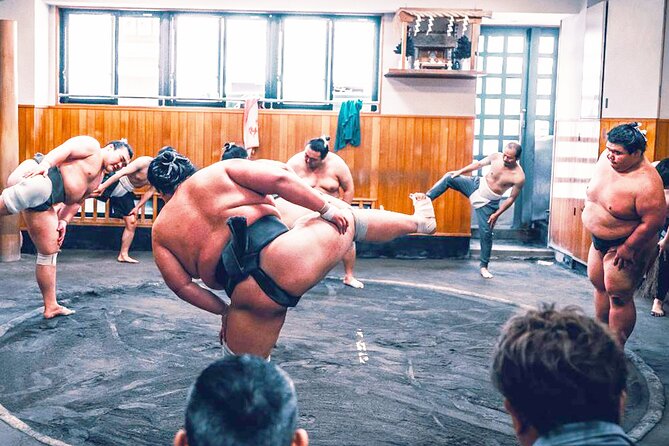
I would suggest this experience to you if you want authentic sports culture, enjoy observing real routines, or have limited time and want a focused introduction to sumo. It is also a good fit for first-time visitors because the guide explains the basics instead of assuming prior knowledge.
Families can enjoy it, but children need to manage the quiet requirement. One useful sign is that a guide was able to keep even energetic children quiet once the rules were explained. Still, the responsibility rests with the adults in the group.
It suits photographers who want a respectful chance to meet wrestlers, though anyone seeking unrestricted photography should adjust expectations. It also works for couples, solo visitors, and mixed-interest groups, especially when one person knows little about sumo.
You may want to skip it if you need a flexible start time, dislike early mornings, or want a loud, fast-moving sports event. You should also think twice if sitting quietly for a long period is difficult. The activity’s strength is its calm, close observation, not constant entertainment.
Practical details that affect the morning
Confirmation arrives when you book, and mobile tickets make the entry process simpler. The activity is near public transportation, and most people can participate.
The experience lasts about two hours in total, although the actual practice is described as about one hour and 30 minutes. That leaves time for meeting the guide, reaching the stable, receiving explanations, and handling the end of the visit.
Free cancellation is available if you cancel at least 24 hours before the local start time. Changes or cancellations made within 24 hours are not accepted for a refund. Because the activity begins early, check your plans the day before rather than waiting until the morning.
The tour begins and ends at the Kiyosumi-shirakawa meeting point. That makes it easy to continue exploring Tokyo afterward, but the activity does not include a separate city tour or meal.
Should you book this sumo stable visit?
Book it if you want to see sumo as daily work, not just as a public spectacle. The strongest reasons are the access to a real stable, the close view of training, and the guide’s help with rules and customs. The chance for photos with wrestlers adds a personal touch.
Do not book it expecting a tournament atmosphere, guaranteed interaction, or a private group. You must be comfortable with an early start, a possible group of up to 50 people, and strict silence during practice.
For the right visitor, $118.92 buys a rare look at the discipline behind one of Japan’s best-known sports. If that sounds more interesting to you than simply watching a match, this is a worthwhile Tokyo morning.
FAQ
Where does the sumo practice tour begin?
It begins at Kiyosumi-shirakawa Station, at 1-chome-6-13 Shirakawa, Koto City, Tokyo 135-0021, Japan.
What time does the activity start?
The start time is 8:30 am.
Where does the tour end?
The activity ends back at the meeting point at Kiyosumi-shirakawa Station.
How long does the experience last?
The full experience lasts about two hours. The morning practice itself takes about one hour and 30 minutes.
Is this a real sumo training session?
Yes. The activity takes you to an authentic working sumo stable to observe morning practice.
Can I take photos with sumo wrestlers?
The experience includes the opportunity to take photos with sumo wrestlers. The timing and availability depend on the stable’s practice schedule.
Can I ask questions during training?
You must remain quiet during the practice. A guide may arrange another way to ask questions, such as a WhatsApp group, and can provide explanations before or after the session.
Do I need to know sumo rules before joining?
No. The guide explains sumo rules, rituals, and traditions during the experience.
How many people can join the activity?
The maximum group size is 50 participants.
Can I cancel for a full refund?
Yes, if you cancel at least 24 hours before the experience’s local start time. Cancellations or changes made less than 24 hours before the start time are not refunded or accepted.
Just added around the world
- Horse Ride + Swimming with Turtles in Aquarium at Nungwi Beach★ 4.5 · 8 reviews
- Xi’an Half-Day Private Tour of Terracotta Warriors and Horses Museum★ 5.0 · 2 reviews
- Desert Trail in Morocco on Horseback★ 5.0 · 2 reviews
- Zakytnhos Horse Riding Swimming Experience★ 3.5 · 3 reviews
- Half-Day Tour: Terracotta Warriors and Horses Museum★ 5.0 · 7 reviews
- Beach & countryside horse riding outside Westport. Guided. 1 hour★ 5.0 · 56 reviews
- Private tour to Sevan, Dilijan Off-road tour & Horseback riding★ 4.5 · 5 reviews
- Vienna Horse-Drawn Carriage Ride with Sparkling Wine and Food★ 5.0 · 44 reviews
Tokyo Horse Riding Tours, compared.
Tokyo Sumo Morning Training/ Sumo Practice with Wrestlers
Read our review →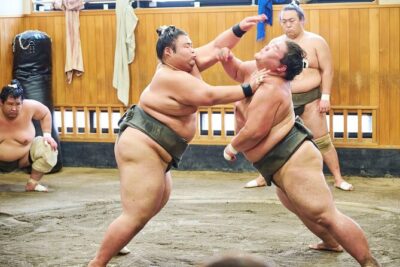
Tokyo: Sumo Morning Practice Viewing Tour at a Real Stable
Read our review →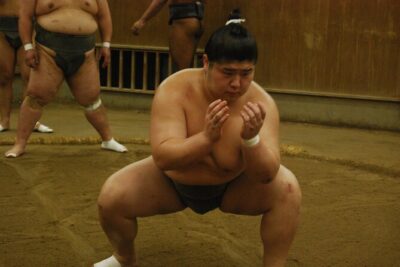
Tokyo: Sumo Morning Practice -Stable Visit Tour with a Guide
Read our review →Tokyo: Sumo Morning Practice -Stable Visit Tour with a Guide
Read our review →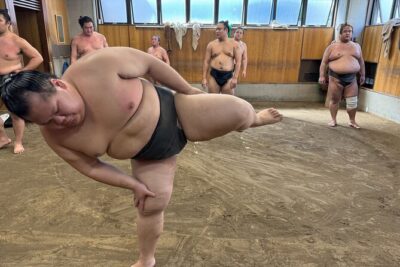
TOKYO , No1 Yokozuna Stable Morning Practice in Ryogoku
Read our review →Browse the lists this tour appears in